Better driver education and higher test standards would save lives too. So would banning alcohol. None of these solutions, including automated cars, will be mandated any time soon. It's not enough to have data, you also have to have societal buy-in.
Interesting that Waymo chooses to compare accident rates with the average driver vs the rideshare drivers their cars replace. The numbers wouldn't look as impressive because rideshare drivers are involved in fewer serious accidents than the average person.
Waymo says it has 170 million miles and I found 2 fatal accidents it was involved in (fault doesn't matter as fault is not included in the other stat either). Looks like the average is about 1.3 fatalities per 100 million miles, and about 1 per 100 million miles for CDLs. This doesn't seem that impressive.
If we want adoption, we would need it be placed in individual vehicles and it should look at removing driver liability. People will use it when they are drunk if it means not going to jail and it's readily available.
Fatality data is extremely skewed. 44% of drivers aren't using a seatbelt, 29% are speeding related, I recall alcohol involvement being about 30%, though it's not listed in the link I checked. About 20% of automobile fatalities aren't in cars but are pedestrians or bicyclists struck by cars (add another 16% if you want to include motorcyclists, though only half of which involve another vehicle). I recall the percentage of vulnerable road user deaths is much higher in urban areas.
(https://www.iihs.org/research-areas/fatality-statistics/deta...)
The majority of drivers are good, but some drivers are really bad. Life in USA is extremely car-centric and taking away a license is often infeasible and the offender usually drives without their license anyways. If anything, I'd like autonomous cars to give a legal out to remove bad drivers. You get a DUI, or commonly speeding? You may only take an autocar.
> "The majority of drivers are good, but some drivers are really bad."
I take issue with this. The majority of drivers are "mostly fine as long as circumstances are favorable", not "good". People for the most part do not even know about the concept of defensive driving let alone practice it. Even the best people are fundamentally complacent in basically everything they do. They zone out sometimes, they get too close, they don't always look where they're going. They don't get into more collisions because the world doesn't throw more obstacles at them, not because they're good at driving.
I disagreed with you and went looking in the article for evidence (yeah bad, epistemologically). I actually found evidence for your point. The largest cause of fatal crashes is Generally distracted or "lost in thought" (daydreaming) at 64%. That happens to most people,.
How many of those 64% had their accident because of phones/drugs/recklessness and claimed to be distracted instead? With all the liability and shame involved in fatal crashes there's absolutely no way people are going to honestly self report illegal behavior.
Phones definitely fall in that category. I’m guessing they are the majority, but I don’t know how to substantiate that.
Hopefully police are figuring out that one of the parties in the accident is high while they do the interview.
The human brain was not designed for a task which requires hours of siting down doing mostly nothing while being hyperfocused the entire time ready to take over in an instant on the rare occasion something happens. While running or cycling your brain is actively engaged keeping yourself upright and avoiding obstacles which keeps you alert.
Seems at least somewhat comparable to walking through a forest full of predators, while, say, hunting/gathering.
Evidence that is is compatible with our psyche is the fact that we're at 1.19 fatalities per 100 million miles driven, and ~50% of those being booze and/or speeding.
Their point is that a “driver take over autonomous” mode is useless because nobody would pay attention to their surroundings at all.
The average person can't last even the length of an elevator trip without reaching for social media.
This is also a big challenge for airline pilots. The planes mostly fly themselves these days, and most takeoffs and landings are uneventful. Being an airline pilot involves an absolutely massive amount of business as usual and preparation, for the very rare times something happens and you suddenly need a team of very focused experts to solve a difficult problem in a stressful environment.
You can see it in what people say right after an accident, stuff like "He came out of nowhere".
As a point of evidence in favor of this viewpoint:
Multi-dozen car pileups aren't particularly rare, with the common cause for a lot of these being "one car hits an icy patch, hits another car, car behind them tries but fails to stop in time due to the ice, rinse and repeat a few dozen times". And the root cause of that is every single driver in that collision driving too fast for conditions and unable to make the requisite emergency stop in time.
Good here is in reference to the average crash statistics.
Most drivers are safer than the average, because you can’t go below 0 and some people are really bad.
I know someone who's been at fault in at least 12+ car accidents, and she keeps driving (as someone else put it you almost have to drive in the USA). There are colossally bad drivers out there and we don't yet have a viable system for keeping them off the road.
Strangely enough... Most US states do not require insurance. Yes, really!
In almost every state, you may post a bond in lieu of insurance, for an amount as low as $35,000!
Most US states have some sort of assigned risk pool which makes minimum coverage available to even the worst drivers, as long as they still have a valid license. (I'm not claiming that this is necessarily a good public policy, just pointing out that it exists.)
https://insurify.com/car-insurance/knowledge/assigned-risk-a...
1) What makes you think she has insurance coverage?
You cannot measure driver goodness (skill and vigilance) by looking at crash statistics, because crashes are definitively circumstantial. Most very clearly bad/dangerous/unskilled/unvigilant operations of automobiles do not lead to crashes.
It looks like the median/mode is 1-2 car accidents (50% of drivers), and the average is 3-4. 25% of drivers have no accidents (as far as insurance companies are concerned, ie, no claims or police reports).
I'm curious how this looks with various ways of normalizing for amount driven; is that no-accident crowd the quartile of drivers who don't drive very much? The biggest factor in being in the opposite group (the 10% of drivers with 50% of accidents) is "drive all the time, commercially or otherwise".
The fatality rate is 1.19 per 100 million vehicle miles [1], ~83 million miles per fatality. The mean driver averages ~15,000 miles per year. So, the mean driver encounters a fatal crash after ~5,500 years of driving. If you started driving when the Great Pyramid was built, you would still have another 1,000 years before you would expect to die in a fatal crash.
The mean driver in the context of the USA driving environment is shockingly safe. Being safer than even the mean human driver in the USA is hard and takes a shocking amount of data to verify. Anybody downplaying it as "lol humans are so unsafe" to argue the problem feels easy to solve or can be solved by the end of the year with a little bit of elbow grease is utterly clueless.
[1] https://crashstats.nhtsa.dot.gov/Api/Public/ViewPublication/...
https://en.wikipedia.org/wiki/List_of_countries_by_traffic-r... has the US at 7th highest out of 22 countries (for which this data is available) for the most accidents per km driven.
So it's clearly not that hard to be safer than the mean human driver in the USA. 3 of the 22 countries manage to have less than half the US rate.
Sir this is a Wendy's, I mean a discussion about autonomous vehicles. The benchmark for the autonomous vehicles in the USA is in comparison to humans in the USA. That means autonomous vehicles need to go ~5,500 person-years worth of driving between crashes to equal the mean driver. The mean US driver is a very high bar to reach for technology, that is why Waymo has just maybe barely reached that bar after nearly two decades and billions of dollars.
80% of the data (for fatalities per km) in that table is missing
Remember, I'm responding specifically to how good people are at driving, not how likely they are to die while driving. How likely a person is to die is mediated by all kinds of things that have nothing to do with how good they are as a driver, like airbags and seatbelts and crumple zones.
In thread context, you're conflating a bunch of things, and it screws up your position as each additional conflation gets you further and further from your headline statistic into "??? -> Profit" underpants gnomes territory.
1) Fatalities vs non-fatal injuries. Not the same thing.
2) Crashes that caused injury vs crashes that did not cause injury. Not the same thing.
3) Crashes that did not cause injury vs crashes that could not have caused injury. Not the same thing.
4) Crashes vs unsafe behaviors that could cause a crash. Not the same thing.
5) Being "safe" in the sense of "enjoying fortunate circumstance" vs being "safe" in the sense of "actively contributing to safety". Not the same thing.
Here is a thought experiment for you to consider:
If you run a red light and the cross traffic brakes and swerves around you, so no collision occurs, were you driving safely? No, right? Then why would you think that fatalities are the true measure of driving goodness?
The people OP is talking about, the 0.05% absolute worst drovers, are not merely complacent, they're doing things like getting hammered and going street racing (shamefully I can say, I was 19 once...) or speeding away from crimes etc
edit: someone else replied with data contrary to this, maybe they are right but Im leaving this here to represent the counterargument
It's a category error to say that everyone else are good just because they're not the worst you can imagine. It doesn't matter what your worst 0.05% do. It doesn't make most people actually good drivers.
The article uses robotaxis as its example self-driving group, but it's not an article about robot vs human taxis. It's an article about self-driving vs non-self-driving vehicles.
The nice thing about a future where all cars are self-driving (this probably will happen) is that it won't only be the taxis that get replaced.
The other reply doesn't contradict what you're saying. Someone who was street racing is going to tell the cops / insurance company that they were lost in thought.
Yeah, there's a woman who is quite old and has a severe disability who drives regularly through our neighborhood who's car every few weeks has a new giant dent, missing fender, broken windshield, etc.
It's sad we don't have a better way for people in these situations to do what they need without driving. It will be incredible to have autonomous driving just for older and or disabled drivers like this.
You could always invest in actual public transport & sane infrastructure, rather than relying on clogging the streets up with more cars, autonomous or otherwise? My mother-in-law is in a wheelchair and zooms by on the bike paths faster than I do thanks to her handbike (it's seriously insane how fast people can move with handbikes), and if she needs to travel large distances she hops onto a train instead.
The best part of proper infrastructure and public transport is that it makes life for the drivers easier, too!
>You could always invest in actual public transport & sane infrastructure, rather than relying on clogging the streets up with more cars, autonomous or otherwise
So what should the disabled people do until that amazing public transport infrastructure materializes, if it ever even does for them at all? Sit at home and wait?
I dislike this type of patronizing superficial handweaving advice that is disconnected from the harsh challenges of building more great public transport infra (lack of funds, geography and land ownership issues, nimbyism, public safety concerns, labor/material shortages, government bureaucracy, corruption and incompetence etc).
People use cars because they have no better choice. I'd also want my city to build me Swiss levels of public transport so I wouldn't have to drive, but guess what, the infra sucks and the city is insolvent, so that leaves me with little choice for the next decades as 100% nothing will change for the better in this regard, so then car driving it is. I didn't make it this way, it's the way the city management has botched it over the last decades, but it's still on me now to adapt to it, and cars are one of the ways.
I agree with you in spirit, that everyone should have great public transport ideally, but when cities are broke and that infra doesn't exist, then that externality is burdened on the individuals because they have no other choice but still need to get to work and other places. Telling them they can "just build more infra" is like telling homeless person they can just buy a house. OK cool, but with what money?
> So what should the disabled people do until that amazing public transport infrastructure materializes, if it ever even does for them at all? Sit at home and wait?
No, the point was that instead of cities waiting until self-driving cars become an option to help get rid of terrible drivers, the cities could invest in public transportation today, and get better road safety that way.
The point is that society's priorities are messed up. Throwing your hands in the air and taking the path of least resistance is never going to lead to change.
The world is literally on fire but the average person simply doesn't give a shit because they don't want to be inconvenienced.
Public transport is not the same as cars. It's silly when people pretend like they are interchangeable and it's just a matter of having "better infrastructure".
Unnecessary is a very strong word. It's also unnecessary to have your own private house, sharing it with other people would be more efficient.
I believe Tesla’s FSD is already better than such unassisted drivers. Particularly with the current FSD limitations which require monitoring driver attentiveness. If every drunk who attempted to drive was using FSD, deaths due to drunk driving would be virtually eliminated. Heck, even advanced lane keeping and smart cruise control from other manufacturers, while much more crude, would still help tremendously.
I wonder how much of drunk driving crashes are because driver turns into speeding asshole vs dozing off. You wouldn't be able to force them to use FSD, especially in a fun car like Tesla. Maybe if it derated itself if it detects erratic driving. They already released a feature where it avoids crashes even when FSD is disabled (but does require subscription).
Does that skew really matter? Nearly all of those conditions are avoided by autonomous vehicles.
My tesla has yet to ask for a road beer while in FSD.
> Life in USA is extremely car-centric
Mostly yes, but some states like NYC its more common to take trains, taxi cabs / Uber / Lyft, etc.
As much as people who live in NYC like to believe they're a state they're not, they're a city. Most of the state of New York does not have good public transit.
I don't live in NYC for the record, my point was more about not having to own a car than public transport, hence i gave a few options surrounding traveling through NYC.
Even in New York City, a very large number of people are not taking transit, there are a lot of cars. Generally gets about a third though different boroughs have different numbers, Manhattan, most people are walking, everywhere else cars are significant, though subway and transit are also there. But you can't really say overall for the city that transit is how people get around.
Pedantically true. By population density, NYC is essentially the whole state, or what matters anyway, to the huge majority of residents.
About 60% of New Yorkers are outside of NYC.
It says a lot that 3 of the 4 options you gave involve cars.
You don't have to own the cars is my argument.
> The majority of drivers are good
Well, 80% of us believes ourselves to be above average, so there's that.
I'd much rather all of the resources that are going into autonomous cars was instead going into proper public transit infrastructure. Cars are so hopelessly space and energy inefficient, and I hate driving them. If I could get around by bus, light rail, bike, and all of the wasted city space devoted to parking could be turned into more housing and amenities, that would be great.
I think it would be meaningful to also compare the fatality rates of the time tested and proven forms of public transit to these self driving cars too.
Public transit doesn't really go that far, when you talk about the last mile it's pretty limited.
But I do like what you're going with that and maybe we could have public autonomous car infrastructure that we all share. And just one large global team working on awesome autonomous vehicles. That could be little pod type vehicles for one person and bigger ones as needed. Cuz the road system is pretty broad and amazing right now.
> the last mile it's pretty limited.
Where is that last mile exactly? In many metropolitan areas, you typically have available a broad selection of trains, subways, trams and/or buses of different sizes that takes you last mile. Some places even have special buses, like the "Neighbourhood Bus" we have here (https://www.barcelona.cat/mobilitat/sites/default/files/bcn-...) for narrow and steep neighborhoods up on mountains.
It's certainly doable, if you wanted to have last mile public transport.
Another consideration that needs to be made before tossing out private transit because "public transit is better" is not all people are able bodied, able, or willing to use public transit.
If it is 2am and you need to get home as a woman, it would be a no brainer to get in an autonomous vehicle while going on public transit is a bad coin flip on being harassed at minimum.
If you are wheelchair bound and the elevator is broken, wheelchair ramp is broken, or someone is already using the wheelchair spot, you just have to wait for luck to change.
If you have sensory difficulties that make public transit uncomfortable, private transit is always the better option.
The list goes on for many reasons and people that having only public transit would harm. The idea we can get rid of or otherwise push out private transit marginalizes everyone who isn't prototypical nor should we hand-wave that they can just rely on runs-on-other-people's-time disabled specific transports to get them into city centers because private transport isn't allowed in.
> not all people are able bodied, able, or willing to use public transit.
Not all people are able bodied, able, or willing to use cars. Cars are killing tens of thousands a year while destroying the environment.
> while going on public transit is a bad coin flip on being harassed at minimum.
While this is going to be city-dependent, I'm a woman who frequently travels along late at night on public transit and I've never had any issues beyond annoying drunk people. You're making this up.
> If you are wheelchair bound and the elevator is broken, wheelchair ramp is broken, or someone is already using the wheelchair spot, you just have to wait for luck to change.
Making sure that public transit is wheelchair-accessible is vitally important, I'm glad we agree on that. How do cars do in that regard? They don't work at all unless you can afford a chauffeur. Your argument here is essentially "public transit is sometimes bad, so it's not worth it to make it better", which is nonsensical.
> only public transit
> private transport isn't allowed in
Ridiculous strawman. Nobody is arguing for the abolition of the private vehicle, just the ways in which we design our cities to prioritize only private vehicles at the expense of everything else. Plenty of people in transit-friendly cities own cars. Replacing a large majority of private car trips would save lives, help the environment, make things more accessible, and make cities more pleasant to be in.
You said both "tram" and "neighbourhood" so I'm assuming you aren't in the US. I truly mean no offense, but it's hard to express how spread out even the most metropolitan areas are in the US.
Sure, NYC is one thing. But check out the ~10th largest city, Austin, where Waymo and other autonomous vehicles are (I think) in their largest deployment. Just on a map, or by density numbers, or whatever metric you want.
I'm in Austin, and Waymos rule. I walk most places, bike others, and rarely drive. I very, very rarely get a rideshare (and often get Waymo by way of Uber lottery). Autonomous vehicles exist, are real, and serve an actual need in this very low density city that most people on HN have heard of. I have 3 kids and if I could snap my fingers and swap them for Tesla Robotaxis (Waymos are better and safer!) I would in a second. I would even pay for that to happen.
If you're arguing about some idealistic society, that's one thing. In reality these things are way better than our public transit, and fixing public transit in a place this (not) dense is not as easy as you might think. The last mile is real, and people are coming from every direction and going every other direction and not willing to wait and transfers when these autonomous vehicles already solve the problems door to door so inexpensively.
Every time you make someone switch modes of transportation to complete their commute, the suffering increases exponentially in my personal experience. I much prefer going door to door and getting the benefit of resting my mind and body.
This is where I've always assumed things were going. People talk about one day owning a self-driving car but I look forward to the promise of not owning a car, never needing to buy, maintain, register, insure, or drive one. Not having to buy into a depreciating compromise, do I prioritize economy or seating or cargo or...? Gas, hybrid, electric? Not having to hunt or pay for parking.
Private cars are costly and spend most of their time just taking up space.
We'll see if it ever works out that way but a boy can dream.
> when you talk about the last mile it's pretty limited.
That's like a 15 minute walk. And with sufficient infrastructure investments this can be 5 minutes.
Rental scooters/bikes cover last mile service very well in my experience. I use transit a great deal more than I would if I had to walk so much on either end of the trip.
>Rental scooters/bikes cover last mile service very well in my experience.
Not so great for family trips, shopping around, etc.
It’s currently 95 degrees. No thanks
Americans would rather die than give up their air conditioned bubbles on wheels. I've wondered why someone hasn't tried manufacturing an enclosed go kart with AC and enough trunk space for a few groceries.
> I've wondered why someone hasn't tried manufacturing an enclosed go kart with AC and enough trunk space for a few groceries.
I see these all the time here in the Netherlands. Very small cars. Some on the road and even smaller ones people drive on the bike paths. Small motorized vehicles, ebikes and scooters share the paths with regular bikes which works because they have usually at least two lanes, so they are more like tiny roads. Very handy.
Regulation kills the value proposition. You are basically describing a "neighborhood electric vehicle", but US law limits them to 25 mph, and it is not legal to drive them on many arterials, so they are only really useful inside communities which were designed for them.
And ideally enough mass to violently crush their neighbors.
That’s the smart car
> I've wondered why someone hasn't tried manufacturing an enclosed go kart with AC and enough trunk space for a few groceries.
Because they are completely unsafe against a twice-the-height, multi-ton Ford pickup truck.
Let me guess… you live somewhere warm and mostly dry? Probably on the younger side and don’t have any kids.
>I think you're coping, like most car owners, we bought the propaganda of freedom &Co
When the bus (in your example) runs on a hourly schedule, while your car is always there when you spontaneously need it, then that freedom is real and not just propaganda.
I did this type of commute before where I had to catch the bus to work, which was also once every hour, and the anxiety during my early morning routine to not miss the bus was crazy since missing it meant one more hour of wait, compared to the freedom of jumping in my car without a fixed schedule while also saving 1h/day of time compared to the public transit, the difference was night and day, not propaganda.
Now if I had a train/subway to work, where I could sit down, and it ran every 15 minutes or less, then yeah, fuck driving and public transport all the way, but nobody sits in traffic for fun, but because of all options for their commute, driving is the better option.
The famously small conurbations and the reality that Finns and Norwegians only are able to bike part of the year. They have cars and public transit for the rest.
I'd add that these discussions tend to handwave the reality of safety when you're on an open platform movie at high speeds, the reality that not all people are physically able, and a lot of others issues that the vocal "cars are the devil" folks don't engage seriously with.
It's getting really old, and it increasingly feels like trying to reason with the "kill all pitbulls" crowd.
Seattle, late middle age. Kid just started high school. My wife has a large e-bike with a passenger seat, but replaced it with a cargo basket a couple years ago after the kiddo outgrew it.
I didn't say that scooters were a solution for everyone, you may note. I don't think there ought to be one solution for everyone, but given the option of micromobility, I really have no use for autonomous vehicles.
I think you need to re-read the parent comment, specifically this part:
> I'd much rather all of the resources that are going into autonomous cars was instead going into proper public transit infrastructure.
You're almost certainly an American, and you probably have no idea what public transit is like in countries that have been investing in it for decades instead of focusing 95% of their resources on infrastructure for cars.
Autonomous cars are pretty space and energy efficient if they act as public transportation. Cars spend something like 95% of their life parked. If AVs replace personal ownership, that's a HUGE reduction in the number of cars in existence. The future looks like a lot less parking lots and 8 lane suburban stroads.
So at 2am you would have thousands of cars driving around empty?
Or would you still need a giant spot of land to park these things outside of peak hour?
Roads designed for buses (and trucks) also cost many orders of magnitude more than ones build for cars only.
If you account for that, cost per passenger mile on fully loaded electric bus is more than uber chauffeur.
It does. About the same amount of money was spent in funding for Waymo as funding SFMTA over the period Waymo has existed. So in SF we are putting in as much money on public transit as Alphabet et al. is on Waymo and we both have the results we have.
We can have both. The resources aren't coming from the same bucket. Public transportation must be built by the local government, and is subject to that local government's ability to execute. In contrast, Self driving cars are largely siphoning resources from for-profit companies.
I live in the west side of San Francisco, and we may get a subway station by 2050 if we're exceptionally lucky. I'd rather have self-driving cars this decade, please.
> Public transportation must be built by the local government,
Amtrak is public transportation. Airlines are pretty close to public transportation. Local government doesn't need to be involved.
To my knowledge there are only a handful of public transit systems in the world that operate at a profit, let alone that operate at enough of a profit to recover construction costs. As in, maybe 5 if you squint really hard. Who do you expect to fund new ones if not the government?
>all of the resources that are going into autonomous cars was instead going into proper public transit infrastructure.
They need not be separated. This is the entire point of the Cybercab and the Cybervan: Get self-driving cars, vans, etc. with the one job of moving people around. They only park to recharge or repair.
> I'd much rather all of the resources that are going into autonomous cars was instead going into proper public transit infrastructure.
Solving the last mile problem also helps solve the public transit problem.
The issue in the US is that the current population configuration does not have single population points connecting to single employment points like back in the days of the mills or the factories. As such, public transit becomes difficult.
For example, the train in Southern California is hampered by the fact that you need huge parking lots and cars at the transit stops. If you can take an autonomous vehicle at either end, that evaporates and a LOT more people can now make use of the train effectively.
Public transit is too often a jobs program
AVs and public transportation are not comparable. The cumulative lifetime investment in Waymo would not fund even half a year of capital expenses for the New York MTA, for example.
I'm not sure that's a fair comparison. The most expensive part of self driving cars is building the roads and highways. Would make more sense to compare Waymo to the operating expenses of PT, hiring the drivers and maintaining the trains.
You are suggesting that we should attribute a fraction of the costs of our road building and/or maintenance under autonomous vehicle development? If so, what fraction are you proposing?
I see. But Waymo investments are also vanishingly small compared to PT OpEx. If you for some reason could tap all of the Waymo money, operations and R&D and all of the rest of it, you could fund WMATA and that's it. Americans spend 100x more just on motor fuels than Waymo spends on itself. If you wanted to raise a similar amount of money you would need a mere 5¢ incremental gas tax. Private Americans furthermore spend $1 trillion every year just replacing and fixing their cars. You could double the public transit subsidy across the nation with a 5% car tax.
IMO the benchmark to pass will be to show it has better safety than the average sober, non-speeding, non-phone-using, seatbelt-wearing driver.
IDK how that could even feasibly be shown but that's when people will actually start going all-in on it. Otherwise I will simply meet those criteria myself for free.
obviously true, and it has a lot of other benefits, such as being able to take a nap while driving.
The most likely scenario at this point it:
- autonomous cars cause fewer accidents
- so either insurance will be cheaper for them
- AND/OR human driving car insurance goes up
- even if only one happens, the relative cost of insurance will change in favor of autonomous
- driving your own car becomes a kind of "prestige" thing where only really wealthy people do it (similar to owning your own plane etc)
> The most likely scenario at this point it:
> - autonomous cars cause fewer accidents
> - so either insurance will be cheaper for them
> - AND/OR human driving car insurance goes up
If they were going to do that, they would have done it by now for those drivers opting into the insurance monitor device: they can literally tell that you're a driver that never took a risk, never got into a situation to brake hard, never drove recklessly, etc, and yet, the insurance cost with the device is only slightly less than the insurance cost without the device.
In any case, if this was strictly a financial decision, why would the human cost go up? The larger the percentage of SDVs there are on the road, the less likely a human driver gets into an accident, their risk goes down too, so their insurance should also go down.
It's a pool. If all the drunks switch to autonomous vehicles then we all win. If all the school teachers switch to autonomous vehicles then the drunks lose.
In my own life I see the most reasonable/thoughtful drivers raving about autonomous driving and the most reckless ones ranting against it. YMMV.
exactly this
Haven't wealthy people spent most of history paying someone else to drive for them?
Driving yourself will become like horse riding, something you do on private property for sport rather than transport.
> Haven't wealthy people spent most of history paying someone else to drive for them?
My understanding is that it is a legal and safety liability for them to drive. The driver is employed by and the car is owned by a company that the wealthy person founded and pays so if the driver hits & kills someone, the company gets sued for a bunch of money then the liability can be discharged in bankruptcy / isolated to the company's coffers rather than the wealthy person's.
It's the same gambit as their security. I am sure more than just Gates and Musk do it but I know that both of them own personal security companies who only provide security to themselves. It's all just shells of liability shielding.
Maybe I’m missing something. I can’t imagine that paying a chauffeur can be cheaper than umbrella insurance.
Well, there is the alternative that prosecution is low enough in case of accidents that insurance payouts are low and consequently insurance is low priced. Also, the majority could easily vote for price controls on car insurance like they have on home insurance.
I can easily construct arguments along the lines of “cars are necessary to drive and insurance costs are regressive since they don’t scale with income so we need to have price controls on insurance for low-income drivers”. These will be quite popular.
And the wage slaves lose even more freedom and autonomy.
If freedom is being shackled to an expensive appliance by a yearslong loan and autonomy is being trapped at home if it breaks or you lose the ability to operate it... I'll pass on both.
Using my phone to make a car show up when I need it and disappear when I don't feels like utopia.
I expected this to happen a few years ago, but I think I was over optimistic. Now, who knows? Maybe it will finally start to make a difference.
Waymo is already self-insured so if they have an advantage it's already on their balance sheet. In California nobody is going to get a discount for having ADAS software because we encoded into the state law in the 1980s, part of a long magical thinking campaign by boomers, that insurance companies can't use that type of thing to set prices.
> so either insurance will be cheaper for them
lol
Insurance will just be bundled with the self-driving car software. Insurance and car are separate today because driver and car are separate today. Once they're the same, there's lots of money to be saved by bundling the sale.
That already is happening. https://en.wikipedia.org/wiki/Self-driving_car_liability:
In 2015, Volvo issued a press release claiming that Volvo would accept full liability whenever its cars are in autonomous mode.
[…]
Starting in September 2023 in the United States, Mercedes-Benz takes liability for the Level 3 Drive Pilot as long as the "user operates Drive Pilot as designed," but "the driver must be ready to take control of the vehicle at all times when prompted to intervene by the vehicle."
> Once they're the same, there's lots of money to be saved by bundling the sale.
There’s a lot of money to be made. Just look at the prices for travel insurance direct from the airline versus a third party. 2-3x.
It’ll be like BMW with the heated seat subscription fee.
The actual money will be made because the driverless car manufacturer is self-insuring and cutting out the insurance company. Competition among manufacturers will then pass most of those savings on to you.
Similarly, many car makers offer heated seats without a subscription fee, because of the magic of competition.
> Insurance and car are separate today because driver and car are separate today.
This is an excellent point.
Yeah, so would investment in reliable, nice public transportation. I know it doesn’t solve the last-mile-problem.
Either way, fewer drivers means fewer deaths.
ADAS + human driver seems enough to solve most of the shortcomings of both human and robot drivers.
Full self-driving doesn't strike me as necessary to prevent deaths.
There is a moral hazard with ADAS + human drivers:
> Once drivers move from the novelty phase to the post-novelty operational phase, behavioral adaptation may begin to occur and overreliance and over-trust in the automation features potentially develop, including a greater willingness to look away from the forward road (as shown in the VCC data set). [1]
I'm not sure if this is more dangerous than strictly human-operated vehicles, but I would wager that it is more dangerous than strictly autonomous vehicles.
1. https://aaafoundation.org/research/understanding-the-impact-...
I'm not sure why a semi autonomous system of equivalent driving capability would be more dangerous than strictly autonomous vehicles because of "over-trust" unless one assumes that the driver that overtrust the autonomous vehicles and looks away is also inclined to try to override the semiautonomous system whilst doing so. Humans overtrusting a system capable of imperfect Level 5 driving will certainly not be alert to correct all its errors, but on the other hand they should be capable of correcting more than the baseline (especially if the autonomous system is good enough at general driving under most conditions for the human driver to be restricted to "get me off this road train track or flood the system shouldn't have stopped in" and "follow instructions" type edge cases rather than misidentifying objects at high speed type edge cases.)
If there are additional problems caused by human drivers, it's surely that they are inclined to intentionally override the system with dangerous behaviours which is a separate problem entirely, or that their driving ability has atrophied so much from not driving they are unable to handle the boundaries of Level 4...
Overtrust looks like people sleeping or not even bothering to stay in the front seats of the car. https://www.nbcnews.com/news/us-news/california-highway-patr...
You are correct but I think previous comment hung on specific word you used: "semi-autonomous". What that would mean is a system that still requires attention / supervision. What I believe you meant is an AV that still has human controls but is capable of unsupervised driving.
If you aren't familiar with SAE AV levels, check them out. It is a common refrain that L3 AVs are a SUPER bad idea because they would be 99.9% perfect at driving but could still mess up so 'drivers' of them would become too trusting and minimally attentive which would cause accidents.
The common thing is that L3 needs to be skipped entirely so a car should either be L2 and wouldn't be good enough to drive entirely on its own for long periods (lane assist, low speed traffic jam chauffeur, etc) or L4+ where the car can drive on its own but if conditions degrade where it can't continue it is capable of finding a safe spot to stop rather than aborting in the middle of driving suddenly.
The controls vs no controls isn't really an argument. Like you said, it will basically be fine either way if the system is sufficiently advanced especially if autonomy can't be disengaged while moving.
I think the argument for autonomous is that human intervention is, generally, wrongly rather than rightly.
At this point, I won't agree or disagree, but it's getting more interesting all the time.
There was research some years ago in Sweden that cars with 4WD get into accidents 20% - 30% more often than cars with 2WD. And cars with 4WD averaged 10% higher speed at the moment of the crash.
The cause was found to be drivers with 2WD losing a little traction early in their drove and subsequently slowing down, while drivers with 4WD just kept driving like normal until they were suddenly off the road.
Another statistic is that intoxicated or otherwise impaired drivers cause more than half of all fatalities. So making a solution with machine learning and cameras that could retrofit into any existing car and just deny starting the car for such drivers, and having insurance companies cut premiums for having such gadgets installed, would be much more effective than any form of self driving or similar.
https://mb.cision.com/wpyfs/00/00/00/00/00/3E/5A/A2/wkr0011....
The gadgets would have to meet an impossibly low false-positive rate and they'd need to be mandatory and non-removable for this to be effective. Constantly impaired drivers won't voluntarily install the devices, and any non-impaired driver who is falsely prevented from using their car will get rid of the device and not care about the insurance discount.
Also, they really need to be able to detect the other really bad cause of impairment: mobile phone usage.
It's like those approval prompts in coding agents. At the start you are reading the commands intently but after being bombarded with them for days you just hit accept on them.
Automatic braking alone is a huge deal: if you're a bit late in braking, you get a warning. If you go past that, brakes auto apply. When configured correctly, I don't even notice it's there 99.9% of the time...and the times I do I'm glad it's there, because the beep pulls you out of a momentary distraction.
The only problem is not every car on the road has it yet.
>Automatic braking alone is a huge deal
Except I had to turn it off for my Ford E-Transit, because it will freak out at nothing. Sometimes it screams at me for cars that aren't even in my lane that suddenly slowed. Sometimes it misjudges a ripple in the crappy asphalt here as an obstacle I'm going to hit. There is a high chance its going to brake for no reason at all and cause an accident.
I left the warning system on, but I will never give it control over the brakes.
Any time I crossed a bridge near me that is kind of steep and has a structure over it, the automatic braking engaged HARD. Like hard enough that I nearly caused accidents until I figured out how to turn it off.
Not great.
I wonder if there will be some extra liability if the driver kills someone and the logs show automatic braking would have engaged. Something similar happened near me where a lamborghini driver disabled traction control, spun out and killed a girl on the way to school. They had to add new laws increasing the liability if you disabled TC.
Fords seem notorious for this but usually can be fixed. Have you tried driving it to a dealership and trading it in?
Multiple times actually, lmao. Unfortunately its only worth $19,000 currently (sticker price of $67,000 three years ago)
Good news, everyone. Soon you won't be able to switch it off.
I suspect this will just lead to people pulling the ABS fuse and losing ABS and ESC along with AEB.
Anecdotally, the only times I've ever noticed these chimes and the auto-braking (even automatic rolling-up of windows), it was false positives, and it was mildly terrifying: for a brief and unexpected moment I was no longer in control of my vehicle. [Recent Honda Civic and Audi A3 models]
I've only had a couple weeks in rentals with automatic emergency braking, and was very nearly been rear-ended twice due to false positives. Anecdotal, and I'm sure they'll improve with time, but I would never allow the system I experienced anywhere near a car I owned. It was profoundly unsafe.
Some years ago, I was in a major crash. The traffic in front of me stopped, I braked hard and stopped in time, the truck behind me rammed me into the car in front. Nearly killed me.
Some time later, I was on a snowy road. The cars in front of me stopped, I stopped, and checked my rearview mirror. There was a truck, who clearly wasn't going to stop. I pulled off to the side, and he hit the car in front of me.
Pretty much, they would have been getting chimes about being too close to start with.
Never hear of someone who was rear ended being liable. Guy behind should keep a distance that allows him reacting in time and he is responsible for keeping that distance.
The same for skiing you don’t have eyes on the back of your head, one behind you is responsible for not crashing into you.
In car you have rear mirrors but if you have something in front of you and breaking you are not going to look in the mirrors.
> The only problem is not every car on the road has it yet.
Yep. ADAS should be mandatory like seat belts and airbags. A regulatory body should be able to come up with a minimum standard for it.
Even airbags were phased in over decades. Front-seat airbags were first available in the early 70s and didn't become mandatory until 20 years later.
Automatic braking can also be hazardous! In a front-wheel drive car, understeer is a fact of life. When you're approaching a bend in the road with your foot in the accelerator, you're going to be pointed at the guardrail, since the car's going to rotate around the bend when lift your foot off the gas. Now imagine you're driving a car with AEB and it slams on the brakes while you were lightly accelerating towards the guardrail, right before you were going to lift your foot off the gas. What was a perfectly routine curve just turned into complete loss of control, and there's a very good chance your car's going straight into the guardrail!
Even when it doesn't slam on the brakes, if you were concentrating on the road, those jarring beeps can just as easily break your focus on driving as they can break your focus on a distraction. I think it's better to avoid distraction by keeping cruise control off, and you can compensate for having human-level reaction time by following at a safe distance and staying in an appropriate gear or setting an appropriate level of regenerative braking to avoid mindlessly getting too close to the car in front of you.
I think that too often, driver assist features are being added to cars to compensate for the other features (like adaptive cruise control) that encourage drivers to mentally disengage from the task of driving. There's also the fact (well, opinion) that driving a car without electronic assists and nannies is fun and engaging (especially on back roads with the windows down and the radio up). Riding in an autonomous vehicle is just as dull as riding on public transportation, all while being less efficient, less social, and worse for the environment.
It would be interesting if we could somehow test how the reduction in crashes with the introduction of driver assists would compare with if we had just banned cruise control, introduced minimum visibility and minimum suspension stiffness standards, and mandated manual transmissions.
This is the perfect expression of chronic windshield brain. If you are driving anywhere near the limits of dynamic stability on a public road, then you are already driving dangerously. Also, computerized stability control works better than 99.99% of human drivers.
Confirmed: you don't understand this subject. Any readers who find themselves needing to stop a modern car in an emergency are advised to stand on the brake pedal with maximum force while the computer sorts the situation out.
i don't think you fully understand how many edge cases there really are, and the full range of conditions people here expect autonomous cars or even driver assist systems to function in.
As a very simple example, i sat my driving test in the Netherlands. Literally the first thing my driving instructor taught me was that tires have finite grip and that changing speed or direction requires grip. Doing both at the same time, as you do while driving along a curved highway off ramp can be very dangerous in slippery conditions.
Many, many times, the auto braking and lane centering system in my hyundai car has caused the car to skid in light snow. i have lost count of how many times this has happened. With my previous "non smart" car, this never happened because i know how to drive in the winter.
Respectfully, not all driving conditions and styles are dangerous.
The problem with mostly-but-not-entirely autonomous is that humans will tend to treat it like entirely autonomous.
It doesn't help when manufacturers call their mostly-but-not-entirely autonomous systems Full Self Driving
A manufacturer.
An ADAS would be L4 if it was designed to be truly autonomous. If it's not designed to be truly autonomous, you have to somehow address the attention problem. Even a good attention monitoring system isn't sufficient, because people have the ability to appear superficially attentive by all external metrics, while not engaging with the driving task mentally.
The data to differentiate these levels is pretty limited for a variety of reasons, and the problem only worsens when you conflate AEB with ADAS as the IHS/IEEE do in this article rather than use an OEDR-based definition.
I recently implemented OpenPilot for my vehicle and used it on a 9 hour road trip.
Due to the nuances of my vehicle, the built-in hands-on-wheel nag was still active and required (small) driver wheel inputs every 10 seconds to prevent the beeps. Just keeping both hands on the wheel was enough to pacify the nag. But this forced me to keep attention on the vehicle, more than OpenPilot's face direction detector. Anecdotally I am certain this kept me more engaged than if I could have gone hands off.
The net effect was I had more capacity to be aware of what was going on around me on the road, AND I didn't feel nearly as fatigued at the end of the drive. Keeping the car between the lines consumes a little bit of cognitive energy constantly, which compounds over a long drive. Freeing up that load allowed me to pay more attention to what was happening on the rest of the road. And the mental burden was still half as much--I felt like I had driven maybe 4-5 hours instead of 9.
I have some ideas for how I might disable the built-in nag, but I'm pretty sure doing so would make my car less safe. The current configuration might already achieve the safety maximum for ADAS based on front-facing cameras only.
It increases situational awareness while reducing fatigue, and I think that anything further I try to do will adversely affect one or both of those effects.
Doesn't
``less cars, more X, where X is bikes and trains''
save more lives than autonomous cars?
Also: We have 580k direct deaths a year due to a top pollutant society cross-funds for those who buy them? This is insane.
After ten-thousand years, nearly six billion humans died in car-related accidents, i.e. one population of earth when I was young? How is a personal level risk of one in ten thousand each year acceptable? Ban at least human-driven cars, not (only) AI/AGSI!
As for driving in full automation: seems impossible outside clear-weathered rectangular cities, for now. But perhaps that does not stay this way for years, and in some places, we can could either adopt this tech, pragmatically, or build liveable, walkable/bikable cities instead in the more long term.
Who's saying they don't? One good thing doesn't negate another
It could, but maybe not if your motto is, "Move Fast and Break Things."
Article is short on data instead referencing a bunch of aggregated IIHS studies.
Uber exited the autonomous vehicle race several years ago. AFAICT, largely because of this mismatch. Who's still in this area (in a serious way) that behaves like that?
Which autonomous vehicle company has that as their motto?
Stop asking relevant questions! I have a narrative to push and you are getting in the way.
That’s a Facebook motto but Facebook (now Meta) isn’t in AVs. I suppose that excludes Facebook of pre 2016 from participating in AVs? I think everyone is fine with that.
"Move fast and break things" looks obviously bad for an autonomous vehicle ...
Honestly, mount a front and back dash camera, and allow people to submit tickets for speeding and tailgating themselves.
I’m not kidding excessive speed and not keeping a safe distance equates for some 50% of all deadly traffic incidents. It’s because a small and vocal minority drives like absolute fucking assholes and they will rally lawmakers not to introduce speed limits and to loosen grip on enforcement. The ADAC (German motor association) is a perfect example. When they announced after decades that they support a 130km max speed limit members jumped by the doves.
The only vastly meaningful improvement I can see in FSD is faster reaction times when it comes to assholes. Coincidentally those are the people who insist on driving petrol and will never upgrade to FSD because they like to drive like assholes.
IMHO it’s time for strict enforcement. Let’s ban them from the road finally. Set fines in percent from income. Allow self reporting via dash cams. Add stricter penalties for recurring offences, if you’re caught speeding 5 times in 2 days your licence is suspended.
That’ll have a much bigger impact than FSD. Maybe we can rally our representatives making them all giddy with all the extra cash they can earn from these offenders?
So can 100% public transport, non-autonomous. But there is less lobbying money for award winning journalists.
It's also easier to do shared housing but part of it is just that people like having their own personal dedicated space to exist in even if it's not the most efficient answer.
That’s a really difficult problem to solve with the built environment being the way it is. Buses get the closest, but to make it usable at times other than rush hour, they have to run empty or nearly empty, which drives the cost very high (although this is often hidden by subsidies). The way to deal with low density transit is automation.
Depends at the scale you're looking at. How much money is wasted by 30 people driving 30 cars when a bus could take them all? Taking into account car wear, gas, etc.
Low density public transport work very well in places where people simply can't afford personal vehicles, it's not a tech logical or financial problem at all, if anything it's cultural and mostly political
If the bus service is good and available, people will use it eventually including in off hours. Induced demand.
I can not imagine that the cost of busses can ever approach the cost of the equivalent amount of cars (for the same amount of passengers).
It is, at least in a place like LA. Fares are like less than 10% the actual total cost of an average bus ride. https://www.reddit.com/r/LAMetro/comments/1orftnt/should_you...
Now if you’re ONLY serving high density and high passenger volume times, buses are incredible.
It's not that simple, road damage is famously non-linear in axle load: https://en.wikipedia.org/wiki/Fourth_power_law
> The wear-and-tear on the road from the sheer volume of cars alone makes them cost more to us as a society than busses.
That doesn't really math, because axle weight is a large factor in road wear. There's details and it doesn't always apply, but the commonly used rule of thumb is that "road wear increases in proportion to the fourth power of its axle load."
If a transit bus weighs at least 25000 lbs and has two axles [2] and a F-150 has an average weight of 5000 lbs with two axles [3], you get a lot more road wear from putting a bunch of people on a bus compared to all of them driving their f-150s by themselves. The power rule says the wear from one bus is equivalent to 625 F-150s. Although if people rode around in classic Beetles (~ 2000 lbs), there'd be even less road wear, and things would be a lot groovier.
[1] https://en.wikipedia.org/wiki/Fourth_power_law
[2] https://phoenixtransportationsf.com/how-much-does-a-bus-weig...
[3] https://www.fordoffeasterville.com/2025-ford-f-150-weight-gu...
> Is your point that busses aren't profitable? Why do they need to be?
Because late stage capitalism brain rot doesn't allow for nuanced things such as "public services".
They'd rather have everyone spend 50k on a car and Xk per year on insurance and maintenance than $100 of their taxes going to public infrastructure
Hundreds of buses on the road. Amazing!
And trucking. But jobs.
I feel like we never get real data on autonomous cars as we never do with data centers. It’s hard to tell if bad stories are anecdotal or rooted in truth. I hear the vast majority of accidents would be things that no human could avoid either - but then I’d also be anecdotal.
Isn't it... quite a well known thing?
The articles I've read on this have said it's murky because of obfuscation of reported data by self-driving companies.
The target article even notes that "while Waymo leads the industry in transparency, and robotaxi operators are required to report even the tiniest scrape to the National Highway Traffic Safety Administration (NHTSA), not every company voluntarily reports their total miles driven."
My sense is that there's a lot of massaging the data by autonomous car companies to make their data look good. The article and a linked article describes the comparisons as "human drivers in the same driving conditions" which is kind of vague to me and isn't the same as, say, taxi drivers to robotaxis. It's also robotaxis and not general driving conditions etc.
I always feel like these comparisons become murky in other ways. For example, if autonomous vehicles have lower accident rates in general, but fail in catastrophically bad ways when they do fail — ways that would never happen with a human driver (for example, by inexplicably driving into an avoidable semi trailer for no reason, killing the occupants) — is that better? What if you eliminate cases where the driver is intoxicated? Aren't those cases cases of malfeasance at some level, that could apply to autonomous vehicle use? Do you hold autonomous vehicle companies accountable for deaths, charging executives with manslaughter? How should we think about accountability versus safety?
I'm not trying to argue against autonomous vehicles. I just feel like these types of published discussions get oversimplified often in a way that seems to parallel similar discussions of AI in general, and seems sympathetic to their adoption rather than a rigorously skeptical appraisal.
They can also massage the numbers by only driving on the safest roads, then making a comparison based solely on miles driven.
The comparisons I've seen are with the general population, not professional drivers. How might that comparison look, since this is a paid service?
I have a feeling that once everything goes EV and autopilot, they will start phasing out regular cars or will make it more difficult to obtain the license.
This will be a gradual process. But probably getting a drivers license will become a lot less common for people over time. There won't be any need once cars drive themselves.
Insurance and liability become a lot simpler if you just don't touch the controls at all. There will be a clear split between people who don't drive and therefore are not liable and the remaining group that still drives and is causing most of the remaining accidents (and cost for insurers). That's going to inevitably get more scrutiny from everybody: insurers, authorities, occupants of self driving vehicles, other manual drivers.
This will probably be insurance driven. If you don't need to drive anymore, you don't actually need a license. And if you are not driving, you can't be held liable for damage caused by your vehicle. You'll still need insurance to cover any damage/harm your vehicle might cause but this will likely be quite cheap given autonomous cars are safer and on average don't really get involved in accidents. It's quite possible that eventually just gets folded into warranty terms for your car and covered by the manufacturer.
As manually driving increasingly becomes a choice rather than a necessity, your insurance for that might become conditional on you being current and proficient in the same sense that licensed pilots need to regularly do check rides to verify they can still safely operate a plane. Additionally, insurers might insist on you passing a regular health checks to verify that you are still fit enough to drive. Some countries already test elderly drivers but there are lots of elderly people with pretty serious health issues passing these tests as well. Expect this to get a lot more strict.
Yes, I'm thinking the same, good write up.
And it'll negatively impact all but the upper classes. Automakers would rather everyone use their autopilot taxi services for the higher profit margins, so autopilot EVs will be prohibitively expensive to outright buy.
I think it would positively impact lower classes because car ownership is by far the biggest financial drain you can take on.
Only if there's affordable transportation available.
There's a large percent of people who have their daily commute possible by public transport, but the weekend or odd trips are not well covered. A cheaper uber powered by self driving would cover the odd trips and save people the massive expense of owning a car.
Also, the autonomous car companies will have their vehicles coordinating to make it difficult for humans to drive, such as holding a long convoy with close following distance in a single lane.
I think the vast majority of voters will have something to say about that.
Yeah but just one automatic update away from becoming a horror show.
Taxis also save lives. The lives of those who drive drunk.
idk if this was even part of the conversation tbh
The question was if they could remain secure
Also I saw people suggest rc cars as an alternative to autonomous vehicles which... is another consideration entirely as well
It'd be really nice to have bolt-on after-market automation. I'm not sure if the car companies will want to accommodate this, but I'd really love to make my old Honda self-driving.
I remember a company called Ghost Locomation that was working on this.
OpenPilot and comma.ai are very close to a bolt-on after-market solution; not FSD 14 quality but you can get a lot of autonomy and intelligence with a $1000 Android device and thirty minutes for installation.
It isn't truly stick-and-go, you need to have existing ADAS and other sensors already in the vehicle. As people are now holding onto cars for an average of 15+ years, the bolt-on kits are about 10 years ahead of the average driver's car.
Probably won't happen for many years, they need quite a lot of power to use the current AV tech.
Of course. This seems so obvious.
More sensors with 360 degrees. Faster reaction time. Constantly improving, be it from real world data or from a simulated environment. Zero fatigue. No emotion evolved. No drugs are alcohol in the system.
Fyi. Long robotaxis.
But they still cannot drive cars. All this stuff can do is react very slowly, maybe, if it detects it, to a change in the environment.
Self-driving cars will never be safer than human drivers.
If you believe otherwise, show actual proof of some kind. Show some footage of self-driving cars doing anything other than blundering around like an inexperienced and impaired driver.
FSD avoiding a deer at night at highway speeds: https://www.youtube.com/watch?v=eWAmZBEK2Wk
FSD driving in decently heavy rain (this is mine): https://www.youtube.com/watch?v=uKePEavEhv
Both of the above aren't current consumer models and the Cybercabs run one major version above this.
I've seen it avoid small rodents and deer that were hidden in foliage around a blind turn, it's super freaky with what it sees that humans can't and this is with only cameras. It is really good, in my experience, at reasoning about other vehicles and what they are about to do such as seeing a vehicle not slowing down quickly enough at a stop sign its crossing so it slows itself down to make sure the car stops. My favorite story is that it swerved out of the way of someone doing a u-turn from the opposing lane hidden behind another car; it had already gotten us out of the way before anyone in the car realized what had happened.
An AV is already superhuman because it never loses focus, it can see all the way around the car, and it can react quicker than any human, besides maybe an F1 driver, could.
> Self-driving cars will never be safer than human drivers.
You're responding to something that actually brought data to the table to answer the question, though one can quibble with details.
Yet you're saying that self-driving cars will _never_ be safer, which is a much stronger claim, and you don't bring any evidence to back up the assertion.
The System loves leaning on the Cult of Safety to justify taking away people's autonomy and freedom of movement
Considering two groups, FSD and non-FSD, what are the shares of full-sized SUVs in them?
Pretty sure whatever the FSD vehicle you can think of, none is a full-sized SUVs, and those are the most lethal kind of vehicle.
Looks like we're over the biggest engineering hurdles. I used to tell people we'd see self-driving cars take off in the 2030s, (with them generally starting to appear mid 2020s) and now this looks like the case.
I wonder to what extent this effect comes from the fact that robotaxis don't get drunk.
I seem to recall a paper showing that human crash frequencies surge up to 6x between midnight and 4am on weekends, despite that traffic accounting for only a miniscule percentage of vehicle miles traveled.
It doesn't really matter whether autonomous cars crash less than human drivers. A computer can never be punished, so a computer must never be allowed to kill any humans.
How does punishing someone make crashes better? I would rather have fewer crashes because of a system that can't be punished than more crashes with punishment.
Being able to punish someone doesn't change the fact that a crash happened and it doesn't change the fact that someone died. There is a difference between punishment and justice, there is rarely ever perfect justice in life.
The best we can do is mitigate harms as much as possible, and it seems self-driving might be the best mitigation of traffic accidents compared to human drivers.
I do think that currently we're at the stage where Waymo is trying to convince most of the world of the _quality_ of its offering, so for the moment, things are well aligned.
But in 5 years if there are multiple self-driving offerings competing on things like price, door-to-door time, OPEX (e.g. does a camera-only system with no moving parts need less skilled maintenance?), then someone may try to be the cheap but good enough self-driving service that cuts corners -- and we should want some execs to actually go to prison rather than just some cost-of-doing-business fines.
Where do you live that humans are punished for "accidents"? You can run someone over in America and it's basically an "oopsie, do better next time!"
Suppose human drivers were killing 1 person every 100 miles driven, and software was killing 1 person every 10 billion miles driven. We should just accept that the human population will be decimated each day for accountability reasons?
* 12 deaths per 100,000 per year, but 4 people go to jail for it
* 2 deaths per 100,000 per year, but no one goes to jail
Because apparently going to jail is important for some reason?
Honestly, choosing jail is somewhat dystopian IMO
Is there a standard that these cars have to meet?
Really there should be an obstacle course of some kind based on the most common anomalies leading to accidents. Partially obscured road signs, worn paint markings, obscured sight lines caused by dense parking, driving on a snowed over surface, etc.
Such a standard for motor vehicles would result in the loss of licensing for a large majority of Americans. Most people would fight against such testing standards as a condition for driving on public roads. It might not be a bad idea. I just don’t think it’s feasible.
There's no legislated standard in the US, nor pre-sale verification that a vehicle has met most of the other automotive standards. That's just not how the US regulatory environment works.
There's the beginnings of a standard for L2/L3 vehicles in Europe, and ongoing discussions about what L4 standards could look like, but neither addresses "adversarial" situations.
China is going for what's sometimes called "L3.5" - hands off wheel, eyes off road, driver may have to take over if alerted, but if the driver doesn't, the vehicle must safely stop and pull over if possible.
The trouble with "driver assistance" systems is the handoff to the driver. That's not reliable. Results from the aviation community indicate that it takes about ten seconds after an autopilot disconnect before the pilot has stable control of the aircraft. "L3.5" accepts that. The < 2 second response required by some L2 systems does not.
Real world data results are so much more important than an obstacle course to overfit for.
While I would like to see that just for the data, from a regulatory standpoint all we really need are the manufacturers being liable in a crash if their cars were driving. The insurance savings of their cars being safer will create the incentive they need.
If it’s anything like my San Francisco DMV driving test, they did a loop around Fell and Oak St (both one way streets with no opposing traffic).
I passed because I didn’t kill anyone in the span of eight blocks.
Autonomous vehicles don’t drink and drive. That alone will save millions worldwide yearly.
Most people don't drink and drive.
It's really only in the US where people still seem to think it's acceptable to drive drunk.
Cool, now show the public transit safety numbers.
I'll be sad when I'm forced to give up driving my old cars.
Even in the far future of AV highways, I expect that tracks will exist where you can drive your car for leisure.
You're old enough that isn't a worry for you. If your grandkids have cars as a hobby they might have to use a track rather than public roads.
It has been, from the start and even before FSD had any basis in reality and was just sci-fi stories, obvious that FSD would eventually get here. The only question has been when. We clearly aren't there yet but it is pretty obvious we aren't as far away as the naysayers make out.
I want FSD, but I want it on consumer terms. Safety is only one aspect and it is the one constantly brought up. It is important, but in the long term it will be solved and the more important things will remain. Concepts of privacy, ownership and access will be the real issues of the future and should be the most important discussions about FSD, and transportation in general, now. If we allow FSD to go the rout it appears it is going, car companies requiring you forfeit you privacy, subscriptions and not ownership and companies clearly demonstrating their first attempts at gating access by advertising where you should go and emphasizing where they don't want you to go, then the FSD future we are being led to is a dystopian mistake.
You may not believe FSD will ever get here but I think it is easy to see the direction car companies are pushing things. I am happy to see safety is being solved but I would rather see a major push towards a FSD future that is more like a 1950's space opera than a 2000's tech dystopia.
Agreed.
I didn't even take the insurance monitor they offered because the difference in cost turned out to be something stupidly low (like a saving of $1/month, or similar).
I don't want my car monitored, I don't want my movements monitored, and I certainly don't want my car reliant on the continuing goodwill of some upstream provider.
They need to sort out the software and privacy implications before I'm biting, especially as my personal accident history beats current SDV anyway: over a million kilometers with a single accident.
Self driving can be safer even if it's less competent because it can just be programed to be more risk adverse, always keep safe stopping distances and slow down when the conditions are adverse. A human driver _might_ be more skilled in driving through a snow storm but the self driving car just slows down and ends up safer.
Most drivers take absurd risks that negate any possible skill advantage.
We've done(ish) the first 80%: long straight roads and grid cities in south USA getting 350 days of sun per year.
The last 20% will be tough. There are 1.3b vehicules in the world, most of the aren't in the US, most places will need a complete infrastructure revamp before autonomous cars can even dream to drive there
Tesla has tons of data to the same. Elon ftw.
In the modern USA, "saving lives" is anti-correlated with policy, so let's see how this plays out.
A vision of a possible future where capitalism might go with the rise of self-driving cars: https://youtu.be/040ejWnFkj0
Growing proof that PR for autonomous car companies has aligned on a strategy of painting you as a bad person if you want to drive your own car, and therefore you should pay them money to continue being a good person.
Growing proof that comment sections from tech forums have been overrun with unhelpful negativity unrelated to the actual posts they're commenting on.
You are dismissing this as "unhelpful negativity", but are not addressing in any way the obvious (and rather malicious, I would say) PR play that parent comment points out.
This is exactly the message, and I for one welcome the anti-cool-aid sentiments being very visible in public spaces.
>the obvious (and rather malicious, I would say) PR play that parent comment points out.
The author Lawrence Ulrich references research from the Insurance Institute for Highway Safety. Why would it be "obvious" that they are paid PR shills for Tesla/Waymo?
I'm jaded and cynical so I can accept that they may be secret PR mouthpieces but isn't it reasonable to expect a little evidence rather than just throwing out a random accusation?
How do using autonomous vehicles benefit their claims-settling? Wouldn't it make it unpredictable- in an accident between two self-driving vehicles, who is liable? What if both vehicles are from the same company? Doesn't this lead to extreme variability?
Whould they? If things are too predictable they would be out of job.
Can you actually define what the kool-aid is here? Because AV companies are saying "look at this new product, it objectively drives better and safer than a human, you don't have to deal with a human driver, it works 24/7, and in our experience most people prefer it to driving."
I have NEVER seen a single person accuse anyone of being a bad person for still preferring to drive a car manually. Not once, not even the usual one or two crazy people you can find to support almost any other crazy statement.
Where is the kool-aid from the robotaxi side that's so visible? Keep in mind that "kool-aid" implies that something is factually incorrect.
Yeah I have. I still don't see it, I do see a lot of unwarranted cynicism and extremely sloppy arguments against these cars.
No, dammit.
Pedestrian friendly streets are great! You can't walk that far, and I love walking places when I have time and energy.
Bike lanes are great! I bike to work. If I'm not careful I'll arrive sweaty, and that inherently limits when and where I bike.
Mass rail transit is great! It cannot get directly to every door or frequently even to within walking distance of every door (I take a train to the office when I don't wanna bike).
I really do understand that it's trendy to hate on cars. There are a lot of bad things that come with car dependence.
All of that is true AND YET cars make us more productive and allow us to do things that would be impossible otherwise.
Robotaxi companies are not trying to replace any of those things. That makes no sense because they don't need to do that to succeed.
So I will ask again: what is the kool-aid that I'm supposedly drinking?
"everyone" still drives -- the problem has very much not yet been solved.
Could it be solved in other ways? Sure, but it hasn't. Why it hasn't is an interesting question but that's out of scope.
Saying an article is just PR, without addressing the specific article is not helpful.
Argue how the author was funded by such and such a group with ties to this other group. Say something about the methodology used. Say literally anything about the actual post.
This would be the equivalent of me just calling you a "shill" with no other context. The burden of proof is on you since you're making the claim that this is misleading PR.
[flagged]
Yeah, and it should not be understated how bad only having autonomous cars would be for privacy and security conscious folk.
A lot of the time you don't own them, so they're operating on the terms provided by the companies and government, even when it's directly against your own interests. The idea of a car that can't drive certain places, be used at a certain time or be used by certain people feels like a terrifying inevitability, and one which society should refuse at all costs.
If you drive your own vehicle, it goes where you want it to go. If you don't drive your own vehicle, it goes where a company or government wants it to go.
Given the state of cybersecurity, the car goes wherever anyone with sufficient motivation wants it to go. Including into pedestrians. And, such a scenario could happen at the scale of a botnet swarm. In other words, hundreds of thousands of vehicles could be simultaneously hijacked.
"If you drive your own vehicle, it goes where you want it to go"
I think privacy conscious folks like yourself consistently overrate how much purchase this argument has. I am perfectly happy to forgo this in exchange for a sufficient increase in convenience / safety (for myself and others). This is not because I have been brainwashed by autonomous vehicle company propaganda, it is because I have different values and concerns.
So you mean to tell me that when I called a Waymo a few weeks ago at 1AM because I was drunk at a bar and wanted to go home, it was actually because my government and Google wanted me to go home?
Woah! This conspiracy goes deeper than I thought! Next you'll tell me that a taxi ride requires mutual consent between me, the taxi driver, and the dispatch company!
You cannot deny the evidence though, driverless cars are safer per-mile than human drivers on average. 1/100 deaths in the United States are due to car accidents, even shaving off 10% of those would save ~4000 people per year.
But.. what if it's true? It's like not wearing a seat belt, or smoking, or drinking while driving. If AV are widely available it becomes similarly opt-in high risk behavior.
Using SUVs are definitely worse for safety as well, and it does not require a huge overhaul of the transportation infrastructure, a few new technologies to be invented, replacing ~all the existing cars, etc. etc. But no-one takes the comparatively basically free steps to remove/reduce SUVs.
Lets not forget that its all about the profits, and if we truly want to save lives there are more cost-efficient ways than what some tech sales-people peddle.
Your us vs them mentality regarding cars is really strange. You've previously said you think bicyclists are the "worst people".
I hadn't thought about it like this, but I think I want the grassroots version of the PR campaign. Society was finally able to rein in smoking when we collectively realized how dangerous secondhand smoke is. People who smoked indoors and exposed loved ones to an early death weren't bad people, but creating societal pressure to feel bad about doing that has saved a lot of lives.
You are more likely to kill someone driving your huge SUV than you are taking a Waymo. Driving your own car certainly doesn't make you a bad person, but I hope self-driving cars will be ubiquitous and safe in the future. When that happens, choosing to drive yourself will be a selfish act, just like exposing people to secondhand smoke is now.
At a systems level, transportation is something we have to be very, very careful about, because if you get it wrong, you start excluding entire groups of people from being a functional part of your society just because they are different from you in where and how they live.
"When that happens, choosing to drive yourself will be a selfish act, just like exposing people to secondhand smoke is now." Really? I drive on logging roads a few times a month to get to some property. This is pretty sketchy even in good conditions and there's always the chance of getting stuck and having to hike a mile or two the rest of the way up to go get the tractor and sort it out. I'm probably not buying a self-driving car any time soon, if ever.
Now, is having self driving taxis a fantastic idea in a very dense city? Of course. There's huge benefits in keeping the average car as safe, efficient in both energy and pollution, and highly utilized as possible. Are these also a good retrofit to dense-ish suburbs where a bus/rail network isn't quite enough (and the costs to build it in already-developed land are unpalatable)? Also yes. But that's not ubiquitous, that's just part of a larger system that needs to be able to serve all users.
And if your point is that "move out of the mountains and into a city because that's the less-selfish option"... that's a certain kind of political statement, I guess.
If driving is dangerous and carries a bunch of negative externalities, shouldn't we expect "good people" to look for alternatives? Not self-driving cars, necessarily, but maybe transit and walking and biking.
And, of course, to support the policy choices that reduce how much we subsidize driving and improve infrastructure for those alternatives.
Reminds me of that scene from I Robot where Will Smith was not supposed to drive his car himself.
Didn't this just happen in an internet company's self driving car with couple kidnappings in the past month? (They were done according to the companies terms of service is what the internet company says if I remember reading correctly)
Many boomers hated antilock brakes, but insurers gave discounts for having them on your car anyway. I think it’s likely going to be a similar thing with self driving.
Even today, I don’t like the intrusiveness of the insurance monitors you can install on your car today and I am willing to forgo that discount to keep my privacy.
Thanks for clearly stating the danger - your point is reasonable
<posted from phone while driving through red light>
There should be laws put in place to ensure drivers will always be able to drive their cars, if they choose, and also prevent insurance companies from skyrocketing your rates for doing so. This is IMO past due.
Why? Insurance companies use detailed risk data. If they discover that letting you drive your own car is a much higher risk than an auto-drive, why should they not be allowed to account for that?
Insurance companies aren't political -- they charge for whatever costs more.
Yes, I definitely trust insurance companies to do the right thing here.
> Car insurance companies have their problems, but pricing risk is not one of them.
If pricing risk was an exact science, you'd get the same quote from all providers (given similar coverage). Yet if you try that, you'll find that the quotes could vary as much as 2-3x. Therefore no, we shouldn't blindly trust "the algorithm".
>Insurance companies aren't political -- they charge for whatever costs more.
Insurance companies you are required to interact with by law are absolutely political.
I meant they aren't political in their pricing. They don't charge less or more for something because it is considered liberal or conservative.
I agree with your first statement but certainly not with the second. Rates for human drivers should and will skyrocket. Individual states may try to push back with regulation but it won't succeed in the long-term
Rates for human drivers are currently at the correct level for insurance companies to pay for damage and make some profit.
If autonomous cars result in less damage than humans, their insurance price will be cheaper than human drivers, but there's no reason to raise the human rate at the same time, their accident rate should stay the same.
> If autonomous cars result in less damage than humans, their insurance price will be cheaper than human drivers, but there's no reason to raise the human rate at the same time, their accident rate should stay the same.
Wouldn't the accident rate for humans go down as well as the percentage of SDV increase? After all, the humans won't be exclusively having accidents with each other.
Great, so when a deer jumps into the middle of the highway the size of the ensuing pileup is twenty times larger. I don't particularly think we should use technology to push efficiency to the point where a mechanical failure, a material failure, or an unexpected object cause much larger scale catastrophes than exist today.
Why not aim for the same distance between cars and twenty times more safety instead?
This is testable. The profits of car insurance companies should rise (let’s say substantially) in real dollars as accident payouts decrease as a result of the inevitable dominance of autonomous vehicles.
Why should they skyrocket? As more autonomous vehicles appear on the roads, incidents with non-autonomous vehicles will go down. Driving will become inherently safer.
In the long-long-term, self-driving will get good enough and people will be relying on it so thoroughly that allowing people to drive on their own, with barely any practice, will probably be more risky than it's worth. In say, idk, 100 years (probably sooner), I doubt people will be able to drive their own cars in the way they do today.
The overwhelming majority of bad driving is caused by alcohol and other drugs, drowsiness, and inattentive driving.
Sober, well-rested human beings who pay full attention to the road are surprisingly good drivers, to the point where I'm not actually sure that robotaxis can reliably beat them yet.
Yeah, a hundred years from now fewer people will drive themselves, but considering how many people DESPISE driving and only do it because it's required of them, that isn't bad.
There should be laws taxing people who insist on driving themselves. And the money should be used to subsidize people who switch to self-driving or install automatic assisted systems on their old cars. That'd partially mitigate the externality generated by human drivers.
How about prison for attempted murder?
I've lost enough friends to drivers who made a mistake. If self driving is better in just that, but worse every other way: I'm for it.
That might be a big if above, but of true them I support it. Drive on a private track or a video game if you must. Leave the real world to safe.
Incumbent rent-seekers want regulatory capture to insulate them from externalities. Dog bites man.
No there should not. Human drivers kill a million people every year. WW1 killed 15-22M.
The law put into place would be that the people who put autonomous cars on the road would risk their freedom and safety just as much as a driver if that car causes an accident through their neglect.
This will never happen, because the entire purpose of the corporate structure is to avoid responsibility.
How selfish. Why should I, someone who wants a safer AV, subsidize those who are riskier drivers?
Extremely selfish.
Is this your first introduction to an insurance pool?
Not the same at all.
This happens in insurance all the time. Healthy people who eat right and exercise subsidize people with poor habits.
It appears to some degree that we as a society do not want risk priced optimally to each individual.
It is understandable that you think this is the case as someone who is not above the age of 50. You will see that health and life insurance premiums rise precipitously once you reach certain milestones. Once you reach 90 years old, you will find that car insurance companies will discontinue your policy based on a single traffic ticket.
We replaced preexisting condition coverage with age-based tiered pricing. If you doubt me it's trivial to validate this using your state's ACA marketplace.
Tesla did something sneaky just few days ago. They added crash avoidance even when FSD is not enabled, but purchased. So in future if they add pay-per-mile option (great for road trips) you'll likely still keep paying for monthly since it offers additional protection even if you prefer driving yourself (which is lol).
Thats too much of an honest assessment. An age old playbook. I'd like the tech do actually do things that are hard for me, like taking control of the car in a high stress situation. Sub-milisecond reactions to correct for a mistake. Something, anything more useful than a fancier cruise control.
Your car does that already. It has a superhuman braking system that saves a lot more lives than cruise control, though not quite sub-millisecond in its reaction time.
The knee-jerk conspiratorial reactions to new technology is depressing to see on HN. Do better.
If your knee is just now jerking, you've got a problem with your reflexes. Discussions like this have been happened for 15+ years.
The promise of tech has been that if we let it rip, we'll have a better democracy and living conditions for all. That promise has failed to materialise, for a variety of reasons. There is increased surveillance, enshittification, huge subscription fees, and upward pressure on climate change (directly linked to bitcoin mining then AI data centres). Then you get Musk lobbying against a city's plans to build a public transport network, so he can build an unsafe single-car tunnel for the rich.
I think people are quite justified in being skeptical of new technology, especially when the track record has shown that the promised societal benefits often never actually materialise. Worse, still, the money earned from selling the new technology is used to make conditions worse for most people. Big tech has a lot to answer for.
I'd be less skeptical if the values of tech capitalism shifted to become more pro-human. They really haven't, and they probably won't. So for now, consider me bearish on new tech.
Sorry, "tech" is not some catch-all for all the new things. "Tech" has given us wonderful new medicine and safer cars and faster internet.
Subscription fees? So "tech" should make producing a film ... free now? What exactly is your point?
Who exactly promised all these so-called benefits you keep saying you were lied about? The companies make products and services. Many, many people buy those things. Both sides are happy, transaction over. What "greater good" are you complaining about, exactly and who promised it to whom?
Yeah, it's just "new technology". Like those Flock cameras, I guess.
Do you care to elaborate further or would you like to just join the nebulous cynicism club and keep on making irrelevant comparisons?
Well, Flock is great and has caught many murderers. What's your point?
Growing proof that driving attentively, sober, not playing with your phone, and not speeding saves lives. Actually, we've known that for a long time.
Didn't save Elaine Herzberg.
The article sensibly asks if the (intentionally or not) cherry-picked stats about automated driving (fair weather only, limited to specific areas that aren't especially difficult) is valid then cites a study that really massages those stats in a dubious way (e.g. only counts as a crash if the airbag triggered, no mention of weather). Hmmm...
Another thing I'd really like to know: let's suppose that these are indeed safer than the average driver. Is it also the case for the median driver?
We'll have arrived at the automated transit network when they stop putting up road signs. The cars know where they are, and how to get there. Signs are for fallible ignorant humans.
GPS not nearly that reliable. There's a reason drones are moving towards computer vision rather than purely relying on GPS. The physical signs won't glitch out and show 100m offset because a tall building was reflecting GPS signals.
Maybe in a 100% automated system we would replace the icons with QR codes or something but physical markers will likely be here to stay.
> The cars know where they are
not if they're in a tunnel or a highrise canyon, or there is weather-related interference, or the maps have not been updated to reflect reality, or there is a detour for construction, etc.
You have to remember that this is data from the US, where the road death rate is just about level with Somalia, something like 30% of road deaths involve drunk drivers, and something like 50% of fatalities overall are because the casualty wasn't wearing a seatbelt.
Driver training is non-existent, vehicle safety inspections are frankly comical.
I have been driven in a car by an American colleague, supposedly trained to a high standard (former public safety) and frankly I think you could train a pigeon to peck buttons to control the car better.
I was reading about autonomous cars being better then people 6 years ago ... along with cries about the cars are treated unfairly.
[dead]
[dead]
[flagged]
We've banned this account since it has sunk to the level of posting nothing but flamebait and unsubstantive comments, and has ignored our request to stop.
If you don't want to be banned, you're welcome to email hn@ycombinator.com and give us reason to believe that you'll follow the rules in the future. They're here: https://news.ycombinator.com/newsguidelines.html.
[dead]
[dead]
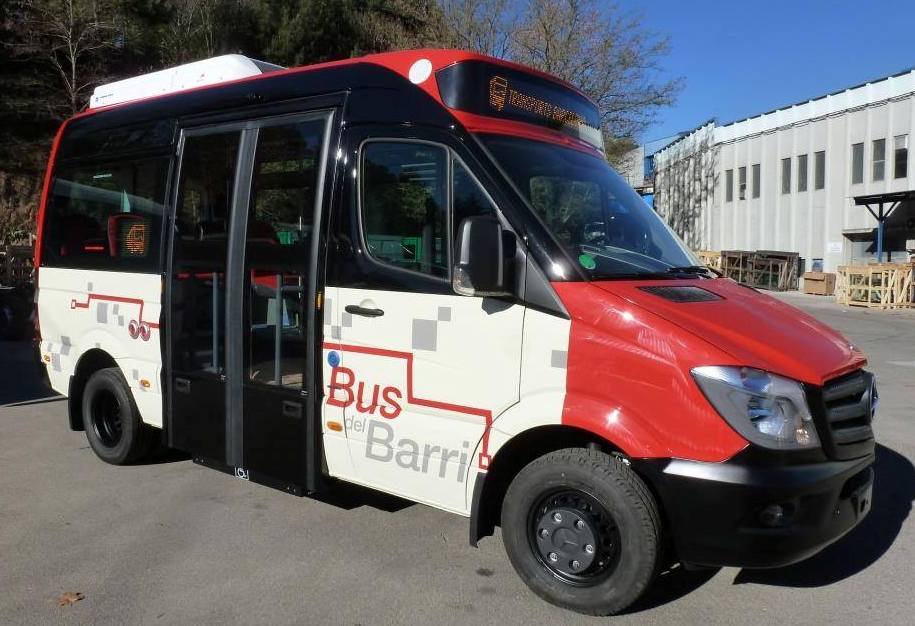
As a biker, I've had human drivers intentionally try to drive me off the road or hit me. Neither driver education nor higher test standards will solve that problem.
I imagine these same people are the type of people who would throw something out the window of an AV too.
Why do you say that?
I've had cyclists totally disregard any rules of the road + road signs and almost cause accidents.
Ah, in that case, you would certainly be excused for trying to kill one or two of them.
Just don’t forget to get your wax touched up afterwards, spandex scuffs your hood a surprising amount!
He didn't say that, and you shouldn't put words in his mouth like that.
Come on now, I don’t think it was meant as a justification of that inexcusable driver’s behaviour.
I don’t think they enjoy sharing the road with you any more than you do with them. Maybe we could encourage our elected representatives to install more bike friendly infrastructure like bike trails and bikeways
Oh wow! Sounds dangerous.
Do more cyclists kill drivers, or do more drivers kill cyclists?
Fewer than drivers, given that drivers tend to ignore the rules of the road more per a Danish government study:
* https://archive.is/https://www.forbes.com/sites/carltonreid/...
And perhaps more drivers should take up some cycling as it would make them better drivers (per a UK insurance company)
* https://archive.is/https://www.forbes.com/sites/carltonreid/...
Or using motorcycles or scooters: 2013 and 2015 UK insurance reports found riders better motorists than drivers, as did a 2014 UK police chiefs survey.
According to the data, not very many.
And motorists definitely don't do any of those things.
Far out, dude! Have I got a story for you! This one time, I saw tons of high-speed metal on wheels recklessly do that, too!
Most people don't know the traffic laws both of your stats are way to low.
> rideshare drivers are involved in fewer serious accidents than the average person.
Do you have evidence of this? It's certainly true for some kinds of professional drivers (i.e. truck and bus drivers) but I can't find any kind of crashes/100m mile numbers for rideshare drivers.
Anecdotally as both a rider and road user I find rideshare drivers to be some of the worst. Aggressive, distracted, impatient, and overconfident. I would be very surprised to find out they are above average drivers.
Per mile driven I expect it's true, just given their greater experience than most drivers. Not that I disagree with you that many Uber drivers are not actually great at driving, but neither is the average driver in North America. I expect we just notice rideshare drivers' mistakes more, and get exposed to them at a greater rate.
There's probably some sort of bias here when you observe someone else driving - it's like that joke - if someone drives slower than you - just curl up and die already boomer, and if they are driving faster than you - what an absolute psychopath.
That observed fatality rate, 2, is too low to give a precise estimate of the mean. If we assume fatalities follow a Poisson process, then it's plausible (at 5% significance level) that the true expectation is only 0.36 deaths, not 2.
So it's more useful to look at serious injury statistics as a proxy. For those, Waymo says that there is a significant reduction.
In my circle, everyone who's tried Waymo never wants to use Uber/Lyft with a human driver again. And, many of them wish they could own one or at least use one for much longer drives (100s of miles).
I would visit my mom (2hrs by car) more often if that 2hrs (each way) wasn't so stressful and exhausting and I could just be chauffeured by a self driving car while I browse the net, play a game, watch a movie, or talk to friends.
In the Netherlands were I live we use trains for this
Yeah, most places other than the US do. Good public transit is a far, far better solution than better cars. Elsewhere in the thread people are talking about ways of convincing drunk people to get their cars to drive them, and don't seem to realize the fact that people drive to go drink is terrifying! At this point it's deeply set in US "common sense" (to the point where in many places, bars have mandatory parking minimums!) and will take a lot of work to unwind. Fortunately there's progress, like in NYC and Seattle.
The US is ~263x larger than the Netherlands landmass wise. It would require a loooot more trains than we have or you have.
You put the trains where the people are, not in the middle of vast unpopulated stretches. Comparing land area is misleading and unhelpful.
Buddy buy a Tesla, as that’s definitely gonna happen in the medium term.
Not only that, it's going to happen every year. Most achievements only happen once.
AFAIK there isn't data about fatality rate for rideshare services (I'm sure Uber has this data but I don't think they make it public). Without this data I wouldn't automatically jump to the conclusion that rideshare services are safer than the average driver, anecdotally at least I don't see any reason to assume this.
It's also extremely important to normalize this data per geo and driving type (urban vs freeway miles), which Waymo does do and you seem to ignore.
> It's also extremely important to normalize this data per geo and driving type (urban vs freeway miles)
Getting to be well beyond the range of “armchair HN statistician”.
Sounds like something the government should do as part of public policy deliberations.
In my dreams.
> Waymo says it has 170 million miles and I found 2 fatal accidents it was involved in (fault doesn't matter as fault is not included in the other stat either)
fault absolutely matters. and with two fatal accidents, it should be trivial to find out if waymo is at fault.
it is bad faith, otherwise.
Fault matters in general, but it's not captured in the stats so you can't make an accurate comparison.
Insurance underwriters may make societal buy-in easier when rates are vastly different but that may take quite a while to hit critical mass so both drivers are self driven
> It's not enough to have data, you also have to have societal buy-in.
You already have it, people want this.
> Waymo says it has 170 million miles and I found 2 fatal accidents it was involved in (fault doesn't matter as fault is not included in the other stat either). Looks like the average is about 1.3 fatalities per 100 million miles, and about 1 per 100 million miles for CDLs. This doesn't seem that impressive.
And what do those numbers look up as the saturation of self driving cars increases?
> And what do those numbers look up as the saturation of self driving cars increases?
Keep in mind the lesson of seat belts. Which is that the highest-risk drivers are also the least likely to wear a seatbelt.
Selective recruitment is a danger in this armchair analysis, too. I don’t think 18 year olds aren’t giving up the thrill of tearing down side streets at 60mph to use a self-driving car - they probably can’t even afford one. To be honest, I am just guessing at the profile of the biggest offenders but insurance rates seem to back me up.
A horrifying number of people flagrantly use their phones while driving. Im not talking about peaking at a text or google maps, but straight up scrolling tik tok while driving. At the end of the day there is going to be a lowest common denominator of selfish morons on the road, and the two practical solutions I see are 1) aggressive surveillance state grade distracted driving enforcement 2) self driving cars.
I used to bike to work in Chicago and it was surreal being able to look right into someone's car and see hardly anyone is paying attention.
I'll also never forget the first time getting hit by a car (car did left turn when I was biking straight through a green light) and right before impact seeing the driver's face illuminated by their phone while looking straight down driving into me.
It doesn't have to be a surveillance state for enforcement. Just preventing repeat offenders would practically remove that lowest denominator. For example, I knew a guy in high school who totaled 4 cars and had other minor accidents in 2 years. There's no reason for that person to be allowed to operate a vehicle. On the prevention side, we could require more training.
If you tried to enforce self driving cars, you'd still need some level of surveillance too.
> There's no reason for that person to be allowed to operate a vehicle
Doesn't much of america outside of cities also have the secondary problem of you physically cannot feed yourself, get to appointments, or do anything without operating a vehicle?
At some point the cost has to be high enough to get the attention of the offender.
I hope you wouldn’t be saying this if they had killed someone in one of their crashes. How about injured? They must have. Get some standards instead of saying everything is ok.
> Just preventing repeat offenders would practically remove that lowest denominator.
That requires enforcement which no longer exists in many cities.
>For example, I knew a guy in high school who totaled 4 cars and had other minor accidents in 2 years.
Wait, he did all that in high school?
I heard something about "20% of drivers are responsible for most of the insurance claims" but it sounds like that one guy is jacking up the averages!
I play the "who is staring at their phone" game as passenger sometimes. From my sampling, the number is pretty damn close to 100%.
Good point. Waymo is not comparing apples to apples here
"At-fault" Waymo crashes on 35mph city roads driven only in good weather vs. all crashes regardless of fault for on all roads including highways driven in all weather conditions
(Ex-Waymo) Waymo tries really hard to compare apples to apple miles, considering a number of dimensions (weather, speed limits of the roads the miles are on, the specific cities, and more). This is one of the things that they feel distinguishes them in the space.
The data on https://waymo.com/safety/ reflects these apples to apples comparison.
They’ve also, when possible, done comparisons of the Waymo driver to an ideally attentive human driver. https://waymo.com/blog/2022/09/benchmarking-av-safety/
The biggest challenge is in sourcing the data. A lot of these datasets don't exist or have to be developed.
(The article itself, mixes and matches stats which is a common thing in general media).
Do human drivers in the same "good weather" cities have fewer accidents than human in other places?
National Safety Council says passenger vehicles are 0.46 per 100M miles, trains are 0.01 and busses 0.009.
https://injuryfacts.nsc.org/home-and-community/safety-topics...
These are great points. I would add that part of societal buy-in might involve driving the cost of hiring cars down by automating them, though I realize at the moment Waymo can charge a premium because people prefer to not have a human driver. Over the long term autocars should be cheaper than either Uber or owning a car yourself.
I was talking more about mandating or encouraging the tech in personal vehicles. I think there's plenty of buy-in for driverless taxis already. It's a perception thing - trust a stranger or trust an automated system. I think it's a much tougher sell to put it in person vehicles, especially due to cost.
> Better driver education and higher test standards would save lives too. So would banning alcohol. None of these solutions, including automated cars, will be mandated any time soon. It's not enough to have data
You can't subsidise "better driver education" (to a meaningful sense, to my knowledge) or "banning alcohol." You literally can't do the latter. We tried, and I'll torch a supporter's house for fun with some high-proof something or other for fun if someone tries it again in 2026.
You can use direct poicy action to save lives through AVs.
So at the end of the day, we're deflecting from harm reduction to preserve a parochial mode of transport or not.
I took banning alcohol to mean lowering driving BAC to 0%, not banning alcohol society-wide.
It would be a lot easier for drivers to have the following thought process: "I drank tonight, I can't drive home" rather than "I drank two beers over the period of 3 hours, am I good? Yeah, probably, let's gooo."
> I'll torch a supporter's house for fun with some high-proof something or other for fun if someone tries it again in 2026.
If you react that strongly and violently to the idea of alcohol being banned, you might want to look into your relationship with alcohol.
Does n=2 give any statistical significance? Or does that come from the miles?
With the miles you can establish a confidence interval of the true fatality rate.
Aside from the fact that I don’t see how you can calculate a rate off two data points (without really wide error bars), I also don’t understand how fault doesn’t matter. If neither of these were Waymo’s fault, then Waymo has never caused a fatal accident, whereas we can assume that nearly all of the fatal accidents that make up the rate you’re comparing it with were caused by a human, right? Well, at least the ones that were someone’s fault as opposed to random chance or something.
The form of the data pretty much forces this kind of analysis because fault is not reliably recorded (or even known, to be fair).
>you also have to have societal buy-in.
Isn't this, as all deadly decisions are, driven (pun intended) by your death rates? As more non-believers of autonomous cars are killed, the momentum of societal buy-in accelerates.
If fatality rates were higher, then maybe. But at 1.3 per 100 million miles, it seems like that would have low effect.
> The numbers wouldn't look as impressive because rideshare drivers are involved in fewer serious accidents than the average person.
Citation definitely needed.
The last couple of human rideshare drivers I have had were AWFUL. One was so awful that I gave them a one star with "Actively dangerous remove from road, please." I never give one star reviews.