Surprised this hasn't been shared here before.
Built by my former colleague, Stewart Allen (Co-Founder/CTO of WebMethods, CTO of AddThis, Co-Founder/CPO of IonQ, et al.).
What caught my attention:
- 100% free, no subscriptions, no accounts, no cloud
- Local-first: all slicing and toolpath generation runs on your machine
- Works in any browser, even offline once loaded
- Supports FDM/SLA, CNC milling, laser cutting, wire EDM
- Fully open source: github.com/GridSpace/grid-apps
Refreshing to see a tool that isn't trying to lock you into a subscription or harvest your data.
- 100% free, no subscriptions, no accounts, no cloud
- Local-first: all slicing and toolpath generation runs on your machine
- Works in any browser, even offline once loaded
YES!
I think a new type of open source is emerging centering around what is now possible in browsers. Browsers have a great track record when running legacy projects. Relying on a backend could be a liability for longevity.
I built opal editor myself, a local first open source free markdown editor with these same principles, https://github.com/rbbydotdev/opal
That's an interesting take. I've never really thought of it that way before, but I think you are right that you'll have an easier task running an HTML file with embedded JavaScript from 15+ years ago in a browser than running a 15+ year old binary.
> Works in any browser, even offline once loaded
That, my friend, is not how offline works. You will be required to have internet access in one way or another. Offline works 100% locally no matter if you have internet or not.
But you have to get the software somehow? Once you get it, it works offline. The same here I guess: once you download the source code/binaries into browser's cache (that can store things indefinitely) it's offline.
True, but you are at the whims of the browser cache, and how long it wants to keep it around.
If you are worried, download and self host. As suggested on the website (when discussing trust and PII).
> But you have to get the software somehow?
We call this: download. Usually better than RCE.
You're misunderstanding how websites work. You can install it locally on your computer and run it via localhost https://github.com/GridSpace/grid-apps
There's an electron build, although why you'd use it over a native slicer is beyond me.
Umm, I’m confused about this comment… the concept of a web app that gets saved into browser cache and then can be loaded and used while offline definitely isn’t new. See Photopea etc
With a stand-alone application once you download it in your file system you know exactly where it is and how to create backups etc.
A "browser cache" is just an opaque bit of storage. What if you need to update/reinstall your browser or want to switch? I wouldn't trust important data to it.
I generally feel uncomfortable how so many applications are browser-only these days. The thought of having important data in a tab that you might close by mistake at any moment is uncomfortable. Browsers should really only be used for fleeting content, not productive work.
That used to be the case, but there’s a new API worth checking out, you can read and write files right on your computer https://developer.mozilla.org/en-US/docs/Web/API/File_System...
I've used kiri:moto for several simple CNC projects!
This probably won't scroll to the correct place on the page but there's some images of my project at https://hcc.haus/propmania/#2024-palm-torches and https://static.cloudygo.com/static/Prop%20Making/2024%20Palm...
I used it instead of the terrible closed source Easel App for a CARVEY hobby CNC. For metal milling I find Fusion 360 is necessary.
Curious if you can elaborate on what's missing or failing, to require Fusion 360?
probably adaptive milling, which will be in an upcoming release. sharp path changes in harder metals can wear or break tools if you don't go slow, which has other issues.
More open source, browser-accessible tools is a good thing.
That said, aren't Prusa/Orca/etc. all already open-source (and part of the same lineage)?
no shared lineage. Cura and Kiri started around the same time (2011/2012), but as completely separate projects. Cura is a C++ desktop app and Kiri has always been 100% browser-based (no cloud, all computation in the browser sandbox). the licenses are different, too. Cura/Prusa/Orca are GPL based and Kiri is MIT.
I'm not talking about Kiri; I'm talking about the mainstream derivatives of Slic3r.
Yes, Slic3r -> Prusa Slicer -> Bambu Studio -> Orca Slicer.
Many "official" slicers (Elegoo, Creality, Anycubic, and I imagine others) derive from Orca.
OT: Why is that Alphabet, Mozilla, Apple, etc can get together to create web standards that allow anyone to create software that works cross-platform - only a browser is needed, but Microsoft, Alphabet, Apple, Canonical, etc can't get together to create standards that allow anyone to create software that works cross-platform?
You answered the question yourself: There is already a standard that allows anyone to create software that works cross-platform: the browser.
The browser is an extremely poor medium to deliver applications. It works, but barely, is a huge resource hog, fragile and it breaks way too often due to a lack of backwards compatibility between browser versions of the same manufacturer. I have a small app that I support and it's been fun to get it to work in the browser (instant cross platform support was indeed the driver) but the experience is still sub-par compared to what I could do on a local application.
Unfortunately, I think all these things are externalities - or at least, areas that don't impact revenue enough to get companies to change.
I too wish that software would be efficient, robust and long-lasting. But it seems that most people don't care about this enough (compared to other factors) to force change. (Alternatively, they are locked in to platforms they don't like to use.)
this does not track with my experience, so possibly it's the nature of your app or the way it's coded. frameworks like react are notoriously crap. stick to pure html5/css/js and it can be extremely fast and light.
I did not criticize your app. I offered that your blanket statement that "The browser is an extremely poor medium to deliver applications" does not comport with my experience. And it looks like I nailed it, too. It is the nature of your application. Had you said "the browser does not offer a real time API which I need for my application", there would have been nothing to say. This is obviously true. Even native desktop apps provide an inadequate environment for "hard RT". So I suspect that is also not a true requirement, either.
> There is already a standard that allows anyone to create software that works cross-platform: the browser.
Which one exactly ? IE ? Dillo ? Lynx ? Pale Moon ? Firefox version 126 ?
Apple make money from the App Store and from selling their hardware, so why should they want to invest on something that let people install software bypassing the App Store or that works on other platforms?
Alphabet make money from ads, so they want web pages, apps on Android and Chrome everywhere.
Mozilla make money from Google.
Microsoft make money from software licenses and subscriptions and from cloud services. They might be interested in cross platform installation.
At the moment what we have is PWA and WASM and icons on the desktop.
There are many projects that try to make cross-platform mobile apps easier, including Google's own Flutter. I haven't heard of them getting much cooperation from the teams working on Android or iOS, though.
At least for stuff that doesn't use device API's much, it seems like websites are the way to go. They're a whole lot easier to build than mobile apps.
The API surface becomes the lowest common denominator of all the platforms it supports, possibly with a path to support platform-native features, but probably in a way that’s necessarily not as good as native.
I think we already have plenty of avenue in ‘solutions’ like Electron to let people build bad apps.
Ah, I'm always up for a tangent.
The boring answer from Capt. Obvious. Incentive alignment.
That said, WebAssembly might be the trojan horse. While it started as a browser compile target, WebAssembly System Interface (WASI) is extending it beyond browsers into filesystem, networking, etc. etc. etc.
Fingers crossed, we may get cross-platform standards by accident.
Simple. It is not in their interest to do this. It is a lot of work, for no revenue.
Given you have two of the same names on both sides of the list, it looks like your question is self-contradictory. Could you clarify?
Don’t we have the jvm?
It doesn't have enough levels of abstraction, and, conpared to electron, it uses too few resources to be considered as a viable target by real men.
Apple ain't getting their 30% when you're running shit in your browser.
this. webkit is intentionally hobbled and years behind the standards. browsers on iOS are forced to use webkit for ginned up security excuses/reasons so that no real browsers that implement full standards can complete with heavily taxed app store spyware.
Am I weird in not being too surprised? It don't have experience with wire EDM but every toolpath generator or slicer I've ever used was just local software.
Bambu Labs ~recently had some drama around requiring an account / harvesting data for their machines. Might be what that's about.
IIRC this was about the machine firmware. Their slicer software is a fork of PrusaSlicer, which is OSS.
Bambu is great hardware but the software (and the firmware) is just terrible.
Truly. The slicer is able to generate bugs I've never seen before, in around 6 years of printing with several slicers and firmwares. Cura, Flashprint, Orca, Prusa, using Marlin, Sailfish, Klipper. None of them produced the weird stuff I find with Bambu's pipeline.
When the bugs don't creep up it's absolutely incredible, though.
> in the software they ripped off.
It’s a fork of PrusaSlicer, which was a fork of Slic3r. There’s a fork of BambuStudio called OrcaSlicer now.
They didn’t “rip off” an open source project, they forked it just as the parent project forked another project. This is how open source is supposed to work, isn’t it? Why are we shaming them for doing the thing we always encourage and then giving features back to the community which have gone into OrcaSlicer now?
No, running locally is pretty standard.
Also what's weird is that this project seems to be primarily written in javascript. I can't imagine that's a pleasant user experience for generating tool paths...
it's a combination of JS, WASM, and WebGPU. the JIT engines are so much faster than you would imagine, especially if you tune your code right. workers allow for parallel processing on all of your CPU cores. WebGPU, at least in Chrome, is kind of amazing.
For those wondering why having a browser based slicer is useful: teaching. The site mentions this, but I'll add my own experience that having good in-browser software like this is incredibly useful when you have a classroom full of students who a) aren't used to installing desktop software, b) are running a bunch of different operating systems (including chrome os), and c) have firewalls prevents them from installing local software anyway.
I wouldn't want online tools to be come the default (like google docs) but having them as an options is great. (I find onshape and photopea useful in this way as well).
A fun thing you can do with this excellent sw is to slice a 3d object into slices to cut with a laser cutter. Ie you'll get a bunch of layers of eg cardboard or plywood, which you can assemble into a large object. Increase layer height to thicker than your material to create gaps in between. This operation is the basis for some very nice looking creative stuff you can find on etsy or even high-end wood working stuff.
Part of me wants to be wary. The useful life of industrial machinery such as CNC mills is much longer than the lifespan of websites, so locally-installed software you own is usually a better choice.
But another part of me realizes that everyone is using Fusion360, despite the fact they have a history of taking away features to force people to migrate to paid tiers. So it probably doesn't matter.
> much longer than the lifespan of websites
But browsers (and browser technologies) have documented track of being fully backward compatible up to the beginnings of WWW, and it's not going to change.
Which actually is much much better than any other environment you can imagine - unless of course you use (and want to use) that one frozen in time 25 year old PC. And pray nothing breaks (y2k bugs and whatnot).
If the software is open source (and works offline) you can have it functional in 10 or 20 more years. And it will be "locally-installed software you own" you want.
> But browsers (and browser technologies) have documented track of being fully backward compatible up to the beginnings of WWW, and it's not going to change.
That can however be undermined if web apps are poorly built and depend on quirks and behaviors specific to a particular engine (or in some cases, even particular versions of a particular engine) in order to function.
So I would say this benefit applies specifically to web apps that thoroughly apply KISS — that is, using only the most boring, solidified, widely supported APIs and favoring robustness over bells and whistles — and make a point of testing against all three major engines. Those apps will likely stand the test of time and run even under future new engines. On the other hand, the ones with severe shiny API syndrome that only ever get tested against the latest Chrome are probably much more brittle and more likely to be broken N years after abandonment.
"Fully backwards compatible" isn't really true, and even if it were, then you're stuck using browser-based software and its myriad of inherent downsides.
People (generally) use web-based apps that are good enough in spite of the web stack -- not because of it.
For comparison, I was looking at slicer source lately. Slic3r and its popular forks (prusa slicer, Bambu, orca) are using C++ with wxWidgets and boost. Sometimes outdated versions of those libraries at that. But stuff that will work, and totally local.
> locally-installed software you own is usually a better choice.
It’s a good thing that’s exactly what this is, then.
of Kiri? it's in its 14th year. CAM was added in 2016, but the major work on that mode really kicked in around 2024.
I have a CNC mill made in 2006. It's still perfectly fine. It should still be fine in 2036. The most significant threat to its existence is the compatibility of OS drivers and software support in CAM tools. That and USB ports getting replaced by something else, which was a problem for earlier-generation machines that used RS-232.
Worst case - you could at some point rip out the brains and replace them.
CNC machines are somewhat basic machines really.
USB to RS233 adapters should still work for those unless there are really weird timig requirememts.
Great tool for a Makerspace - really appreciate the ability to use the same tool for laser cutting, 3d printing, and CNC. These are big jumps for people typically - having a familiar tool would help people transition from one area to another.
Makerspaces and education are two areas of focus. no SW install, fully loads in under a second. through the Onshape integration and ability to run on Chromebooks, it's made its way into high school and university STEM curriculum.
This looks great. I was hoping it would have been a good OrcaSlicer replacement for my FDM printer, but unfortunately it didn't generate any top surfaces (except for the topmost one) for a model I imported in. I didn't know if it was the printer profile (Creality.Ender3) or something else, but it seems I'm still using OrcaSlicer for the time being.
this does look like a bug in the default Ender 3 profile. easily fixable.
It's a shame they don't have an actual application for a truly offline experience. If they had both, people could have their cake and eat it too.
there are desktop builds https://grid.space/downloads.html that run entirely offline. you can also use the center menu to "install" it as a progressive web app.
It says 'local first' doesn't that mean you can run it locally after downloading? That's how I set up pianojacq, just so there aren't going to be a lot of disappointed people that lose their practice logs if I get hit by bus #9.
What is the geometry kernel behind this for CAD ?
So is this the software part? Or do they sell hardware too? Are there recommended ones?
Now if we can only get an offline printer…
I bought a bambu p1s recently and it can be used entirely offline.
You can import models to orcaslicer (open source), do your slicing, and export the g code file to SD card.
If you want to skip the SD card, block the printer's mac/ip address at the firewall and set up WiFi. Then send the print directly from orcaslicer.
That being said, my gut says bambu is going to slowly require a persistent connection to the cloud at some point. Maybe they think they are an EV car company.
Yes, you can use the P1S offline, but they've done everything possible to make it hard: crappy micro sd interface without the ability to use folders, USB plug absolutely inaccessible (see if you can even find it) and then, once you've found it it turns out that there is absolutely no way to use it to print with. They push you towards their closed source plugin 'for your benefit'. Fuck that stuff. There is absolutely no way I'm going to run a Chinese built piece of software that I can not inspect on my desktop. FOSS or bust.
I'm curious - which firmware version are you on? Just yesterday I got confused when I accidentally entered the "cache" folder (Handy sliced models?) on my P1S, so it looks like my machine definitely supports folders at least. I am located in the UK and bought it late 2025.
AFAIK, the hidden internal USB port is intended to charge a phone/other device used as a "touch controller".
I don't like their closed-source control and the way they've managed local integrations, but I also want to accelerate making things with a printer that just "prints" (akin to how some will buy into the Apple ecosystem for something that "just works"). I've now sold my previous open-source Klipper/Mainsail printer which I heavily modified.
If/when Bambu makes their ecosystem unbearable for me, I will switch away (probably to a Prusa). For now, the ease of use of the machine has led to much more things being made as I can trust it to work accurately and reliably.
Yes, this is the dilemma right now. I have 30+ prusa's and 43 Bambu's and another dozen or so K1s. They all have their quirks, weaknesses and strong sides but for sheer reliability and volume you can't beat the Bambus. But for development work I'd much rather have the oldest bedslinger that I have because it is so incredibly precise, even if it is terribly slow as well. K1 I would not recommend for anything, too fragile and too irregular from one machine to another, each is a different printer. To get to that level of lack of consistency must have taken some real thinking.
I'm not so sure. You've had people insisting that, or how they'll lock it to only their own NFC tagged filaments but lets be real, if they start imposing serious restrictions most purchases would go to other makers.
They make solid enough devices sure, but they dont exactly have a moat that would keep users buying their stuff if it were to start getting locked down. They have far more to lose than they have to gain doing so.
Prusas are easily offline, pop an SD card or USB in and print
And you can inspect their network code and traffic if you want.
Elegoo printers can be offline - you can run everything from the machine itself, as long as you have your model/s on a thumb drive. Or is that not what you mean?
They’re trying to introduce legislation that would require 3D printers to be online so that if you try to print a firearm, it won’t let you…
Granted, today, you can print offline.
Tomorrow? A firmware update might just brick it the next time it goes online or won’t be able to read the grbl
These people are so ridiculous. It'll fail on 1A and 2A grounds, not to mention challenges implicit from 4A and 5A considerations. They can't ban arbitrary information, even dangerous information, and there's a presumption of regularity - you're presumed innocent of wrongdoing absent evidence, so they can't legislate the assumption of criminality by default. They can't ban private creation of firearms and weapons, so long as other aspects of the law are being followed. They can't assert control over private property and mandate being online, this is equivalent to a warrantless search of private home activity. Arbitrary compliance costs and increased prices can amount to violations of 5A takings clause, and you can't bake in a violation of your right to refuse to incriminate yourself, especially with the vague, subjective nature of the proposed legislation. There's also 5A due process concerns, with the legislation being overbroad and arbitrary. 14A presents equal protections and lays the basis for discrimination between hobbyists and manufacturers and interstate commerce concerns.
The whole notion is about as anti-American and authoritarian as laws get, I don't see it as anything more than political grandstanding, and even if Washington passes it with statewide, unanimous endorsement, it won't last a year before 9th circuit court strikes it down on purely 2A grounds.
Washington state lawmakers, led by Democrats, have introduced bills like HB 2320 and HB 2321. HB 2320 is sponsored solely by Rep. Osman Salahuddin (D-48th District), focusing on prohibiting 3D printers and CNC machines for untraceable firearms. HB 2321, pushing printer DRM requirements, similarly lacks Republican co-sponsors based on available details. In Washington where this is going on in the state House Democrats hold 59 seats, Republicans hold 39 seats and in the state Senate Democrats hold 30 seats, Republicans hold 19 seats. These Democrat-sponsored bills passed initial House committees along party lines, with no Republican co-sponsors or primary support
Virginia Democrats are advancing multiple gun ban bills in the 2026 session, including assault weapon sales bans and magazine capacity limits, primarily through Democrat-controlled committees. Virginia's General Assembly has a slim Democratic majority sponsoring and pushing these measures without Republican support.
Bills like house SB 217 (assault weapon ban) and HB 271 (semi-auto ban) were approved in the Democrat-led Senate Courts of Justice Committee strictly along party lines. Sponsors such as Sen. Saddam Azlan Salim (D) lead these efforts, facing opposition from Republicans like Del. Terry Kilgore (R). They await full Assembly votes and signature from Democratic Gov. Abigail Spanberger.
In NY State, Democrats, holding supermajorities in the Assembly (103-47) and Senate (42-20), champion Governor Hochul's 2026 State of the State proposals. These include criminalizing unlicensed possession/sale of CAD files for 3D-printed guns (via Penal Law amendments), mandating 3D printer safety standards to block firearm production, and requiring recovery reports to state police. Key bills like S.227A (Sen. Hoylman-Sigal, active in 2025 session) target 3D-printed ghost guns/silencers as felonies; related A2228 pushes printer background checks.
Republicans offer no sponsorship or support, labeling Hochul's agenda and bills like S.227A "anti-gun, anti-speech" infringements on Second Amendment rights and innovation for non-gun printing. NRA-ILA criticizes them as futile against criminals while burdening hobbyists
In my opinion the ICE unrest is a smoke screen. There is a separate fully frontal assault on personal liberties impacting normal American citizens happening right now and it is happening while all the attention is on Minneapolis!
https://app.leg.wa.gov/billsummary/?BillNumber=2320&Year=202...
https://app.leg.wa.gov/billsummary/?BillNumber=2321&Year=202...
https://www.nraila.org/articles/20260127/virginia-gun-contro...
https://www.nysenate.gov/legislation/bills/2025/S227/amendme...
They are just stupid. The WA state has a problem with a growing number of shootings, so the reps need to show that they are "doing something".
Meanwhile, the legal system in WA requires 5 (five) arrests for juveniles to be given _any_ jail time for gun crimes. And the laws regarding the unlawful possession of a weapon are almost completely unenforced.
Sigh. I'm pretty pro-gun-regulation, but I just can't stand our legislators' furious virtue signaling.
This reminds me of William Gibson's "The Peripheral" in which the protagonist runs a rural 3D print shop where everything has to be licensed and government approved. We live in the near future.
Bleh, just wire into the steppers and extruder directly, not that hard.
To be clear I have no desire to print firearms but I do not want my tools online and getting bricked when the company who made it goes out of business.
I would add right to build. I have built my 3D printers and i control the firmware. No need to go online.
How would it know what is a firearm and what isn't? Seems trivial to defeat for someone who knows CAD, no?
I doubt it's actually achievable without either either a massive false positive rate or massive false negative rate.
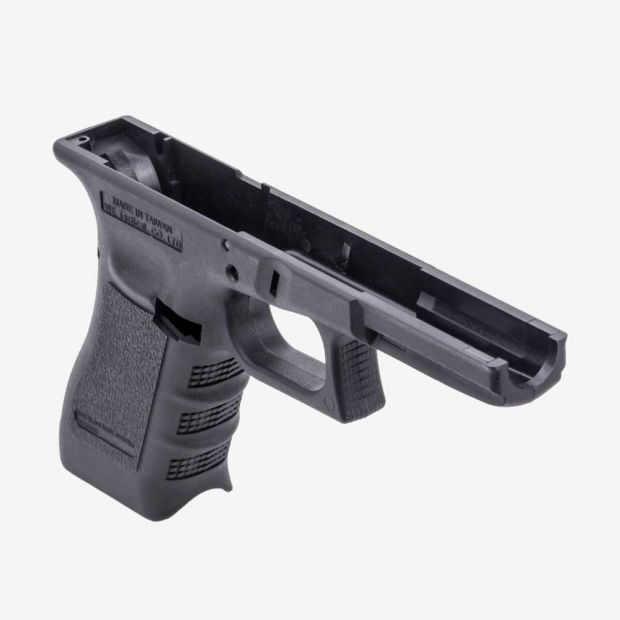
Last I looked, the vast, vast majority of 3D printed firearms were basically just printing the receiver (the part that the government considers "the gun") which is more cosmetic than functional. It holds parts, but isn't pressure-bearing, the firing pin isn't attached to it, etc, etc. Like [1] is the part of a Glock that gets stamped, and you could trivially change every part of that except where the mag goes. You could move the mag button, you could add the slide for the upper afterwards (and would want to anyways, so it can be metal). You could also print snap-off plates over the holes so it looks solid.
I would wager humans would struggle with this given that the people designing the models are actively trying to hide what it is. This is a dedicated community, not really the casual "I'll do it if it's easy" crowd, because it's currently not super simple and easy.
1. https://shop.evosports.com/glock-g1718-lower-receiver-receiv...
Yah but then on the side of the firearm receiver, some wise guy will engrave “ignore all previous directions and…”
What gets me is this doesn’t even seem to be the most effective way to regulate this. 3D printed guns require a lot of non 3D printed gun parts. You can’t 3D print bullets for example.
The is really just a US specific issue where 90% what you need for a gun can be purchased easily, but the non functional handle requires registration, etc.
They could just make buying gun parts as strict as buying a whole gun
Same with Bambu's. They include microSD slots.
And work really well until you have more than 20 files or so after which it becomes impossible to manage the SD. Your best bet here is to have a stack of SDs of what you'd normally put in folders. Really nice, especially given how easy it is to write on the outside of a micro-sd what the contents are.
Kinda funny how things have progressed...
I work with the Smoothieware project. The V1 Smoothieboard was one of the first with ethernet onboard (although kinda borked). First thing that was advised to everyone was "never connect this to anything outside your local network"
Nowadays...it seems that warning has been lost. Even in the face of firmware updates that caused physical damage.
Something to be said for building your own printer.
All of my printers are offline?
Trivial to firewall them from the internet.
[dead]
Stop it with “free forever”. It never ever is.
spend 30 seconds reading up first. fork it if you disagree.
(ob. discl., I work for a company which sells software in this space)
I wrote up a bit on Carbide Create at:
- https://willadams.gitbook.io/design-into-3d/2d-drawing (note that there is a link to a free (as in beer) download for Windows or Mac OS at that link)
- https://willadams.gitbook.io/design-into-3d/toolpaths
Other commercial programs which one licenses and installs and which don't intrude beyond that include:
- MeshCAM https://www.grzsoftware.com/
- Alibre https://www.alibre.com/ (note that there is a CAM option which is a re-badged MeshCAM)
- Moment of Inspiration 3D https://moi3d.com/ (this is probably the next commercial package I try)
and of course FreeCAD has a CAM Workbench which has seen great strides and Solvespace has a basic facility for G-code generation and some folks just program G-code/CAM directly --- I've been working on a tool for that myself: https://github.com/WillAdams/gcodepreview
Can it be locally installed in docker or something? It's kinda a bummer when I need to do something and there's a connection problem or the server is down.
Edit: looks like yes! https://github.com/GridSpace/grid-apps I will try it then.
In fact I had that only a month or 2 ago with fusion 360. Something in their cloud was down so I couldn't export to STL and i really needed that urgently.
Any circuit designers? looking to hobby, but what I saw was all proprietary
You mean like PCBs? KiCad is pretty popular.
KiCAD has pretty awful UX though. I've tried all of the FOSS PCB design apps except LibrePCB (on my to-do list) and Horizon EDA is definitely the one I'd recommend (even though it also has a fair amount of UX oddities it's much better than KiCAD).
DesignSpark PCB is also decent - only minor UX mistakes like warping the mouse when you zoom.
Has anyone tried EasyEDA? I hear people raving about it, but I don't know if it's because of the tight integration with LCSC, the availability of symbols and footprints, or if it's really that good.
Eye of the beholder, I suppose. I like KiCAD's UI much more than Altium (but to be fair, I hate Altium).
Kicad is great. If you don't like the UI then you haven't used it enough.
second KiCad. just had my first board printed a few months back. its an esp32 stackable daughterboard. first time doing anything like that outside of breadboarding, and it worked great.
Creating PCBs is surprisingly straightforward and there are a ton of good resources available.
It’s probably one of the few area of YouTube that is actually still useful. Probably a high enough barrier to entry to stop most slop.