Tyson foods and other meatpacking companies lobbied and funded RFK...
Here's industry reports
https://www.nationalbeefwire.com/doctors-group-applauds-comm...
https://www.wattagnet.com/business-markets/policy-legislatio...
And straight up lobbying groups
https://www.nationalchickencouncil.org/new-dietary-guideline...
https://www.meatinstitute.org/press/recommend-prioritizing-p...
Lobbying groups, putting out press releases, claiming victory...
Here's some things you won't find in any of the documents, including the PDFs at the bottom: community gardens, local food, farmers markets, grass fed, free range... Because agribusiness doesn't make money with those.
Just because you might like the results doesn't mean they aren't corrupt as hell
Of note: the US's per capita consumption of meat has increased by more than 100 pounds over the last century[1]. We now consume an immense amount of meat per person in this country. That increase is disproportionately in poultry, but we also consume more beef[2].
A demand for the average American to eat more meat would have to explain, as a baseline, why our already positive trend in meat consumption isn't yielding positive outcomes. There are potential explanations (you could argue increased processing offsets the purported benefits, for example), but those are left unstated by the website.
[1]: https://www.agweb.com/opinion/drivers-u-s-capita-meat-consum...
[2]: https://ers.usda.gov/data-products/chart-gallery/chart-detai...
> the US's per capita consumption of meat
That number seemed unreal to me, so I looked it up. I think it represents the total pre-processing weight, not the actual meat meat consumption. From Wikipedia:
> As an example of the difference, for 2002, when the FAO figure for US per capita meat consumption was 124.48 kg (274 lb 7 oz), the USDA estimate of US per capita loss-adjusted meat consumption was 62.6 kg (138 lb)
Processing, cutting into sellable pieces, drying, and spoilage/loss mean the amount of meat consumed is about half of that number.
Interestingly, ~12% of humans in the US are responsible for ~50% of beef consumption.
> The US is the biggest consumer of beef in the world, but, according to new research, it’s actually a small percentage of people who are doing most of the eating. A recent study shows that on any given day, just 12% of people in the US account for half of all beef consumed in the US.
> Men and people between the ages of 50 and 65 were more likely to be in what the researchers dubbed as “disproportionate beef eaters”, defined as those who, based on a recommended daily 2,200 calorie-diet, eat more than four ounces – the rough equivalent of more than one hamburger – daily. The study analyzed one-day dietary snapshots from over 10,000 US adults over a four-year period. White people were among those more likely to eat more beef, compared with other racial and ethnic groups like Black and Asian Americans. Older adults, college graduates, and those who looked up MyPlate, the US Department of Agriculture’s (USDA) online nutritional educational campaign, were far less likely to consume a disproportionate amount of beef.
High steaks society: who are the 12% of people consuming half of all beef in the US? - https://www.theguardian.com/environment/2023/oct/20/beef-usd... - October 20th, 2023
Demographic and Socioeconomic Correlates of Disproportionate Beef Consumption among US Adults in an Age of Global Warming - https://www.mdpi.com/2072-6643/15/17/3795 | https://doi.org/10.3390/nu15173795 - August 2023
(my observation of this is that we can sunset quite a bit of US beef production and still be fine from a food supply and security perspective, as consumption greatly exceeds healthy consumption limits in the aggregate)
> A recent study shows that on any given day, just 12% of people in the US account for half of all beef consumed in the US
By itself, this figure doesn't really mean much. On any given day, less than 1% of people have birthdays, but that doesn't mean there's a small percentage of people who are having most of the birthdays
The following paragraph is more valid, but the 12% figure still seems dubious.
Do you have a BBQ on 12% of days? Is this how it goes in America?
I'm sorry but is nobody reading TFA? It quite specifically is saying there's a population of disproportionate meat eaters, noting that they're older, they're whiter, and influenced by cultural traditions normalizing it.
It's not just saying it pops out of the data as a statistical curiosity, it's saying that there is a real subset of the population who are disproportionately eating more beef.
> Interestingly, ~12% of humans in the US are responsible for ~50% of beef consumption.
Go on...
> One limitation of this work is that it was based on 1-day diet recalls, so our results do not represent usual intake[0].
Ah.
[0]: Demographic and Socioeconomic Correlates of Disproportionate Beef Consumption among US Adults in an Age of Global Warming https://www.mdpi.com/2072-6643/15/17/3795
> A recent study shows that on any given day, just 12% of people in the US account for half of all beef consumed in the US.
This phrasing strongly suggests it’s not the same 12% every day. In which case… it’s probably not that noteworthy.
And from the study linked, that framing/suggestion would be incorrect (at least for the numbers given). "the 12% are not the same every day" is an accurate interpretation. They asked about what people ate _yesterday_...
The phrasing you’re looking for is that 12% of Americans consume an average of 50% of beef consumed every day.
By saying “on any given day” you are suggesting it’s a different 12%. The article does confuse this by identifying cohorts that eat more beef. But it’s a tautological label based on the survey data. They identify some correlates, like being a 50 something male. But there are males who are 50 something that don’t eat any beef. They’re not included in the 12%.
The 12% is just the outcome of the sample. It doesn’t mean they’re a consistent cohort.
Example:
* on any given day x million women give birth
* there are x million women who give birth every day
> is it normal, in the USA, for half of all people to only eat beef once every 8 days?
Thats not the implication of 12% of Americans eating 50% of beef by consumed by all Americans that day.
If I had to make up some numbers it’s probably that, on any random day, 12% of Americans ate 50% of the beef (a large burger), 28% of American ate the rest of the beef (bit of lunch meat), and 60% of Americans did not eat any beef.
> defined as those who, based on a recommended daily 2,200 calorie-diet, eat more than four ounces... daily.
This sounds like.. not very much. I eat 6-7oz of ground beef with breakfast alone, pretty much daily! Are people really eating less than ~1/2 cup of meat over all their meals combined?
> Are people really eating less than ~1/2 cup of meat over all their meals combined?
Your mind is going to be blown when you learn about vegetarians!
I'm in the US and was raised on a pretty standard diet. As a young adult, I stopped eating beef for environmental reasons. As an older adult (50s) I mostly stopped eating most meat for environmental and ethical reasons. I don't call myself a vegetarian and don't make a fuss when vegetarian options aren't available (eg, eating at a friend's house).
That is all to say: I haven't noticed any difference in my health either way, but that isn't why I (95%) stopped eating meat.
6oz of beef is only 44g of protein; a moderate gym load would require more for many adult men. Typical might be more like 75-100g. (Recommendations I’ve heard is 2g per 1 kg of muscle mass; roughly 40% of your weight at moderate fitness.)
I’m a large guy (190cm/100kg); I lose weight eating a pound of bacon for breakfast and a pound of chicken for dinner, if I’m even moderately exercising (3x cardio, 3x strength each week). Thirty minutes a day, split between strength and cardio is hardly “top athlete” and more “recommended amount”.
That’s not to say anybody is wrong, merely our experiences may be as varied as humans are — ie, we may legitimately have different needs.
There’s a substantial body of evidence that consuming the average American diet while also being mostly sedentary is terrible for you. I’m unclear how much of the data gathered about red meat specifically can be meaningfully decoupled from all the confounding factors, though.
A study of people who eat almost exclusively whole foods that do not include red meat vs people who eat almost exclusively whole foods that do include meaningful amounts of red meat would be really interesting.
When so much red meat is consumed as greasy burgers coupled with white bread buns and deep fried potatoes, I don’t know how to decouple the impact of the red meat from the rest of it. I fear the “red meat bad” stuff might be the inverse of the “oh, it’s clearly the wine” silliness for why French people are healthier.
I know or knew (and at a time was one) who would eat a hamburger for lunch every day, day-in, day-out.
If you expand from that, it could easily be daily.
4 oz (a quarter pound) is 100 g or an amount about the size of the palm of your hand -- a single serving. It's not a small portion, it's recommended standard portion.
If you were following the old food guide in use for the last 20 years -- the one that replaces the food pyramid -- you'd see that 100 g is about a quarter of your plate. The old food guide could be summed up as "a quarter of your plate should be protein, a quarter carbs, and half fruits and vegetables". Real simple, so simple anyone could understand it. Although I have been presented with evidence recently that there are some who can not.
I eat meat (beef, pork, poultry, and fish) maybe three or four meals a week, and probably about 6 to 8 oz per meal when I eat it. So on a per day basis, yeah, I probably eat about 3-4 ounces of meat per day.
But the source you were quoting was about beef alone. So these are people who eat more beef daily than I eat of any meat.
Sometimes I wonder how is it possible that cattle alone severely outweighs all livestock on the planet, and by a very huge margin (like 10 to 1), then I read about such dietary habits.
I eat meat too, but I don't eat it every day so if you average it over time it will likely be around those numbers.
Not a burger: ground beef and eggs scrambled, with potatoes and whatever fruit-of-the-week on the side. Yes it's a post-gym meal :)
ground beef can be more things than a burger.
every breakfast joint near me in California has some sort of variation on hamburg steak & eggs. Judging by the fact that it's on every menu, it must be popular to some degree.
A burger is close to a sausage McMuffin which I'm sure some percentage eat for brekky every day.
I haven't had any meat in about 20 years. But I also don't live in the US.
That's 4 ounces of beef, not meat. I eat plenty of meat, but eat beef less than once a week.
Wow! That's feels like a lot to me. I take 7 days to consume 450g (~1 US lb) of pork. I eat maybe 120g of beef in a month.
So you have effectively zero protein with breakfast, are you eating four chicken breasts for dinner or something? Or are you protein-deficient.. if so, it seems the guidance in OP is meant to correct people like you.
So the data is skewed by burgers georg who eats 3,000 Big Macs each day?
We are Paraguayans... Argentinians, and Brazilians... but mostly Paraguayans and Argentinas
https://idlewords.com/2006/04/argentina_on_two_steaks_a_day....
"just 12% of people in the US account for half of all beef consumed in the US."
what???? there is entire family that eat entire Cow that can feed the whole village, that is crazy
[flagged]
They were referencing the last paragraph of the OP, about being able to safely sunset a large portion of beef production.
Since this is a market economy, I assume equilibrium will eventually be reached. Lower supply raises prices, new entrants see an opportunity to make money raising cattle, prices start to come down.
[flagged]
Not sure why the downvotes, it's a coherent post, and certainly there is a perception that food, and particularly beef, is a partisan issue.
Of course Democrats haven't actually taken any steps to penalize beef farming or consumption. But that doesn't stop Republicans claiming they want to. And if beef consumption drops, well, we just get the (Republican) health dept to recommend it.
I would agree that comments like "sunset beef production" intrinsically sounds bad to those who eat beef. But farmers farm profit, so as long as people buy it, farmers will farm it. (And at least some proportion of land used for beef farming is unsuitable for anything else.)
Drying doesn't mean anything... The nutrients are still there you're only really losing water.
What evidence do you have that the loss adjusted numbers have gone down while the preprocessed numbers have gone up so dramatically?
> Drying doesn't mean anything... The nutrients are still there you're only really losing water.
The problem with the number is that people see it and imagine pounds of meat like they see at the grocery store, but it's measuring pounds of meat that go into the meat processing plant.
> What evidence do you have that the loss adjusted numbers have gone down while the preprocessed numbers have gone up so dramatically?
No, the two numbers show the ratio.
The "pounds of meat consumed per person" from the FAO is a pre-processed weight.
The pounds of meat consumed per person from the USDA is the end-user weight. It's about half of the FAO number.
Well if it’s based on weight, and one of the steps is to reduce the weight significantly…
Point being someone eating a couple bags of jerky over a workday would probably count as having eaten literal pounds of beef, despite consumed weight being much lower. Water is noncompressible and makes your stomach full very quickly.
> Point being someone eating a couple bags of jerky over a workday would probably count as having eaten literal pounds of beef
For the purposes of this conversation, about the nutritional effect of your diet, that seems like a fair way to put it.
I'm a weightlifter and as part of my training, I eat pretty close to about a pound of meat a day during bulk, usually about 12-14oz. This is because I need to eat about 200g of protein a day. I supplement it with protein shakes.
I find that to be a challenging amount of meat. It's a lot! And to find out that's average???
Americans eat way too much meat. Cheese, too.
The number quoted is the pre-processing weight. A lot of mass is lost during processing, drying, aging, in transport, to spoilage, and so on.
The real number for meat consumption at the end consumer is about half that amount.
The thing is though you’ll be eating (I presume) mostly lean meat. Chicken breast, white fish etc.
When you compare the macros of that to sausages or ribs or even steak it’s quite drastically different.
Also I’d guess you aren’t covering your meat in thick sugary sauce every time…
I am not a weightlifter, I am an amateur powerlifter, and I do pretty intense resistance training for my age (54yo) and my weight (112kg) and I eat about 800g to 1kg a day of meat - duck, pork or beef. Even if I eat 1kg Wagyu beef, it would give me about 3000 calories, slightly less than 3500 calories I need to keep my muscle mass. I would happily eat even more meat but circumstances prevents me to do so.
I used to drink protein shakes, but now I am actively against these. Artificial sweeteners provoke insulin release [1] [2] that leads to type-II diabetes.
[1] https://pubmed.ncbi.nlm.nih.gov/2887503/
[2] https://www.sciencedirect.com/science/article/abs/pii/S10568...
you can get protein powder that doesn't contain artificial sweeteners. You can get protein powder that doesn't contain any sweetener. You can even buy pure protein powder without any additives at all.
thanks for the dietary advice, b00ty4breakfast
I, okay? Next time don't make it sound like the reason you dislike protein shakes is sweeteners!
Why did you drink them before, if you appear to fundamentally object to the idea?
> Why should I, as a top predator, ...
I can't imagine anyone actually saying this with a straight face (also I am totally using this line for everything now). What a way to view oneself!
Dawg, you buy meat at the grocery store. you aren't an apex predator out here running down water buffaloes and dik-diks on the savannas of Africa with spear in-hand.
agree with the people that say you are moving the goal posts, but to answer this question anyway...
As someone who lifted for a good handful of years, there are a few reasons i used protein powder, it was a very affordable way to add 25-50g of protein and some random fruits or peanut butter or whatever(i'd usually blend up a shake).
It was also a good way as someone who struggles to eat a surplus, to hit my goals as it just went down way easier than an additional full meal.
It is ALSO easier to cut weight and maintain protein goals by utilizing simply water and protein powder.
when it came time for me to cut, im simply swapping milk for water, and removing the peanut butter, and suddenly that "meal" is ~400 calories less.
So the very simple answer? convenience/affordability.
> including other predators like bears
Bears are a terrible example to pick, as they aren't real “predators” in the first place. They are omnivorous, eating more fruits, roots and insects than meat, by far. Depending on their species and where they live they may eat fishes as well, but not that much meat at all.
And of course as omnivorous ourselves, we eat far less meat than actual predators like wolves and felines.
Actually humans are most similar to chimpanzees and bonobos, which eat meat but very little and mostly eat fruits, nuts and seeds.
You should acknowledge when you shift the goal posts.
One has to be very careful when drawing parallelisms from the animal kingdom.
Lions challenge the dominant male, and if they win, they kill all of their offspring and take all of their females.
Hopefully you are not doing that with every male you encounter that happens to be physically weaker than you.
> Lions can't eat ducks or chickens. We can and do.
As in they can't catch them? Or they can't survive on a diet of them? I'd be surprised if it was the latter.
You can get protein powder without flavoring. I drink that either pure or with a little bit of flavored protein mixed in (something like 3:1) because the flavored stuff is so sweet I can't drink it. Some brands I could literally do 3 parts flavorless, 1 part flavored and it would still taste too sweet.
The origin is not unknown.
It's convenient. I have no idea where the meat came from either.
Whey has the same origin as beef meat you know?
Your best evidence is a rat study and a narrative review?
Kinda makes zero cal sweeteners look good.
It is hard to experiment on humans. Here is an experiment on monkeys: https://pubmed.ncbi.nlm.nih.gov/39978336/
At least aspartame increases insulin secretion in them.
I guess it's a matter of perspective and what you're used to. Some indigenous North American peoples used to subsist largely on bison for at least part of the year and often consumed 5 pounds or more of meat and other animal products per day. Was that too much?
They also had an average lifespan of 40 years. Now obviously, high meat consumption isn't the cause of that, but we now know that eating large amounts of red meat leads to an overall reduced lifespan in societies where people make it to 70 on a regular basis.
> Was that too much
I challenge you to eat 5 pounds of animal products in a day, for three days.
I too try for 200g of protein/day, with meat and supplements by shakes. It’s difficult to eat more meat than that, because of how it fills you up, its prep requirements and its cost.
I don’t believe that the average American eats nearly a pound of meat per day. I do believe if the average American ate meat before carbs, we could get there, and all be a lot healthier, though.
For me, processed carbs make me much hungrier, but the kale salad I’m eating right now makes me less hungry.
200g a day? Are you a big guy? I did an experiment in my 20s on building muscle on a plant based diet, and managed to gain 10kg in one year (muscle mass, confirmed by a DEXA scan). Total weight gain was about 16kg. Most of the surplus was water.
I started at 70kg (181cm), so pretty skinny, and without prior resistance training. I ate between 120and 140g of protein per day, without any shakes.
I am aware that these gains would not have continued, but my body obviously had more than enough with 130g to build muscle. I did eat a calorie surplus, but
200g seems like A LOT.
> The latest in body building science recommends 1g of protein per day per 1lb of body mass (or 2.2g per 1kg for metric folks).
I wasn't that serious about the whole thing, but I read somewhere that the benefits decline rapidly after 1.6g/kg bodyweight. That was the reason I didn't do any shakes.
> How did you do that in a plant based diet
Beans and whole grains. I realized that fat intake was limiting my protein access so I cut fat down do between 10 and 20% of energy intake. That means you have to chew down a whole lot of bulgur and beans. I ate about 3000 calories (I do a lot of swimming) and then you only need about 18% of energy from protein to reach 140g. Easy peasy.
I also made my own firm tofu (i was cheap). I could easily eat 200g of tofu a day.
Definitely possible - I used to get 100g easily. Simple example would be some granola (with lots of nuts/seeds) with soya milk for breakfast, big tofu scramble for lunch, poki bowl with lots of veg, edamame and tempeh for dinner. You could probably just do this with big portions to get to 130 tbh.
I think this is person dependant. A Kale salad makes almost no impact on my hunger, but a piece of bread makes me feel pretty full.
Just as an example of an opposite experience.
(american, vegetarian for 13 years, athletic, former meat eater, long carb centric diet that i'm trying to change)
> I have made twice baked potatoes before and eaten an easy 2000 calories of them along side thanksgiving dinner.
Try plain boiled potatoes. I bet you feel like stopping long before 2000 Calories. Tasty things are tasty and often easy to eat an unhealthy amount of.
Right. My wife doesn't feel full unless she has protein. I don't feel full unless I have a bunch of carbs. It makes life interesting.
Maybe true! I eat a bunch (like the formal term of 1 unit) of kale in my daily salad. That seems to be enough, alongside some Greek yogurt and blueberries to maintain me for a few hours.
Can’t help eating junk carbs when I see them, though.
I cut out mammal products and replaced with plant protein like lentils and wild rice.
I can eat 200g of lentil noodles in a sitting.
fwiw at the level of protein i need to eat to build muscle mass (im weight training 3x a week), even that 27 vs 19 difference starts to become a problem.
people don't realize how challenging it is to eat 200g of protein a day, every day, for months, without eating like 3000cal lol
that said, i do eat a lot of plant based protein. i love chickpeas and i also fuck w tofu a lot.
https://www.youtube.com/watch?v=lzsEqV0Bjcs - that lecture refers a simple formulae to compute protein content from the amount of nitrogen. They count nitrogen in grams, then multiply by 6 to get amount of "available" protein. But, any antinutrients such as cyanides will count as proteins by this calculation.
Lentils contain trypsin inhibitors, which contain inordinate amount of nitrogen that is counted as protein.
While you do not eat these directly after cooking your lentils, you do not eat as much protein as you would think you do.
You would just eat more protein dense plant foods like tempeh, extra firm tofu, and seitan which is the most protein dense food.
If the only food in your pantry were seitan, you’d have to eat 260g (960cal) of it to hit 200g protein. It’s not that much food.
Most people haven’t tried it but asian stores may sell it next to tofu as “vegan chicken/beef”. It has a nice texture that you can cube and treat like chicken in a stir fry.
I eat it weekly.
> 800g of lentils for 200g of protein, 2500 cal.
> im just thinking out loud here, but lentils alone wouldn't be adequate for me.
This seems in line with maintenance calories for a moderately active man, am I missing something?
Tofu's ratio is really good, though? I can get 162kcal/18g of protein tofu here. Anything where P*10 > KCAL is a very good protein source, imo.
Depends on "adequate". The average western diet over-consumes protein.
Lentils are about 9% protein by weight; that's only 18g of protein.
(Beef is about 25-30% protein by weight. Whey protein isolates are about 80% protein by weight.)
> mammal products
Makes me think of the song:
I like that term. I assume that means you cut out beef, pork, mutton, goat, cheese, and milk but eat seafood and birds/eggs.
I may start that diet!
Depending on the type of training you're doing, you're likely eating lean meat too, like chicken breasts and fish. Most people are much less picky about the kind of meat they eat, opting for fatty cuts or meat products high in salt and saturated fats.
yes that's true
im probably more conscious about what i eat than the average person, just on virtue of watching macros lol
> And to find out that's average???
I think you’re conflating 200g of protein with 200g of meat that has protein.
They said “I eat pretty close to about a pound of meat a day during bulk, usually about 12-14oz”
A pound of meat is 450g of beef, which has about 110-140g of protein in it.
I'm not a weightlifter but I'm a carpenter. Meat is like a healing potion on my body. Makes the pain go away. And without meat, it doesn't.
Eggs work too.
A 16oz ribeye can easily be eaten in a single meal by most people who are large enough (90kg) to need 200g of protein per day.
That's an immense amount of cholesterol. You might consider replacing some or all of it with plant-based sources. (Many protein shakes are made with whey powder, which also contains cholesterol.)
Heart disease is a real risk. Don't ignore it. It's not something that only happens to other people.
Would be important to see how that number is being computed? If it is the amount of meat sold divided by number of people it may be misleading since there is a fair amount of wastage particularly in places like schools etc with kids filling plates that are never consumed.
Yeah, I was thinking the same thing. There is even more trimming that goes on as well. Chefs trim what's ordered, tallow may be rendered for non-consumptive reasons, and so on. Like a poster above, as an athlete I eat more meat than most people, and I don't seem to eat those numbers... I feel like we are missing some data points.
Cheese is probably there due to lobbying. I don’t understand why it would be that high.
Cheese _is_ delicious.
(But I doubt the cheese I find so delicious is that same as the cheese that's so prevalent in American diets...)
David Bars, while not even close to anything resembling a whole food, have made hitting macros so much easier. End up being cheaper than chicken, per gram of protein per calorie, sometimes too!
I'm not a weightlifter, and 1lb steak (pre-cook weight) is a normal amd very reasonable sized dinner for me. Weird to hear that called "challenging".
Bodybuilder? Powerlifter? Curious what specifically you mean that requires you to bulk vs. cut
well im not bodybuilding anymore, so i guess im just in a constant bulk/caloric parity. i still think like that tho lol
Have you considered not bothering to bulk or cut and instead just maintain? Maybe you are saying that but I can’t tell. I lift 5-6 days a week but neither bulk nor cut. Just eating/consuming whatever is necessary to maintain and/or hit goals when I feel like it.
TIL the amount of animal suffering that goes into each person trying to be swole.
The starting point for that data is 1909, when average life expectancy was under 50 years and child malnourishment was a major problem. The change since 1970 has been much quite modest: http://ers.usda.gov/data-products/charts-of-note/chart-detai...
Also, you need to adjust for demographics. In 1900, 35% of the population was under 15: https://demographicchartbook.com/index.php/chapter-5-age-and.... Today it’s only 19%. Children and babies obviously eat a lot less meat than adults, and they make up a much smaller share of the population today than back then.
There’s a restaurant in Las Vegas, the Heart Attack Grill, which sarcastically plays on this trope.
> It has become internationally famous for embracing and promoting an unhealthy diet of incredibly large hamburgers. Customers are referred to as "patients," orders as "prescriptions," and the waitresses as "nurses." All those who weigh over 350 pounds are invited to unlimited free food provided they weigh themselves on an electronic cattle scale affront a cheering restaurant crowd.
> The menu includes the Single Bypass Burger®, Double Bypass Burger®, Triple Bypass Burger®, Quadruple Bypass Burger®, Quintuple Bypass Burger™, Sextuple Bypass Burger™, Septuple Bypass Burger™, and the Octuple Bypass Burger™. These dishes range in weight from half a pound to four pounds of beef. Also on the menu are Flatliner Fries® (cooked in pure lard) and the Coronary Dog™, Lucky Strike no filter cigarettes, alcohol, Butterfat Milkshakes™, full sugar Coca-Cola, and candy cigarettes for the kids!
Real sugar Coca-Cola is delicious though, and while this may just be a personal anecdote, real sugar soda always makes me feel full and satiated, while I've been able to drink several cans of corn syrup soda in a sitting before, I can't imagine doing that with several cans of real sugar soda. The calories are pretty much the same!
Was very confused by this comment, until I looked it up. It seems, sweet beverages and candies in the U.S. are not sweetened with sucrose (table sugar) like in most places on earth. Instead, they use fructose (fruit sugar) syrup.
The more you know.
It's more complicated than that.
Many foods in the United States are sweetened with high fructose corn syrup (which is very cheap compared to cane sugar because growing corn is very cheap in the United States because of climate, infrastructure, and extensive government subsidies). In soft drinks, the syrup is roughly 55% fructose, 45% glucose.
Table sugar is usually sucrose, which is a compound sugar (disaccharide) comprised of one fructose and one glucose molecule. In many bottled soft drinks, the low pH of the beverage hydrolyzes the sucrose into its component sugars, resulting in a solution of 50% fructose and 50% glucose.
Chemically, we're comparing a 55/45 mixture of fructose and glucose to a 50/50 mixture of fructose and glucose. HFCS has become a bogeyman in American society, but evidence since the 1980s seems to show that, when it comes to soda, the excess fructose isn't nearly as bad as the whole "recreationally drinking 40g of instantly available sugar" part.
Mexican coke does taste different, but it may have more to do with the other flavorants and the bottling process than the source of the sugar.
Here's a fantastic video about this all: https://www.pbs.org/video/everyone-is-wrong-about-mexican-co...
Edit: I found a cool 2014 study that actually assayed the sugar content in various soda pop brands: https://www.sciencedirect.com/science/article/pii/S089990071...
Looks like some HFCS-sweetened soda pop has up to a 70/30 fructose/glucose ratio. It's also worth noting that corn syrup contains maltose and various polysaccharides not present in table sugar, but I think most of that is refined out in colas, since there only seems to be 1% maltose present in the colas analyzed by this paper.
No, they use "high fructose corn syrup", which is, just like table sugar, a mix of fructose and glucose (sucrose is 50% fructose and 50% glucose). The increase in the fructose fraction in HFCS over table sugar is single-digit percentage.
It's not "fructose" vs "sucrose", it's a difference between something that's 50% fructose and 50% glucose (table sugar) and something that is 42% fructose and 53% glucose (corn syrup).
The real sugar cocacola is sometimes called Mexican Coke in the USA to refer to the different sweetener being used.
A must visit, though I have no idea how anyone could possibly get past the single bypass...
If you can’t get past that burger, they celebrate when a real ambulance shows up to help haul you away!
Just looked it up on Google Maps. Have to say it's not exactly what I would expect from a restaurant... but makes sense in Vegas though.
It says 1.2-1.6 grams of protein and healthy fats per kilogram of body weight, from animal and plant sources (including milk). Is that really advocating for more meat?
The implication is that the current food pyramid disproportionately weights against proteins and fats. Assuming that Americans follow the current pyramid (this is a hell of an assumption), then any change to the pyramid that asks them to change their diets in favor of more protein and fat is likely to result in them eating more meat.
In reality, I don't think anybody in the US follows the food pyramid religiously. But I do think people (try to) follow the main strokes of what the government tells them is a healthy dietary balance, and so any recommendation to increase their fat/protein intake will result in more meat consumption even if the guidelines doesn't itself proscribe that as the only source.
The food pyramid was phased out in 2011: https://www.politifact.com/article/2025/nov/07/food-pyramid-...
True. But you can stop recommending bad science. The original food pyramid was an industry wish list.
> But I do think people (try to) follow the main strokes of what the government tells them is a healthy dietary balance...
Do you really observe that in your circles? I've lived in 6 different states, from Maryland to Idaho, and I've never got an impression that many people take any real though or consideration for their health at all. If anything, I'd armchair guestimate something like 10% of adults seem to put any real attention of effort into their health. I feel like late teens to late college year people put more effort in general, but only because they themselves are on the meat market and don't usually have complex lives (kids, careers)
I agree, and think particularly where there children are concerned at least some parents will try to follow official dietary guidelines to make sure their kids grow up healthy and with healthy habits.
Americans do not follow the food guidelines. It's an absurdly low percentage who do
As I see it, the point of this new pyramid is not to add more emphasis to meat specifically, but to undo some of the past vilification of fat (note the emphasis on whole milk and full fat dairy), and to move emphasis away from carbs as the basis of the diet. And honestly, I think that's pretty much correct - the low fat movement was a disaster for our collective health, because food manufacturers added more sugar to compensate for the bad effects on taste that that has, and because if you eat a good amount of full fat stuff, there's not nearly as much need to snack between meals.
If you go to Western Europe, they're not drinking lots of skim milk, and if you eat things from the bakeries, there's more butter and not as much low quality vegetable oil or sugar. When my French cousins come here, they find lots of the stuff sold here revoltingly sweet.
First, a grain of salt, I'm certainly not an expert, I've just read a bit about the subject.
You know how people like cold pressed extra virgin olive oil? Or avocado oil? Those are "high quality". Industrially refined/deodorized/hexane-extracted soybean, corn, non-high-oleic sunflower/safflower oil, canola tend to be considered to be on the opposite end of the spectrum.
Deodorizing causes the oil to oxidize, as does deep frying, and that makes a variety of nasty byproducts that seem likely to cause systemic inflammation. And from here on HN the other day, "Inflammation now predicts heart disease better than cholesterol" https://www.empirical.health/blog/inflammation-and-heart-hea...
People in this thread are scoffing at RFK saying that beef tallow fries are "healthy", and while I wouldn't go that far, there seems to be good evidence that it's much healthier to deep fry in beef tallow than the soybean oil most switched to in the 90s. Beef tallow is high in saturated fat, which tends to be relatively stable under heat, and very low in polyunsaturated fats, which tend to be the fats that oxidize the worst. Soybean oil, on the other hand, is extremely high in polyunsaturated fat (60% vs 2-4% for beef tallow). And the big problem with commercial deep frying is that the oil is frequently just topped off rather than replaced, so those oxidization byproducts build up over time. More stable fat is really important there.
I also don't know how relevant this is, but soybean frying oil tends to have silicone-based anti-foaming agents mixed in (polydimethylsiloxane is the one I've seen most commonly) - you can find this in the big jugs at Costco if you want to check it out. Silicone generally doesn't seem great to be swallowing - I think it's pretty inert, but it seems likely to me to have mechanical properties that your body's not quite used to dealing with effectively. This is just me being biased about eating something that's pretty obviously not food, though, I haven't seen much on the subject.
Hydrogenated oils are now well known to be bad (trans fats). So Crisco/creamed vegetable shortening, very low quality.
So yeah, there are higher and lower quality oils, especially once they've been degraded via high heat over a long period and oxygen exposure in commercial or industrial frying processes.
This can be an outrageous amount for a normal individual. These proportions are used for bodybuilders and powerlifters.
And even then this rule is not perfect because of individual genetics, metabolism rates, activity level, percentage of lean mass, etc.
Americans (US citizens) really do eat a lot. What the hell
These numbers are actually "disappearance" they include an immense amount of food waste as well so the average American is probably almost half a body builder and leaving food on their plate at a restaurant while more of it is going bad at home and in their grocery.
1.5g/kg for a 90kg person is 135g. You can get almost half that daily need from a chicken breast or a few ounces of fish. Two meals of that and a few non-meat things like rice and beans, lentils, peanut butter, etc and you're set, even towards the higher end of the recommended range. That's doesn't seem outrageous at all.
And here I am thinking that 50-100g of protein per day for an elderly person was way too low.
But here we have the problems with the numbers and why they should only be guidelines. Consumption of protein needs to increase as you get old (into the range we consider for athletes). And basing consumption on body weight is stupid, because telling an obese person they need to eat twice as much protein as a non-obese person is probably wrong.
I think most commenters are missing two things:
1. It’s proteins and fats, not just protein. The site specifically calls out avocado as an example.
2. It’s from meat and vegetable sources. Other commenters have mentioned that you get more protein from non-meat sources than you expect.
People are also forgetting the importance of fiber for satiety and gut health.
yeah, and it’s also worth noting that the usual guidelines you hear like “eat 1g of protein for each pound you weigh” are actually meant to be 1g of protein per pound of lean mass, which for many people is significantly smaller amount.
The public health discourse about protein is in a weird place right now. The recommendations are higher than ever, yet people are constantly told not to think about protein, or to worry about excess protein intake instead.
Case in point: the Mayo Clinic article titled "Are you getting enough protein?"[0]
It claims that protein is only a concern for people who are undereating or on weight loss drugs, yet it cites protein recommendations that many people find challenging to meet (1.1g/kg for active people, more if you're over 40 or doing strength or endurance workouts.) To top it off, it's illustrated with a handful of nuts, which are pretty marginal sources of protein. It's bizarrely mixed messaging.
[0] https://www.mayoclinichealthsystem.org/hometown-health/speak...
When I did strength sports and would eat ~180g protein a day (which for me was 1.8g/100kg), I ate a lot less meat than you would think, I was carefully tracking all my food for a while and you have to count the whole diet.
I really like this study of a population of highly trained athletes and their diets/protein intake: https://pubmed.ncbi.nlm.nih.gov/27710150/
In that study they eat > 1.2g protein/kg body weight, but 43% of that is "plant sources", meaning grains, legumes, fruits and vegetables. Like one serving of oatmeal is 6g, things you don't think of as "protein" add up and you have to count them. The athletes in that study are Dutch and 19% of their protein intake came from bread.
But what always happens with protein recommendations is that they say "x grams protein/kg bodyweight" but people hear "protein is meat, you are telling me to eat x grams/kg bodyweight of meat." Very few people ever look closely enough at their diet to develop an intuitive sense for counting macros.
Protein from grain food isn’t as well absorbed as protein from meat, milk, fish. Roughly, 2g of protein from bean equal 1g meat protein.
but then how do you know how much protein you should eat ?
if I'm eating bread, pasta and other cereals, I may exceed the 1.2g/kg recommendations but the PDCAAS (Protein Digestibility-Corrected Amino Acid Score) of these would make it in truth closer to 0.6g/kg.
Someone else eating mostly meat would get in total 1.2g/kg protein but also 1.2g/kg when PDCAAS is accounted for.
Maybe it's to simplify the calculation to the average user but it feels misleading, you can't know for sure the proportion of cereals in somebody diet.
PDCAAS (Protein Digestibility-Corrected Amino Acid Score)
90g of protein, what is recommended for me, is like 4 hamburgers or a 16oz steak per day ...
Doesn't make sense to me that a 400lb obese person would need to consume the same amount of protein as a 400lb lean muscle bodybuilder.
All of the protein recommendations I've seen were for lean mass. You don't feed fat.
Correct, and the guideline on the "realfood.gov" site doesn't say it but all the protein g/kg body weight I've seen (mostly relative to weight training or building muscle) are in terms of kg of lean body mass, not total body weight.
All these things are actually rules of thumb that aim to be easy, and less focused on accurate.
A reasonably close rule of thumb can actually be 1g of protein per cm of height.
Also not accurately represented is that your body absorbs less protein per gram consumed the older you get. (I couldnt find a source with an actual ratio, just recommendations for _more_ as you get older).
When listening to folks like Layne Norton, they have said that surprisingly many people who simply increase their protein inadvertently begin to lose weight due to greater satiety per net calorie. (remember, roughly 20% of protein calories are lost in digesting/absorbing/converting the protein)
> Doesn't make sense to me that a 400lb obese person would need to consume the same amount of protein as a 400lb lean muscle bodybuilder.
yeah both of those people are extreme cases that would break this very crude formula
A 16oz steak is over 50% protein, or over double your entire daily target. Hamburger count could be right, if you are eating McDonald's burgers or similar. But then you are not following the guidelines, with far too much processed grains and added sugars.
If you don’t forget to count proteins from all the grains and other products, then you may realise you don’t need that much meat (or any meat at all).
Nobody should be getting all of their protein from meat, though.
Even a cup of cooked rice or a slice of bread has several grams of protein.
People, even meat-eaters, tend to get much of their protein intake from the long tail of non-meat foods they consume. Lots of foods (especially grains and legumes) have a little bit of protein, and that adds up.
That's not really a lot of protein on a low carb diet like they are suggesting.
Nobody said you have to get all your protein from meat…
do you think that's a lot or a little? does that sound realistic or unrealistic?
Worth noting there seems to be no upper limit for the anabolic response to protein ingestion, according to this study:
https://pubmed.ncbi.nlm.nih.gov/38118410/
What happens is that the excess of protein stays in your system, but, if you don't use the nutrient by exercising, the caloric excess will obviously make you fat.
"These findings demonstrate that the magnitude and duration of the anabolic response to protein ingestion is not restricted and has previously been underestimated in vivo in humans."
Too many calories is the basic explanation for why American's health sucks. Calories available per person has gone up ~32% since the 1960s (we obviously can't measure calories consumed per person, but supply and demand would dictate these excess calories are going somewhere). It is not clear to me that meat specifically is a problem so much as excess consumption leading to obesity, which then causes chronic health problems downstream.
Though of course "meat" is too vague a category to be helpful. Obviously there's a link between beef and heart disease and colorectal cancer. There seems to be no health problems associated with consuming chicken or seafood.
People are more wasteful now (in times of relative plenty generally) too though, at least I'm sure that's true in the UK.
I bet the number of vegans and vegetarians in the US are also at their highest (and growing).
That's probably true, but I don't think vegans and vegetarians as a demographic overlap closely with demographics that tend to have heart disease.
(Note that I am neither a vegetarian nor a vegan.)
There may be some correlation but causality is unclear. India has a lot of vegetarians and also a high incidence of heart disease.
It has more to do with people who are on farming diets but no longer farm.
People in India smoked just as much when they weren't living such sedentary lifestyles.
Vegans are probably mostly healthy. Vegetarians? Religious vegetarians and healthy vegetarians intersect but mostly don't ;).
This is not accurate. Please link to your source.
A healthy, whole-food plant-based diet is linked to a lower risk of ischemic stroke, with studies showing reduced risk compared to meat-eaters. The conclusion of this paper[1] for example reads that "Lower risk of total stroke was observed by those who adhered to a healthful plant-based diet."
Additionally, researchers at Harvard found that a plant-based diet may lower overall stroke risk by up to 10%. [2]
1: https://pmc.ncbi.nlm.nih.gov/articles/PMC8166423/
2: https://hsph.harvard.edu/news/healthy-plant-based-diet-assoc...
Hey, do whatever helps you sleep at night. That's what I do. We're all going to the same place - a couple of years here and there won't do much when you're that old anyway.
[dead]
There is a massive amount of research that shows that Vegans are healthier as a population than Vegetarians and definitely meat eaters. Lower risks of nearly every preventable food related illnesses, including cancer. Having this new government health pyramid flies in the face of nearly all current research.
nothing stops you from reading more about the topics before commenting on them haha
I thought that would fall under common sense, but if not:
But it sure does seem like that sometimes
I'd strongly prefer the government just not try to tell people what to eat, the incentives will always be perverse and nutrition science is anything but science in most cases.
EDIT down-thread to prove my point you'll see people citing studies in favor of and against the new recommendations. The studies are almost always in animals or use self reported data with tiny sample sizes.
The whole point of government performing the function is that they don't profit from misleading you, rather their goal is the country's welfare.
Obviously there are exceptions - particularly right now - but those are solved by rooting out corruption.
You say that but the food pyramid was devised but the agriculture lobby, and was never based on science.
I guess it would be more correct to say it was heavily influenced by the ag industry[1].
> attempt to improve heart disease rates
The diet basedheart disease science of the early 1990s was totally junk.[2]
[1] https://pubmed.ncbi.nlm.nih.gov/8375951/
[2] https://www.ucsf.edu/news/2016/09/404081/sugar-papers-reveal...
> not try to tell people what to eat
food industry has to be policed -- The Jungle by Upton Sinclair is a high school level story featuring the meat packing industry. All around, additives and substitutes are more profitable than raw ingredients.
I'm clearly not advocating against basic safety oversight. It's worth noting that The Jungle was a work of fiction and Sinclair famously fabricated a lot of details wholesale.
"a chicken in every pot" is a political slogan that has been in active use from 17th century France to at least Herbert Hoover.
Small nit - this is probably assumed, but I would like the unit to be explicit: Yearly per capita pounds of meat.
That is, how many pounds of meat the average American eats in a year. An increase of 100 pounds means about an extra quarter-pound a day.
USA is actually healthier then in 1909. Life expectancy was going up the whole time. A whole bunch of malnutritiom related issues and diseases just disappeared.
You need to go to much more recent times to get worsening results/predictions.
I wasn't making a claim about the US being either healthier or unhealthier as a whole; I was only observing that annual per capita meat consumption does not trivially track with the benefits claimed on the site. It might, but the evidence is not presented.
> I was only observing that annual per capita meat consumption does not trivially track with the benefits claimed on the site
There was no such observation, just claim going contra observed data. The period you picked does correlate meat consumption going up with health getting better.
You said that meat consumption went up for last century. Then you claimed that "our already positive trend in meat consumption isn't yielding positive outcomes" - except that majority of that period did yielded positive outcomes.
Processed food and sugar consumption has also gone up.
https://pmc.ncbi.nlm.nih.gov/articles/PMC8805510/
> Conclusions: As observed from the food availability data, processed and ultra-processed foods dramatically increased over the past two centuries, especially sugar, white flour, white rice, vegetable oils, and ready-to-eat meals. These changes paralleled the rising incidence of NCDs, while animal fat consumption was inversely correlated.
You should see the local Golden Corral.
The biggest food related problem in the US is obesity. Lean meat is very high satiety and really helps with keeping weight in check. Of course a McDonalds meal is the opposite and you eat more than half your day's calories in a few minutes.
I think the key point is the relative ratios of meat versus processed carbs. Right now we have government guidance telling people to eat more processed carbs than meat, and that’s backward.
Americans also just need to eat less period, but that’s a separable issue.
>Right now we have government guidance telling people to eat more processed carbs than meat
No we don't. Please show me where.
Are you claiming the old food pyramid is where?
Because Bush jr deprecated that in 2006, and his new, balanced pyramid was again replaced in 2011 by MyPlate, which did not tell you to eat more processed carbs, and was not even a pyramid.
Why do so many of you people think that something that was very clearly replaced twice is still somehow in effect? How much of the recent history of the US are you guys missing? Did you lose your memory or something?
Okay, I amend my statement to say “we raised an entire generation to think you should eat multiple times as much carbs as protein.”
I learned the 1992 food pyramid in school. I was in college by the time they changed it, and I have no idea what the current one says. When the government undertakes a mass campaign to socialize children into a particular idea that’s what happens.
Wouldn't it be more likely that it's calories, not meat per se, that is the main proxy for measuring our health decline?
There is a lot of research that shows the type of calorie you consume determines to some extent the next calorie you want to consume. You are more likely to be "sated" (i.e. not want to eat more calories), if you eat protein than you are ultra-processed carbohydrates, low calorie soda will leave your body yearning sugar, and so on.
When you couple this with the motivations of industrial food companies (some of whom are now owned by tobacco companies), and the research they do into the neuroscience effects of flavour, texture, even packaging of food, you'll start to spot that a push to "Real Food", and for that food to be less processed and more inclined towards protein, is more likely to result in overall calorie reduction.
One of the things that isn't cutting through on this program is saying "eat protein" is assumed to mean "eat meat", which some assume means you can eat burgers. Nope. Healthy protein is not red meat that has been fried - that's going to take a bit more education, I expect.
Fun...
This is something I have been thinking about and researching for awhile, because there is so very much confusing language out there.
Your quote says over the last century, so I'm going to use roughly 1920 as the baseline. It also refers to a per capita increase of meat consumption by 100 pounds, or about 45.4 kilograms (to make the math easier). This is roughly an increase of 124g of meat per person per day (or about 3oz if that makes more sense to you).
This equates to a daily increase in per-capita protein intake by 25-30g (depending on which meat and how lean it is).
In 1920, the average American adult male was about 140 pounds, and ate about 100g of protein per day, which works out to roughly 0.71 grams per pound of body weight (or about 1.6 grams per kilogram).
In 2025, one century later, the average American adult male is 200 pounds, and if he eats the same ratio of weight to protein, you would expect that he would eat around 140g of protein per day, which is slightly higher than the increase in per-capita meat consumption over the same time.
However, if you look at actual statistics of what people are eating in protein, you'll see that the average American adult male is actually eating about 97g of protein per day, or about 0.49 grams per pound (1.1 grams per kg), which is much less than we ate a century ago, which means that that the increase in meat consumption doesn't match change in protein, so is offset by either less non-meat protein, meat with lower protein content (e.g. more fat), or both.
There was some discussion lower in the thread about bodybuilders vs normal people, and about basing your calculations on lean body weight vs full bodyweight. Lean body weight calculations are often used for bodybuilders, but those numbers are elevated (typically 1 gram of protein per pound of lean body weight). For someone who is sedentary to lightly active (e.g. daily walks), the calculation is based on full body weight, not lean body weight, and is about 0.7 gram per pound (or 1.5 grams per kilogram), which matches this recommendation exactly.
Hitting these targets has been shown to greatly increase satiation, reduce appetite, but it does not make you lose weight, and it is not permanent (reducing your protein intake removes the effect, which makes sense). However, long term studies show that people who increase their protein intake to these levels and lose weight (through calorie reduction or fasting) keep that weight off.
Finally, from what I've been able to cobble together, high protein intakes combined with high fat and high sugar intakes does not have the same effect as a diet that matches the recommendations here (ie. it's not just about higher protein intake, it's about percentage of calories from protein, which should be around 20-25%... 200 pound sedentary to lightly active adult male, 140g of protein, or 560 calories, in a total diet of 2250-2800 calories, depending on activity level)
At least the page mentions alternatives - plenty of other sources of protein, like dairy, eggs, legumes, etc.
The moment I saw whole milk and a huge steak in the intro, I knew this website was not to be trusted.
Milk is very unhealthy, in any quantity.
Meat is as well. Maybe organic in small quantities, not too often can help.
Fish is problematic as much is contaminated with mercury and other heavy metals (we poisoned the ocean).
So what then do you believe is a healthy diet? Surely eating animal protein on a regular basis is better than having to take a variety of unregulated supplements to stay within a healthy range of essential vitamins and minerals? Animal protein also has the upside of offering a tremendous amount of, well, protein, alongside the necessary vitamins.
Dairy (in certain forms) offers the same benefits.
B12 is not produced by animals, but supplemented to them as well if they do not live outside.
B12 is produced by bacteria in dark soil.
Dairy is unhealthy because it contains a lot of hormones that are unhealthy to take, except from your own species and during weaning stage of growing up.
An other reason it is unhealthy is the amount of puss allowed in by the industry. Those animals are sick and have huge udders, too big -> often infected.
Focusing on legumes, nuts and whole seeds is better than meat and fish.
What is your criteria for "very unhealthy" and do you have any evidence to back up that claim?
If milk if unhealthy in any quantity how did we all survive infancy?
Unhealthy for adults. Good point :)
It’s the corn subsidies.
My wife is vegetarian, mostly vegan because she's allergic to dairy.
I really enjoyed "keeping up" with her when we were dating, because I was really tired of eating the same things all the time. There's really a lot of delicious plant proteins if you take the time to look.
(That being said, our kids like meat. We just don't eat it all the time.)
"Last century" is a big piece of that, surely. As recently as 50 years ago, obesity rates were quite low (and risk of hunger among the poor was, you know, more real than it is today).
I think its dangerous to engage with this website as an earnest attempt to make people healthier as individuals or as a population and not a metastasis of woo-fueld ignorance of data and trends like you're talking about whos goal is ultimately just to sell shit to desperate people.
Speaking from personal experience, this is consistent with multiple doctors over the years recommending high-protein, low carb diets. (Clarification: low does not mean no carb.)
I don't understand people freaking out over this - outside of a purely political reflex - hell hath no fury like taking away nerds' Mountain Dew and Flamin' Hot Cheetos.
Nor do I understand the negative reactions to new restrictions on SNAP - candy and sugary drinks are no longer eligible.
> I don't understand people freaking out over this
Personally I'm not a fan of any diet that recommends high meat consumption and I say that as someone who eats everything.
Cattle outweighs the total livestock on this planet by a 10 to 1 factor.
While governments pretend to do stuff for the environment, they seem to always ignore the extreme cost on the environment and pollution caused by cattle. Even focusing on CO2 emissions by industry avoids the elephant of the room of the insane levels of methane produced by cows, a gas that's 200 times more harmful.
There is little evidence that a meat heavy diet is good for people, but there's plenty of evidence of the contrary.
So, to be honest, while I don't freak out and I'm all for freedom, there has to be also some kind of consciousness into how do we use the resources on this planet, and diet is by far more impactful than the transport of choice.
The livestock industry is an ecological disaster of unimaginable proportions. 50% of all habitable land is used for agriculture. Of that land, 83% is used for livestock, despite the fact that it only provides 18% of the calories consumed worldwide.
> While governments pretend to do stuff for the environment, they seem to always ignore the extreme cost on the environment and pollution caused by cattle.
While governments and politicians generally like to portray themselves as being driven by morals, they are actually driven almost entirely by economic interests.
> So, to be honest, while I don't freak out and I'm all for freedom, [...]
Well, I would like the freedom to live on a planet with an intact ecosystem. I also think that animals would like the freedom to live a life free from unnecessary exploitation.
> [...] and diet is by far more impactful than the transport of choice.
Both are high-impact areas, but changing your diet is much easier than changing your choice of transport - in some countries. Transport emissions account for about 25% of all emissions, 60% of which are caused by individuals' use of cars.
And after all of this, we haven't even touched on what fishing is doing to our oceans.
> While governments pretend to do stuff for the environment,
Not the one that put out that statement
Very reasonable but it could not be more unpopular right now to tell people to stop eating meat
It’s maybe unpopular, but people should feel bad about it, especially they should feel shame. I don’t feel it either, who knows this for decades, and even tried a few times. But I should. There is exactly zero pressure regarding this.
Why don't you think people should feel bad about it? My moral system generally dictates that I don't economically support immoral behavior, or at least seek alternatives where practical.
Don't expect a carbon tax to save us, a carbon tax is not coming.
Is it really shame or are you imagining it? Maybe it’s discomfort at eating something delicious while not being able to share it. Like eating candy or cake in front of kid and not giving him any.
> it could not be more unpopular right now to tell people to stop eating meat
If we phrased it from a carbon perspective that would probably help it be more popular, at least for beef which is a huge methane emitter.
Yeah, the meat industry has successfully tied meat consumption to the American ideal of masculinity and there is an endless supply of insecure men that buy into the world of bro-science.
> Cattle outweighs the total livestock on this planet by a 10 to 1 factor.
It seems odd not to include cattle in total livestock.
The point is to emphasize that there's more cows on this planet using more resources than all of the other animals combined (excluding fish and water mammals).
You could add all the squirrels, elephants, lions, cats, birds, all of those, and you're not even at a fraction of mass of the cows we grow.
Yeah that seems phrased wrong, but here's xkcd visual: https://xkcd.com/1338/
“If the entirety of the US were to go vegan for a year, the reduction in GHG emissons would be 2.6%”
https://youtu.be/sGG-A80Tl5g?si=yFnHO9cX3apu1yBh
I think cows get to much blame
> I think cows get to much blame
I think that incredibly biased channel and extensively criticized video gets too much credit
> Nor do I understand the negative reactions to new restrictions on SNAP - candy and sugary drinks are no longer eligible
The issue is that "Ultra-Processed" does not mean "candy and sugary drinks" and even "sugary drinks" is overly broad. Can SNAP pay for sugar-free Coke but not classic coke? What about Gatorade?
SNAP already had reasonable restrictions. This very much feels like a "middle management style" project. Dedicating resources to a nebulously defined BIG project regardless of whether or not it actually improves outcomes.
Sugar free coke is not as bad as sugar-ful Coke but it's still bad. Many of the cheap sweeteners have been linked to cancer. They still fuck with the brain and hormones and make you want salty foods and/or more sweet tasting things.
So yea, how about drinking water as your primary source of hydration?
If you are poor, the last thing you need is Diabetes, Cancer, Hypertension, Cardiovascular disease, etc.
The problem also is there is a huge amount of fraud with SNAP with people claiming benefits for multiple people and then reselling their SNAP cards to just make cash. The people buying the endless cases of Mountain Dew often have just bought a 50% discounted SNAP card off some other person who isn't starving at all.
"Linked" to cancer at outrageous consumption levels. No artificial sweetener on the market is remotely as dangerous as sugar. Risk should never be examined in isolation, but only in comparison with the alternatives.
And where is the evidence of widespread fraud? The MAGA crowd keep pretending everything government is full of fraud, but they keep faring abysmally at finding said fraud. The problem is not fraud, but wasted effort. Most things government involve a lot of duplication of effort because everyone wants a piece of the pie. And all too often they spend a dollar to save a dime. A pair of examples illustrates the problem:
1) My wife tried to buy what turned out to be a 31 pound watermelon. Oops, has to be weighed on a properly certified scale to be allowed to sell it--and every such scale they have only goes to 30 pounds. Once the problem was identified the manager proposed a simple solution: sell it to us for the price of 30 pounds of watermelon. Not even a minute.
2) DMV. They made a field too short, two people used different abbreviations to fit into the field, the registrations didn't match and the unused portion of the old registration that should have transferred over didn't. By the time it was fixed IIRC 4 people had been involved, something like an hour passed. Over what turned out to be $6. (Not that I knew the number when I squawked.) The vast majority of that time was spent trying to document to the system that it was proper. Nobody with the authority to simply say moving this money is proper, do it.
And the related problem of politicians always wanting to visibly do something. Lots of duplicated effort because of this. Locally, several professional type fields require a separate business entity for every licensee even if they are part of something else that is licensed. A few hundred dollars a year per person for absolutely no benefit to society.
There is not a huge amount of fraud with SNAP and obviously what fraud does exist should be investigated, resolved, and prevented.
You are proposing eliminating fraud by eliminating the system. "You can't have failing tests if you have no tests"
You're going to get very bored just drinking water all day every day. Why can I buy coffee to make my water more interesting? Why can I buy Kool-Aid and pour 12 tablespoons into a glass, but I can't buy a Coke? What about a diabetic who is out and needs a quick sugar fix?
Might as well tell people they also just need to eat plain rice for every meal too.
I get there is some fraud on SNAP. I know people on SNAP. Most of them use every single cent on decent food. I've seen fraud, though. In Chicago I would place a bet that most non-chain convenience stores will sell you cigarettes on SNAP. Some of them absolutely sell weed on SNAP.
Junk food very often is more calories per $. Doesn't matter if they want to eat better, they can't afford to.
Pure partisan spite. The gov't not spending money on candy and sugary drinks is good. Just like when Michelle Obama pushed for better school lunches.
When Michelle Obama pushed for better school lunches she was excoriated for trying to get healthier foods into the hands of children. Glenn Beck's response was "Get your damn hands off my fries, lady. If I want to be a fat, fat, fatty and shovel French fries all day long, that is my choice!". Seems partisan spite cuts both ways.
I'm glad to see this announcement and despite the leadership in Washington right now I don't think these adjustment will be seen as too controversial by the American public. The recommendations are based on a lot of good nutritional science that's been out there for years, but the buck seems to stop at the conversation around fat.
They went to great lengths to remove the debate around good fat vs bad fat from this discussion. Even reading the report, emphasis is put on the discussion of why we use so many pressed oils in the food chain, but not why we phased lard and shortening out of the American diet.
"Eat real butter" is ostensibly a recommendation presented at the bottom of the webpage, but butter is not a healthy fat. Same with some people's obsession with frying in beef tallow, but the report doesn't want to dig into this distinction for obvious self interested reasons. They even recommend:
> When cooking with or adding fats to meals, prioritize oils with essential fatty acids, such as olive oil. Other options can include butter or beef tallow.
Which is a good recommendation. But no, you don't want to replace olive oil with butter or beef tallow. There's a lot of good nutrition science to back this up, but the report would prefer to not go there. Maybe "eat some butter" is appropriate, but unless the FDA wants to have an honest conversation around HDL and LDL cholesterol and saturated fats, I don't see this inverted pyramid doing too much good for overall population health (besides raising awareness)
Partisan spite does cut both ways and should be seen as such and ignored on either side.
Regarding fat I think "eat real whole unprocessed food" is a simple way to cover it. These guideliness recommend using less added fat including avoiding deep frying, and if one must use fat to use a minimally processed (i.e. pressed or rendered) form like olive oil or coconut oil or butter or animal fat. Though they failed to mention the distinction between refined and unrefined olive oil - today much of it is refined i.e. highly processed.
One of the best litmus tests for Democrat or Republican I have found is "Should people on food stamps be able to buy mountain dew / candy / etc with them?", very low false positive rate in either direction.
But regardless I have it on very good authority that with the BBB some within the Republican party wanted to limit EBT to only be able to purchase healthy food. No soda, no candy, no chips, etc. A couple calls from Coke, Pepsi, etc lobbyists shot that down.
People should be able to get cash transfers to buy goods on the general market. There shouldn't be food stamps.
The success of SNAP comes despite its inherent inefficiency, friction, and the indignity of its limitations. We structure the program the way we do in order to mollify voters who twitch at the idea of the poor ever enjoying anything.
Inequality isn't just about healthcare costs, biological metrics, etc. It is also deeply corrosive socially and psychologically, and this side of things is systemically underappreciated in policy circles.
To be sure, our food and diets are bad. Americans broadly should eat healthier. But are society's interests really better served by insisting that a poor child not be allowed to have a cake and blow out the candles on his birthday, the way all of his friends do?
In California you can also use food stamps at farmer’s markets with a 50% discount.
Mountain Dew and Twinkies are bad for your health regardless of your income level. We should tackle unhealthy eating by going after the supply, not by going after a class-segmented group of consumers.
Like many Americans, I grew up in a town where unhealthy eating was a major part of the social rhythms of life: a bag of buttery popcorn at the movie theater, an ice cream at the zoo, things like that. Not having the means to participate in these simple pleasures is a kind of social deprivation. I view redistributive programs as a tool to lessen the gap between families. Food regulators can handle the junk food problem.
> We're just choosing between fraudster shop owners getting a cut, or the addict being able to buy twice as much malt liquor.
I don't agree with these zero friction in a vacuum takes. Difficulty in access does shape choices, a lot in fact.
If you make it easier for people to use handouts to gamble or do drugs or whatever then more people will do it and ones doing it will do more of it. This isn't even a take its the null hypothesis.
> A couple calls from Coke, Pepsi, etc lobbyists shot that down.
Fucking hell, if this is true, I don't know how those people sleep at night. Really, It's a failure if my imagination, but I don't imagine how people like this function. I'm sure I've done my share of indirect harm in this world, one way or the other, but being so on the nose about it would make me absolutely nauseous.
Very informative post, and for background, I am not an us citizen. I have no issue with the idea of small luxury because it's socialized, but I do have the impression that obesity is a huge issue in the US and these kind of consumption patterns cause reinforcement and lead to worse outcomes. I have nothing against cheap food and cheap calories(actually I think they are super useful) but I do think healthier people are an aim we, as a species, should target.
It is indeed true.
The truth is that lobbyists have a ton of cards to play, including that if such a ban were to go through, there would be a lot less demand for High Fructose Corn Syrup, which might sound wonderful, except that HFCS is a byproduct of corn, which is a major export of some very competitive swing states.
You fuck with that, your party gets trounced in the next election.
> If they so choose to dissolve their teeth and decimate their guy bacteria, who am I to intervene?
In this case, I'm the American taxpayer who is paying for all of this food, and, perhaps more importantly, paying for all of the medical treatment they receive because of the consequences of these choices.
When your consumption is being paid for by other people, it's perfectly reasonable for those people to put limits on your choices, especially when they're footing the bill for the consequences of any bad choices you make too. We're a wealthy country and shouldn't let people starve, but you don't need ice cream or Coke or Pringles not to starve.
Why should they not, what is with this parental-ism? Should Social Security recipients be able to buy candy? Should my employer get to choose what food I can purchase?
Food stamps are an inherently paternalistic program. The whole point is to ensure people get enough to eat, even when they can't or won't provide for themselves. Same with other voucher or in-kind welfare programs in housing, healthcare, education, etc.
A poor kid on food stamps should be able to get a birthday cake on their birthday. Anyone that believes otherwise definitely should never have kids or work with kids.
Oh good, you have demonstrated how money is somewhat fungible and therefore any moralizing about what welfare is spent on is a little odd
>SNAP's stated purpose is nutrition
SNAPS purpose is dual, and it was always also about ensuring american farmers had more demand, including for corn syrup. Horrifically, EBT being spent on soda is intentional.
If that bothers you, we can reduce corn subsidies without taking candy from literal children, or keeping poor parents from buying chips.
Who cares? It's $5.00 to buy a box of cake mix and a can of frosting. Let poor people have fun sometimes instead of trying to use the welfare as a leash to harry them constantly about their choices.
I would say that a short answer that implicitly accepts the framing of the question is a flag for someone without well-considered political views.
I'll bite. I think there is a difference between "should they" and "should they be able to."
Most liberals I know think they shouldn't but that its stupid to police this aspect of people's behavior if they are on EBT. Most liberals might even feel more comfortable regulating everyone's behavior by taxing unhealthy foods than they would just bothering poor people with it.
Easily sidestepped, however, there is a thriving economy in poor neighborhoods around converting EBT to cash.
I don't really see the point, as a practical matter. Money being the fungible thing that it is, the only way this policy actually restricts anything is if the only money SNAP recipients ever spend on food is their SNAP benefit.
It feels much more like spite politics: We can tell these people whose morals are so bad that they need our money to survive that they cannot spend it on what we think of as junk food. That is a luxury only us hard working folk are permitted. When you are poor, you cannot suffer alone, you need to know that we are making sure you feel extra pain. Please be motivated to be better.
Soda, I agree.
Chips ... I think you should probably allow parents to spend EBT to buy a bag of chips for a hungry/picky kid in a pinch.
Why shouldn't EBT money be allowed to purchase sugar free soda?
If we want healthy food we have to regulate the food-makers. Everything else is skirting the edges of the problem. Taxes, EBT restrictions, none of that will make a dent.
You have all of that freedom in countries with single-payer but somehow they're able to make it work.
I don't see why this would be the case - it's not like the private system in the US today has different premiums based on how much junk food you eat (the closest to that I've seen is higher premiums for tobacco users).
In my experience the reason Republicans are so interested in what people can buy with food stamps is that they want very much to punish people who are on food stamps. If they truly cared about the health of needy Americans there are a lot of other things they could do, or even a lot of things they could stop doing like making it more difficult to access health care, quackifying vaccine recommendations, holding press conferences in which they say nobody should take Tylenol under any circumstances, making dubious assertions about AIDS; the list goes on and on.
> giving people lifelong obesity and metabolic disorders
Is that a given? People can drink soda without getting fat. And plenty of people get quite large without ever drinking soda. This seems more personal, like intentionally causing suffering as a moral imperative.
I go on HN to read thoughtful non-partisan commentary but the general mood seems to be "everything is bad" in certain threads even if that contradicts a previous popular HN consensus.
Lol I forgot about that. What was it? Pizza is a vegetable?
Pizza as a vegetable (because of tomato sauce) was California under Reagan. Michelle Obama said to eat healthy and exercise more, though "eat healthy" still used the MyPlate guidelines.
Oh wow, you're right. I somehow completely misremembered it.
Pizza as a vegetable was 2011[0], so Obama years. And the ketchup was Reagan as president, not governor.
> Nor do I understand the negative reactions to new restrictions on SNAP - candy and sugary drinks are no longer eligible.
I can think of one issue here. Ultra-processed foods, candy, and sugary drinks are cheap and shelf-stable. They're cheap because they're subsidized. Fruits and vegetables are more expensive, and they don't last very long. So a person on a very limited SNAP budget will get less food under the new restrictions.
The answer, of course, is to make it so that fresh produce and other healthy options are cheaper than the junk food. I have a hard time seeing that happening, given how susceptible the administration is to being "lobbied".
The actual issue is that "Ultra-Processed" is EXTREMELY broad and vague.
For example, hot dogs are ultra-processed. Obviously hot dogs are not the healthiest food but also obviously "franks and beans" is a pretty good meal for a tight budget and is something you should be able to get with SNAP.
Franks and beans are not the best meal on the cheap. Sounds more expensive than cooking fresh and you're missing out on better nutrition.
For the most bang for your buck you want to be eating less expensive real protein like chicken and pork and filling up on salads. Limit carb intake from beans and other starches. Prefer fruit for carbs because it has fiber and vitamins you can't get anywhere else.
Oh well I guess I must have dreamed when I was broke and hungry.
In all seriousness, canned food is way more expensive than buying a pork butt and chicken. I don't think you read what I originally wrote.
Hotdogs are obviously bad, but beans are good. They are packed with fiber and protein.
Of course, your typical can of Bush’s baked beans is loaded with added sugar. Gotta get the kind that doesn’t have added sugar.
Beans are legitimately one of the most balanced foods out there. Yes, they have carbs (but they're more complex than the simple sugars in fruit), they also have a lot of fiber, protein and several key micro-nutrients. Not to mention, most people on SNAP have kids and good luck getting them to eat salads.
I think you answered your own question with the last sentence. Have cattle ranchers, chicken farmers, vegetable and fruit farmers lobby for same or higher subsidies than grains.
For what it's worth, meat is insanely cheap in the US due to lobbied subsidies as well. The produce is what we really need to subsidize.
> a person on a very limited SNAP budget will get less food under the new restrictions ... make it so that fresh produce and other healthy options are cheaper than the junk food
I'm confused by these statements. How are you deciding to measure the quantity of "food"? If you see food as a means to deliver nutrients, fresh produce is already far cheaper than junk food.
From the perspective of your body, you can sustain yourself much better on a smaller amount of nutrient dense calories than a larger amount of empty ones. Obesity is not merely an overconsumption of calories or a measure of food or body mass.
The negative reactions to the new SNAP restrictions are because much of it make no sense. In the states that have implemented there has been mass confusion at many stores as people can't figure out what is eligible and what is not.
For example at one store there was confusion as to why a ready to eat cup of cut fruit packaged with a plastic spoon from the store's deli department was ineligible, but a slice of cake packaged with a plastic fork from the store's bakery was eligible. Apparently the cake being made with flour makes it OK, regardless of how much sugar is in the cake and the icing.
Restrictions on SNAP are tricky business. You can't ask someone on SNAP to spend time preparing food. Prepared meals are expensive, often not accessible, and sometimes difficult to prepare for people with certain disabilities. It might seem strange, but I have known people, very poor people, who rely on "foods in bar and drink form" out of necessity. I have known poor people for whom eating fruit is physically challenging.
SNAP changes like this may be better on a population health level, to be sure. On this I have no evidence. But each restriction placed on food for people living in destitution may mean some people go hungry. (And this excludes issues of caloric density.) I would like to see better data, but sadly, there is none.
+1 – it's all well and good for me to buy just some vegetables this week, because I have a pantry full of hundreds of dollars worth of basics, spices, a herb garden, bulk (more expensive) rice/pasta, etc. I also have a single 9-5 job so can spend an hour each day cooking.
But if I had an empty kitchen, lacked the funds to invest in bulk purchases, and had 30 minutes to cook and eat, I'd be eating very differently.
> Prepared meals are expensive
I'm not sure if you mean buying pre-prepared meals is expensive. If that's what you are saying, I agree.
But if you're stating that preparing meals (at your own place from raw ingredients) is expensive. That's simply not true, at all.
I would hope that it is clear from context that I mean purchasing pre-prepared meals is expensive.
What they need to do is handle disability better. When you try to make it one size fits all you're either too generous with the cheap problems or too stingy with the expensive ones.
I very much can ask someone on SNAP to spend time preparing food. In fact, I demand it.
Sounds farfetched. Especially if restriction is on candy and sodas
As others have pointed out, that's not what the restriction seems to be limited to. The distinction isn't based on sugar content but the amount of "processing", which rules out quite a lot of things beyond just candy and soda.
Nutrition science has come up with acceptable macronutrient distribution ranges (AMDR). The recommendation for adults is 45-65% of total calories from carbohydrates, 20-35% from fat, and 10-35% from protein. That is definitely not low carb.
The sources of those macronutrients also matter. The ideal range for saturated fat is 5-10% of total calories. Meat consumption, especially red meat, is associated with higher risk of colorectal cancer. Dairy consumption is associated with higher risk of prostate cancer.
I haven't read the new guidelines in detail but if they're recommending red meat and whole milk as primary foods, then they are not consistent with the research on cancer and cardiovascular disease risk and I doubt that people following them would meet the AMDRs or ideal saturated fat intake.
To be fair, those macronutrient guidelines were established not because of any special properties of those macros (give or take the nitrogen load from protein) but because when applied as a population-level intervention they encourage sufficient fiber, magnesium, potassium, etc. You can have 50% of your calories be from fats and still live a long, healthy life, and you can do so as a population (see, e.g. Crete and some other Mediterranean sub-regions in the early/mid-1900s). You can have a much higher protein intake and have beneficial outcomes too.
Your point about the sources mattering isn't tangential; it's the entire point. The reason the AMDR exists is to encourage good sources. A diet of 65% white sugar and 25% butter isn't exactly what it had in mind though, and it's those sources you want to scrutinize more heavily.
Even for red meat though, when you control for cohort effects, income, and whatnot, and examine just plain red meat without added nitrites or anything, the effect size and study power diminishes to almost nothing. It's probably real, but it's not something I'm especially concerned about (I still don't eat much red meat, but that's for unrelated reasons).
To put the issue to scale, if you take the 18% increased risk in colorectal cancer from red meats as gospel (ignoring my assertions that it's more important to avoid hot dogs than lean steaks), or, hell, let's double that to 36%, your increased risk of death from the intervention of adding a significant portion of red meat to your diet is only half as impactful as the intervention of adding driving to your daily activities.
The new guidelines seem to be better than just recommending more steaks anyway. They're not perfect, but I've seen worse health advice.
Well, there are two factors that go into the recommendations. As you mentioned, one is adequate micronutrients. The other is chronic disease risk reduction. The 5-10% of total calories from saturated fat recommendation falls into the latter category. The risk of meat and dairy is not just cancer, but saturated fat.
I would agree that with proper knowledge and planning, it's possible to reduce carbs and increase protein/unsaturated fats while maintaining adequate fiber and micronutrients. But in practice, I think it's much more common to see people taking low-carb diet recommendations as a license to eat a pound or more of meat per day, drink gallons of milk per week, and completely ignore fiber intake, which is objectively not healthy.
mostly because of the destruction of American science, public health and public safety the admin pushed through in order to publish this set of guidelines, instead of just hiring a professionally trained RD to write it up.
Didn’t those professionals give us the original food pyramid that told us to stuff our faces with bread? Weren’t they the same people that told us not to eat eggs because of cholesterol? And tell us to limit our fish consumption?
Maybe different areas of expertise aren’t equally valid, and even good experts often can’t see the forest for the trees in terms of developing actionable advice.
And tell us to limit our fish consumption?
The only recommendations to limit fish that I have seen are due to mercury exposure risks:
https://www.fda.gov/food/consumers/advice-about-eating-fish
Coal burning and incidental industrial releases drastically increased the amount of mercury in surface waters over the past century. The released mercury gets transformed by bacteria into organomercury compounds which are lipophilic and concentrate up the food chain, meaning that predator fish like tuna and swordfish can contain orders of magnitude more mercury than the water they live in.
There are plenty of fish with much lower mercury levels (like salmon, trout, and sardines):
https://www.fda.gov/food/environmental-contaminants-food/mer...
You can eat all the salmon you want without worrying about mercury, and I haven't seen government advice to the contrary.
Your first link recommends limiting fish for children to 2 servings per week, even from the “best choices” list. By contrast it recommends kids 1-5 have two servings a day of other meat and poultry: https://www.parkchildcare.ie/food-pyramid-for-1-5-year-old-c...
Thats tantamount to a recommendation that fish should comprise a minority of your protein, which is backwards. It’s almost certainly healthier overall for fish to be your primary protein source and to eat red meat, chicken, and pork sparingly. How many servings a week of fish do you think Japanese kids eat?
This is incorrect reasoning. Science is advancing. It is like saying we should not listen to physicists because "Didn't those physicists gave us the original heliocentric system?"
The Department of Agriculture employs 2,000 scientists: https://www.ars.usda.gov/docs/aboutus/
Who was lobbied? The lobbyists can’t publish things in the Federal Register. How it works is they try to influence the experts at the agencies to support their position. That’s what lobbying is. It’s all laundered through experts both in the private sector and the government.
This is an incorrect response in that this isn't about reasoning, this is about feels.
The food pyramid was the result of intense lobbying and political processes, not scientists and doctors.
No, that was the US Dept of Agriculture. You need to talk to an actual RD.
It was pushed by food lobbies, like a lot of topics in current admin
Are you talking about "professionally trained nutritionists"?
Those people are worse than Astrologers.
At least astrologers stick to their fantasy, while, since I remember being old enough to count, I already lost track of how many times they've told us that "eggs are bad" and then "eggs are good" again, and then bad, and good, and... I've lost track.
Then they told us to eat cereal at breakfast, and that bread and potatoes are the basis of a good diet, then that fat is the killer and then that we should replace butter with plant based alternatives and the list goes on.
Nutritionists aren't scientists. They aren't even good at basic logic and coherence. So, no, I don't want them in charge of dictating policies.
"The professionals" produced 2.5-3 laughably bad food pyramids depending on how you count. Of all the things this administration has done to "run around" the system on this or that issue, this is not gonna be one I'm gonna get pissed off about.
Food pyramid is a US Dept of Agriculture thing, not from any professional RD
Is the department of agriculture not "the professionals"?
And even if they weren't not a day goes by that government doesn't do things based on research/influence/numbers from academia that was produced with funding from a) the government b) the industry. So it's not like anything other option for deriving a food pyramid is free of questionable influence either.
That sounds more like the fad Atkin's weight loss diet that said you could eat unlimited meat/fat/protein, but no carbs.
This new JFK Jr diet has something in common with the Paleo "cave man" diet, which at least makes some sense in the argument ("this is what our bodies have evolved to eat") if not the specifics. I'm not sure where the emphasis on milk/cheese and eggs comes from since this all modern, not hunter-gatherer, and largely unhealthy, and putting red-meat at the top (more cholesterol, together with the eggs), and whole grain at the bottom makes zero sense - a recipe for heart attacks and colon cancer.
https://www.cnbc.com/2026/01/07/rfk-jr-nutrition-guidelines-...
Eggs are very healthy. There's a lot of nutrients that are hard to get from other sources that eggs have in abundance. And it makes sense in just a common-sense sort of way -- if you're a chicken you want to surround your offspring with the best possible food you can as they grow.
With regards to dairy, it's more about a person's individual reaction to it. It's a similar argument with nutrient density (since milk is intended for growing offspring, obviously it's going to be very nutrient dense). The downside is potential inflammation or not having the enzymes to process it.
I would definitely not lump eggs and dairy as "bad" in any way though.
Also, the "cholesterol" thing is a very bad thing to focus on. Cholesterol is not bad! You need cholesterol. (What do you think cell membranes are partially composed of?
Whole grains are not as good as you think. Often, they're made from strains that are optimized for growing and robustness not nutrition. Also, unless you're exercising a lot you really don't need much in the way of carbs.
> Also, the "cholesterol" thing is a very bad thing to focus on. Cholesterol is not bad! You need cholesterol. (What do you think cell membranes are partially composed of?
There is also not a very strong connection between dietary cholesterol and serum levels, anyway.
There's certainly a difference between modern and ancient grain varieties, but OTOH whole grain bread is basically what fed at least the western world for the last 2000 years - bread was the center of the roman diet and also of the medieval diet, which seems more than long enough (~100 generations - evolution is fast) for this to be the natural "our bodies evolved for this" diet that we should be targeting!
As far as eggs and dairy go, sure they are healthy for who is meant to be consuming them - baby chickens and baby mammals, but that doesn't mean they are good for us in excess.
There have been, and continue to be, so may flip flops in dietary recommendations and what is good/bad for you, that it seems common sense is a better approach. All things in moderation, and indeed look to what our relatively recent ancestors have been eating to get an idea of what our bodies are evolved to eat - whole foods and not processed ones and chemical additives.
I don't think 2,000 years is enough, but am not an expert. The main thing that grains and bread did was make it a lot easier for more people to get through lean times without starving. It also allowed people to specialize: not everyone needed to be a hunter/gatherer.
20,000 years maybe yes. But we have not been agricultural for that long. And that's why grain-based food still is not something we're well adapted to.
If you're looking for an excellent supplier of einkhorn, I'd suggest Bluebird Grain Farms. (They're local to me, so I'm a bit biased of course. But they are a great group, and their flours and grains are excellent).
Humans have been eating eggs for approximately 6 million years, a few years more than bonbons...
Common sense says that adults are not embryos and humans are not chickens, so if eggs are nutritious for adult humans, it's more of a happy coincidence.
Our hunter gather ancestors ate eggs when they could find them, probably often uncooked. What they generally didn't come across were trees full of snickers bars, coke and Wonder Bread.
> You need cholesterol.
Your body produces cholesterol naturally, without any meat or dairy. In my case it actually produces way more than I need, even on a vegan diet, because of genetic factors. People should test their LDL and evaluate whether eating cholesterol is healthy _for themselves_ as it’s different for everyone.
Dietary cholesterol does not affect blood serum cholesterol and recommendations to limit cholesterol intake were removed from AHA and ADA guidelines in 2011 and 2013 respectively... the fact that this "common knowledge" still persists is disappointing.
The Paleo diet is utter nonsense. Human gut biome and ability to process different foods evolves far far far faster than that. We are nothing like our paleo ancestors.
This department is led by an insane person who constantly says ridiculous things. It's not a "purely political reflex" to have an initial bad reaction to anything he puts out. The fact that this is fairly sensible is quite surprising. I'm sure it won't last, and we'll soon be back to saying Advil causes schizophrenia or whatever the next round of madness is.
I think the zeitgeist is starting to turn on the high-protein diet recommendations:
https://news.harvard.edu/gazette/story/2025/11/looking-to-bu...
There was a story about this in the NYT recently (can't find it) and IIRC, it basically said protein is out and fiber is in. It wasn't that simple, but that was my takeaway.
Fiber is stupidly easy to supplement, something that’s not talked about enough.
A glass of water with psylium husk a day and you solve a lot of modern diet problems.its also super cheap,a $20 bag can last you a year.
Supplements don't seem to work as well as getting fibre from your diet.
Supplemental fiber is mostly worthless.
Honestly, you can find studies to prove just about anything when it comes to nutrition. Too much money involved. Sometimes you have to use common sense or try different diets to see how your body reacts. I find "high fiber" and "low protein" to be a suspicious suggestion though. Protein generally has a small insulin response, your body actually needs protein, and if things like the "protein leverage hypothesis" are correct it can also help with satiety. Fiber, on the other hand, is literally food stuff that can't be digested. It can be helpful for your colon bacteria, but that's about it.
Just because an article comes from Harvard doesn't mean it's correct -- Harvard scientists were also behind the original food pyramid, and were likely paid off by the sugar industry.
Fiber greatly lowers your blood sugar response because you can't digest it. It also lowers your blood cholesterol for the same reason, so it's often recommended for those with a risk of CVD to eat more fruits and vegetables. It also protects against colorectal cancer for similar reasons.
Turns out just slowing down digestion can have a lot of benefits.
Also, most Americans eat very, very little fiber. Anything is an improvement. I believe the FDA recommendation is 30 grams a day, and most Americans eat, like, 2.
However, most Americans are not deficient in protein. They eat lots of meat, and very little veggies.
The thing is basically nobody eats enough fiber, so that's one big ticket optimization you can make. And the trouble with "eat less carbs" is that people take that and run with it, and cut out fruits and veggies, which is not going to help them.
I agree people should eat less carbs in general, but we need to be careful. Ultimately, replacing kale or something with bacon, which is basically tobacco in meat form, isn't going to improve their health. Eat less carbs, eat more protein, but eat the right protein, and the right carbs.
> Sometimes you have to use common sense or try different diets to see how your body reacts.
I sometimes wonder if the complexity of the human body doesn't stop us from seeing things that can have great positive effect on a set of people because it's counteracted by the effect on another set of people so the result in the whole is cancelled out. I now wonder if the statistic methods used in these studies take this into account.
All this to say that I approve of controlled self-experimentation, but you need to be very rigorous and brutally honest. Most people are not.
i think about this a lot and i genuinely believe that for every fringe diet or supplementation regimen, there exists a population it would genuinely benefit, for at least some point in their lives
but it's tricky to figure out and i assume the consensus rules are good enough for most people
Beyond the protein insulin response... when you have protein with sufficient fat, the insulin effect is much, much lower still. I tend to suggest that people try to get about 0.5g fat to 1g protein (which is slightly more calories from fat than protein). I think the aversion to fat is problematic and likely a lack of sufficient well rounded fat intake is likely a factor in the fertility and other hormonal issues in western society today.
Too much protein is bad for your kidneys.
How are you calculating that?
Google tells me that 2 lbs of steak contains between 225 and 270 grams of protein. That would be well over the threshold that the article I linked to a couple of posts up mentions:
> Your kidneys process all the extra nitrogen from the protein, and when you’re eating 200 grams a day, sometimes they just can’t keep up and they get stressed.
The recommendation wasn't for high fiber, low protein. It was moderate protein and higher fiber.
I still find it suspicious. "Moderate" protein sounds great, because "moderate" anything sounds great. The question is what "moderate" actually means. I think the people that encourage more protein are generally suggesting that the guidelines for "moderate" are actually too low.
Tangent, but it reminds me of how people consider a "balanced" diet to be 1/3rd protein, 1/3rd fat, 1/3rd carbs. It sounds good, until you consider the purpose of carbs. Carb's aren't inherently bad of course, but they have glucose which stimulates an insulin response, resulting in storing more food as fat. And considering how many obese people we have, the "balanced" diet seems to be very unbalanced. The thing with carbs is, you really only need to take them in if you're very actively doing anaerobic exercise. If you're doing that, great! Then you should eat carbs. If you're sitting at a desk 8 hours a day and not exercising at all, then you really don't need much in the way of carbs at all.
Higher fiber seems, at best, to not move the needle much at all. At worst you could irritate various gut linings. Fiber in things like fruit can be good because it moderates the absorption of fructose, but I generally don't think you need to supplement fiber at all.
Fiber also gives your colon material to push against, adds volume to poop, and helps clean and clear you out when you poop.
If you're on a low-carb diet you should supplement fiber.
Unless you're doing something blatantly wrong or have a very specific disorder like coeliac, diet just doesn't have very much influence on health. There are a very wide range of diets that are more-or-less equally healthy, within a margin of error. Humans are highly adaptable omnivores that have evolved to survive and thrive on a broader range of foods than pretty much any other species. The data seems so mixed because the effect sizes of reasonable interventions are so small - a tiny signal drowned out by noise.
The entire problem is that most people in high- and middle-income countries are in fact doing something blatantly wrong - they are consistently eating vastly more calories than they use. Some of those people are ignorant of what 2000 to 2500 calories actually looks like, some are deluded, but a very large proportion know damned well that they're eating far too much and do it anyway.
The obesogenic environment that we now live in is partly due to the influence of the processed foods industry, but in large part it's simply a product of abundance. Before the late 20th century, it was simply inconceivable that poor people could afford to become morbidly obese. Agricultural productivity has improved beyond all recognition and the world is flooded with incredibly cheap food of all kinds.
We've spent the last few decades trying to push back against that with all manner of initiatives intended to endgender behavioural change, with very little success. It doesn't really matter what guidance we give people when they have shown a consistent inability or unwillingness to follow it.
If we're actually serious about the effects of diet on public health, I think there are only two credible options - extremely heavy-handed regulation, or the mass prescribing of GLP-1 receptor agonists. All of the other options are just permutations of "let's do more of the thing that hasn't worked".
If the current government gave me 500 dollars and told me the sky was blue I'd start checking to be sure it wasn't a scam, yeah? Even if they say something that sounds true you want to look for the trick.
Yep. I switched to this sort of diet a few months back and there's been no downsides. I've gotten needed weight loss, more energy, better skin, and better mood.
There was a temporary period where I had some GI issues from changing what I ate very abruptly, but that wore off as my gut bacteria adapted
This new pyramid is obviously FAR healthier than the previous one. The reason it's being opposed is partisan politics.
the reason it's being _changed_ is obviously partisan politics.
Nah, probably just shifting fronts of lobbying. That said new recommendations match way closer what I consider to be a good diet for myself (more calories from fats, less from carbs). Of course everything in moderation.
A lot of red meat is probably one angle I can’t get behind. They are very high in cholesterol and triglycerides which are deadly for the heart over the long haul.
Is pretty clear that eating cholesterol doesn't lead to higher blood cholesterol. It just doesn't matter.
Its actually not "pretty clear"—about 25-30% of people are hyper responders who are impacted by dietary cholesterol.
You wouldn’t happen to know the specific genetic markers for this, it’s the only thing I’d like to know about myself so I could eat eggs guilt free. A cursory search keeps giving me not the results I want to see.
No, doctors still recommend limiting the intake of cholesterol in food, and also saturated fat. See:
https://en.wikipedia.org/wiki/Cholesterol#Medical_guidelines...
https://www.heart.org/en/news/2023/08/25/heres-the-latest-on...
From ://nutritionfacts.org/video/dietary-guidelines-eat-as-little-dietary-cholesterol-as-possible/
"Most studies regarding cholesterol are bought and paid for by the egg industry. "
One of those Egg Council creeps got to you, too, huh?
The problem is that when people say "red meat" they're almost always referring to the modern "hamburger-like substance" which almost certainly high on the ultra-processed scale.
An actual steak or hamburger ground at a butcher would be a pretty gigantic step up for most people.
No it’s just the contents of regular red meat. But there’s also a genetic component to it. Some people are more negatively affected than others.
Your colon doesn't care how expensive the beef was.
The whole thrust of modern nutritional research is to prove that your statement is wrong.
For example, a steak is better than pastrami. This is the point of not eating "ultra-processed" food.
There is no public health consensus advocating for widesoread adoption of the diet RFK Jr is pushing here. There are significant parts of this that if anything the consensus suggests is unhealthy.
It's a fad diet being recommended, and parts of the advice being good don't make it good overall.
This is not consistent with multiple doctors over the years recommending eating less meat (specially beef), less cheese. The only part that is consistent with most doctors is the base thesis of eating more whole foods.
> Nor do I understand the negative reactions to new restrictions on SNAP - candy and sugary drinks are no longer eligible.
Because poor people should be allowed to enjoy some of life's pleasures as well.
I think it's just what democracy does, make people to turn off their brains and instead decide if something is good/bad, right/wrong based on whether they like the person saying it.
All you have to do is look at this food pyramid and the old food pyramid and ask "if I had to feed one of these a week to my kid which would I pick".
It's clearly superior and it's just sad that people are so just defiant to good, for who knows what reasons.
Based on the science appendix it seems like the inclusion of a "low carb diet" is more toward disease treatment and not health promotion. This would be antithetical to the DGA in years past and is kind of useless. The appendix itself acknowledges that the long term effects of a "low carb diet" are muted in the long term, which is probably why you would never hear it hawked by a nutrition professional as a healthy eating pattern.
The restrictions on SNAP are insidious because SNAP is supposed to enable one to live a normal life -- and that includes occasionally buying things that are not "healthy" in a bubble. The mantra that many health professionals will use is "there are no unhealthy foods, only unhealthy diets". Combine all that background with traditional stigma associated with SNAP/food stamp benefits and a picture starts to emerge of why policy was to embrace more foods and how this administration is often called the "administration of harm".
> Nor do I understand the negative reactions to new restrictions on SNAP - candy and sugary drinks are no longer eligible
My understanding is that it adds a complex layer of regulation where one did not previously exist. Large retailers and grocers have the systems that can accurately track this. (Essentially: does your POS have the ability to sync with the Federally Approved Foods For Poors list or not.)
Smaller convenience stores (more common in places where poor people live) are less likely to have the resources be able to comply. Rather than get sanctioned for accidentally selling a Gatorade on SNAP, they will simply pull out of SNAP altogether. This means that even the non-sugary foods they have will no longer be available to people on SNAP.
The net effect is expected to be to remove SNAP purchasing ability from entire geographies. I understand the effect is expected to be most pronounced in rural and dense urban areas.
"hell hath no fury like taking away nerds' Mountain Dew and Flamin' Hot Cheetos"
Its an addiction. Try taking away an alcoholic's alcohol and sit back and enjoy the infinite rationalizations about how its heart healthy and lowers stress and its just a couple a night, etc etc.
[dead]
I freaked out when I realized I had to change my diet. "What do I eat then?" was my constant mantra for six months. Looking back, it wasn't that bad but something in me really freaked out at having to change a habit (that I wanted to change...)
> I don't understand people freaking out over this
Its not like it is a tan suit.
The poors should have NO dopamine, nor pleasure, certainly not simple basic ones!
While I despise this administration, as a celiac I’m very hopeful for any cultural shift away from grains. People truly do not realize how often they will reach for some processed bread for nearly every single meal.
Frankly I just don’t trust federal health info while RFK jr. Is at the helm. 2 days ago they reduced the recommended scheduled vaccines from 19->11 with absolutely no evidence or process. All vibes and conspiracies.
Why should I trust them with the food pyramid? How do I know if anyone who actually has expertise was consulted when his signature move has been axe experts and bring in “skeptics” with no actual background since day 1?
I’m supposed to play ball and accept health advice from the antivaxxer who has led to countless unnecessary deaths? Who walked up with the president and said “Tylenol is linked to autism” with no evidence?
No way.
Edit: it’s worth mentioning that he and a bunch of “MAHA” proponents cite the natural and healthy food in Europe but never want to use the dirty word that makes it happen: regulation. If we are serious about unhealthy additives and other food concerns, then we need robust regulations. They aren’t serious about change. It’s easy to go “we’re gonna have everyone eat healthy and natural stuff” but when it counts they won’t do what is necessary. [also toned down my heated language]
The mythical "doctors" recommending high protein.. Yeah okay bud.
I think this is at least better than the old food pyramid, though not perfect. It's a step in the right direction.
What I hate, and react against, is the package deal. We get a better food pyramid, but we also get antivax imbeciles and a resurgence in easily preventable diseases. We get an official nod of approval given to idiots who think you can treat cancer with "alternative" treatments. We get blaming autism on Tylenol with incomplete and inadequate data or, wait, maybe not, or maybe, or whatever that was.
I think it reflects a deeper problem though. The "crunchy" "natural" alt-med orbits have usually had better ideas about nutrition. They've historically been right about whole vs. processed foods, more protein and fats and less simple carbs, sugar being bad, etc. Unfortunately they've historically been wrong about most other things. They're wrong about vaccines, wrong about just how powerful and effective diets can be, mostly wrong about psych meds, and wrong about giving the nod to unmitigated quackery like homeopathy.
I also think that tends to be a common problem with any and all populism, whether left or right. The present establishment may be corrupt or broken, but replacing it is hard, especially when it tends to have a talent monopoly. "Serious" people who go into medicine go to college, then grad school / med school, then get licensed, etc., and pick up establishment views. The people who want to do medicine but don't take this path tend to be amateurs and quacks and weird ideologues.
Venezuela's been in the news lately. My understanding of what happened to their oil industry is: they had it working okay with professionals doing it, and then there was a populist revolution. Then they kicked out all the professionals. Then they had no idea how to run an oil industry. The professionals were linked to a foreign power and probably taking too much profit at the expense of the Venezuelan people, yes, but they also knew how to extract petrol.
Edit: You see more sympathy here than many other educated places for this stuff, and there's a reason for that.
I think CS people are extremely open to autodidactism, probably too open, and I think that's because CS and programming is one of the few serious fields where it is actually common for an autodidact to equal or exceed a trained professional.
The zero capital cost near-zero real world implication nature of computational experimentation facilitates this. You can just read open literature and sit and play until you get good and it harms nobody and costs almost nothing. Math is another field where there have been genius autodidacts that have made huge discoveries. The arts are obviously mostly like this, excluding those that are very hard to learn alone or have capital costs.
Medicine is definitely not a field like this. I don't think you can autodidact medicine. As a result, doctors outside the establishment are usually not good. There have been historical examples, but few, and most of them came up through the ranks of real medicine before pushing a radical idea that turned out to be right.
Also note that even in CS and math, most outsider ideas are wrong. Outsider ideas are kind of like high risk / high reward investments. It's very hard for anyone, insider-trained or not, to formulate a deeply contrarian or wholly original idea that is correct, but when someone does it makes the news because it's both rare and often high impact. The hundreds of thousands to millions of deeply contrarian or original ideas that were worthless or wrong don't make the news.
I think you're worried too much about specific tribes and groups, and less about what information is good or bad. End of the day almost any source is going to tell you some things that are useful, some things that are useless, and some things that are actively harmful. I'm not trying to say all sources are equal, but mainstream medicine has a lot to answer for in terms of giving bad advice for decades (both now and historically). For a long time mainstream medicine also thought smoking was healthy and bloodletting was a way to treat infections. I don't say that to mean "don't see doctors" or "get your nutritional advice from chiropractors", I just think it's worth pointing out that with ANY source you need to wary. Autodidactism is a very good thing IF you use critical thinking when evaluating your sources.
I think the point being made is that the challenge is when it comes to medicine, lay people can't even begin to understand the research and can't form their own opinion. So for those of us without MD's, we HAVE to trust someone to tell us what works and what doesn't. Giving mixed signals really screws that up as I can't personally assess what is good medicine and what isn't.
Regarding, smoking and bloodletting, the former was bought and paid for by industry, that is just fraud. For the latter, there are cases where bloodletting actually works. Medieval medicine isn't the backward thinking we often ascribe to it and many would argue that it wasn't a "Dark" ages at all. There are even modern instances where maggots are the best solution for cleaning wounds. Even given that history, the recent advances by people whose jobs I can't even begin to understand, can nuke my entire immune system to treat a cancer and bring me back to full health. That is not something an autodidactic can do.
Just for anyone reading - the food pyramid was canned over 15 years ago. MAHA promotes it as absurd in order to criticize it even though food guidelines have been evidence-based and extremely reasonable since the early Obama years. Their entire grift is built on deceit.
> What I hate, and react against, is the package deal. We get a better food pyramid, but we also get antivax imbeciles and a resurgence in easily preventable diseases.
Clearly if you eat a T-bone steak and half a dozen eggs daily combined with 25 pull-ups, you don’t need any vaccines.
You're getting downvoted for snark, but that's exactly what a lot of layperson MAHA people think.
[flagged]
What corporate interests are pushing against a meat centric diet that have any actual traction or power in the USA?
If you look at the actions of most of the heavily processed food product companies, they treat it as a zero sum game and are finding profits in working against meat.
Kellogs was founded by a Seventh Day Adventists, you can also look into Adventist Agricultural Association, though they don't list associated members directly.
Almond/Oat/Soy milk costs a fraction of what whole cow milk takes to produce and charge much more... the fats and sugars in the product are emphatically worse and it's treated as a health food with higher margins, with concerted efforts to remove/restrict/eliminate animal products from availability. Similar for advocates of meat alternatives.
ConAgra, General Mills, Kellogs.
The 7DA tinfoil hat stuff is part of the story... beyond this, sometimes conspiracies are true. Look into education materials used for higher education for doctors, most are produced by companies actually owned by 7DA.
7DA believes it's an imperative of God to stop people from eating meat. Unless you don't believe people would ever do something in order to appease God.
I agree. This is nearly the exact diet anyone with credibility has suggested for a long long time. If you get into the bro-science(which I believe tends to front run mainstream by a long ways), this is the diet every athlete and gym rat has been doing for years and years, with AMAZING results.
The bro science would tell you the protein target is still too low too :)
That's starting to change... mostly in that exceeding 14g:1kg ratio mentioned in TFA is being shown to have worse results, so some more recent recommendations are that you need to get enough protein, but not too much.
My own opinion is that you should also get at least 0.5g fat to 1g protein as a baseline... more would be for energy in lieu of carbs.
Isn't protein more like a catalyst than the building block? I.e. muscle is not built primarily from protein, it is built primarily from carbohydrates but protein is a necessary building block.
> you should also get at least 0.5g fat to 1g protein as a baseline
And hormonal health
For all the lunacy of RFK this somehow is actually a really good set of guidelines? Certainly better than the previous version. I didn't expect that to be honest.
I had a similar reaction. Although I can't help but notice that even in something like this it included the now obligatory combative culture war framing with "we are ending the war on protein".
It’s even more ridiculous because Protien has been like the no 1 promoted macronutrient for the last decade of nutrition advice.
Pretty sure nobody reputable has ever said “eat less protein”
It must be such a tiring way to live, constantly enflamed in imaginary thought wars.
That's not how it works, they're just inflating the importance of their work by elevating it to a battlefield, and they're the heroes.
You see it across all kinds of industries. Presumably each individual is just engaged in the solitary imaginary thought war. Surely they're not soldiers on multiple fronts. Superheroes?
There is a difference between inflating your work, and flat out lie. The previous guidelines weren’t against protein at all. The mentioned war didn’t exist at all in these. The protein target is about the same as 10 years ago. Back then the only recommendation regarding this was, that more seafood and nuts would be better for almost everybody, and for some people less meat. So generally, that we should consume more protein. So the “war” wasn’t there.
Au contrair, wars invigorate reactionaries, they don’t know any other way to live.
wars invigorate donations, they don’t know any other way to make money
Those DEMOCRAT SOYBOYS are gonna hate this, but I'm gonna say it anyways. Today we're joining the WAR on protein- ON THE SIDE OF THE PROTEIN.
It's an idiocracy bit, the continual flanderization of the USA. It reminds me of carlin's act about how everything we do has to be contextualized into war: we can't just solve homelessness, we have to declare WAR on homelessness (https://www.youtube.com/watch?v=lncLOEqc9Rw).
Going to be pretty crazy when they find out soy is actually a good source of protein.
Also you can make all kinds of delicious food with soybeans
It was a low bar. The previous nutrition guidelines were garbage for generations
Which ones? The guidelines this replaced were "half your plate should be fruits and vegetables, the other half protein and grains (at least half of which should be whole grains)." That's not way different from this.
There are differences: the previous guidelines are very down on saturated fat, for example. But I feel like a lot of people are imagining that this is replacing the old food pyramid with the huge grain section at the bottom bigger than everything else, when that's been gone for over a decade.
Realistically I don't think these guidelines really have much effect at all, except maybe things like school lunch programs that may be downstream of them.
> which ones?
The literal food pyramid that’s printed god knows where and that is recommended in many countries due to US recommendations.
Have you been to the site OP linked?
How do we marry that "dishonesty" with the fact that the previous food pyramid was the dietary guidelines officially endorsed by the US government, represented in posters and taught in primary school classrooms?
And what does it say about traditional governance that it takes a someone like RFK to actually do anything about it.
A stopped clock is right twice a day. A running clock set incorrectly is correct zero times a day. If you have an incorrect clock, the solution isn't to stop the clock, it's to set it correctly and fix the process
People don't notice "incorrect" as much as "stopped".
Here's hoping that now that we've stopped our incorrect clock, the next step may very well be setting it correctly.
That a majority of your populace not caring about how they're governed is bad for a democratic republic.
I disagree I think nutrition guidence is extremely important and in the precense of horrible examples nations get really unhealthy. The only country 1st world country not to have really obese people is Japan (~5% obese ~20% overweight). (~35% obsese ~70% overweight US) and I'd wager a large part of that is the fact that kids cook for themselves in school so they learn early what a reasonable meal is. They also learn how to cook not that they do that forever but setting reasonable food expectations is extremely important.
Being obese as a kid is almost causal for being obese later in life[1] as becoming obese screws up a lot of your bodies biology permenantly. You can of course change and become healthier but many lingering symptoms linger regardless of you losing weight. While still 70% obese adults were not obese as children 80% of obese children end up being obese.
Open to other ideas but school meals and peoples relationship with food is extremely important to maintaining weight in my experience.
That's clearly true, given people by and large know what's good and bad for them but their consumption choices need to factor in a much larger set of pressing constraints like price, availability, and readiness and more abstract constraints like "am I able to be at home with my child and cook for them or do I need to work a second job to make ends meet?" I will not trust a single word from RFK's mouth until he has something to say about food deserts and prices and a plan to do something about it. Until then, he's done the easiest part which bureaucrats specialize in, which is publishing an updated set of guidelines.
It's a good observation, and one I don't think is widely enough appreciated among modern post-COVID, pro-censorship liberals.
Trust primarily by virtue of authority is a bad quality to inculcate in a populace.
Yes, any alternative epistemological basis means you have to deal with Aunt Glenda or Uncle Roy who didn't graduate high school being convinced they're smarter than 'those scientists'.
But we're sliding dangerously close to outsourcing common sense, and the solution isn't encouraging more prostration to expert authority.
It's developing more widespread reasoning from first principles (coupled with curiosity and self-awareness of ones own intellectual limitations).
I think it says that industries have a lot of power over governments in the US, especially when they are critical to people's survival. The food industry has enormous power, maybe more than any other industry in the US. Few other industries mint their own laws that fly in the face of the constitution as well as the food industry. Ag Gag laws are crazy. People talk about people being labelled terrorists for activities that are obviously not terrorism. Animal Rights activists who go to extremes have been familiar with that for a while now.
What does it say about the current administration that appointed a science-denying halfwit to run HHS and knowingly kill children with his anti-vaxx bullsh*t?
And 52 GOP coward senators that approved the idiot. The only stand out was Mitch McConnell because he was almost paralyzed by polio as a child and knows first hand the damage RFK is doing.
I'm amazed the new guidelines don't recommend a daily portion of roadkill, preferably raw.
from what i can tell, most of this is existing stuff that advocates have been trying to push for a while now.
i think it's a perfect example of why advocates for any policy should have specific, achievable, and well-documented goals - you never know who might be an ally. politicians don't want to do this sort of detailed work, they're looking for preexisting policy they can champion, and if you're standing there ready to hand it to them when they're looking for it you get get good stuff done.
Yeah, I was about to say this.
Even before RFK Jr rubbed his metaphorical nutsack all over our healthcare system, doctors pretty much always told me to eat better. They told me to avoid processed foods, avoid sugar, and focus on fiber and protein.
I don't know why RFK Jr. is getting credit for telling people to eat healthy, especially since some of his recommendations (e.g. telling people to eat french fries if they're fried in beef tallow) are actively bad and will likely lead to people becoming more overweight and less healthy.
Because nobody else changed the food pyramid to be somewhat not-garbage until him. Who else would you congratulate for this specific action? Your own personal doctor??
[flagged]
We haven't had a food pyramid for like twenty years. Yes, other people have "changed the food pyramid to be somewhat not-garbage" before RFK.
I post this elsewhere but:
I have not seen the pyramid with bread, cereal, rice and pasta at the base pushed for at least ~20 years. Maybe it was 25-30 years ago when I saw it pushed seriously in school and even then I did not see people taking it seriously outside of those lessons, as in people actively calling it questionable.
Where in the world was this old pyramid still being pushed?
It's a pretty straight-forward question - you can just say "Michelle Obama" or whoever you're referring to instead. I never understand the desire to actively present yourself as someone throwing a tantrum.
If that's not who you're referring to, please correct me.
Reminds me of something said about Pete Hegseth:
Sure he may be a meathead moron who can only advocate that the military should get jacked, but if the military really DOES need to get in better shape and his brainiac predecessors weren’t actually doing anything about that, he’s actually functionally smarter than them.
So to answer your question, if RFK is doing the thing that needs to be done, he should get the credit.
I don’t know enough about the military to say for sure if Pete Hegseth’s stuff is stupid or reductive. I suspect it is, I am pretty sure that the military has had pretty aggressive physical training for decades and he contributed literally nothing to this conversation (like basically everything the Trump admin does that isn’t actively destructive), but maybe I am wrong.
The food pyramid was removed in 2011 and replaced with MyPlate, which was much more reasonable than the food pyramid. Of course, it was heavily criticized by conservatives because they claimed it was a “nanny state”.
But of course, like everyone in Trump’s circle, RFK Jr. rebrands someone else’s work, pretends he is the first person to ever suggest eating healthy, and then every stupid Trump voter with the apparent memory retention of a goldfish acts like he was the first person to ever suggest eating healthy.
I’m pinning the blame for the frustrating animate-while-you-scroll design squarely on RFK.
Apple has been using this UX for years. Blaming it on RFK is ridiculous.
It actually behaves surprisingly well when you just scroll with the spacebar, as I always do[1].
[1] note: using this method (spacebar to jump one screenful, and shift-spacebar to go back up) on sites that insist on doing the "sTiCkY hEaDeR" idiocy results in losing a line or two on every page, so, I guess, don't get too used to it as it's hard to use today.
I can’t find the space bar on my iPhone and I’m afraid to ask now.
Weird, I just carry a Model M and a series of dongles with me for exactly this purpose.
It's next to the period.
it's a terrible design and i can't believe they've done this to the american people
There's absolutely no need for the average American to eat more protein, we are eating more protein than ever and health outcomes are not improving. Likewise, the dairy intake recommendation is not backed by any science whatsoever.
When I went as a kid with my parents to the US, there was this 'milk, it does a body good' commercial playing all the time. While in my country there was already talk that it really doesn't do a body good. Not sure what it ended up with, but we definitely never had the kind of gallons of milk in the fridge and grabbing cartons when you want something to drink.
The problem in my eyes is that it's performative. They're making this announcement as if they're doing something revolutionary (they're switching the food pyramid diagram around) while at the same time doing so much to damage the health of Americans: dramatically cutting healthcare access, bringing vaccine denialism to the mainstream, holding press conferences in which they wildly assert that nobody should ever take Tylenol, elevating discourse around quackerism like Methylene blue. The list goes on. And they're making this announcement after spending the entirity of the Obama administration vilifying Flotus for trying to raise awareness of healthy eating.
Its the same thing with eliminating red40 dye. its a crumb. At the very least they should end corn syrup subsidies. Its telling how people often bring up people buying candy with food stamps, but never trace the source of the problem back to how we subsidize bad food. America has a huge blindspot for corporate welfare
Better than which one? I don't think it's really an improvement over either the exercise slice pyramid nor the "choose my plate" recommendation. It is better than the popular one from the 90s though, sure.
https://www.familyconsumersciences.com/2011/06/usda-food-pyr...
There remains concerns about saturated fat, especially for those with high cholesterol levels. I recognize that mistakes have been made in the past (low fat diets, fear of salt, etc), but it seems like RFK et al are driven by ideology rather than science.
RFK is a pretty fit, healthy guy. Whatever he believes is certainly working.
He spent 15 years as a heroin junkie. I sure hope that doesn't show up in the US RDA.
He has bad skin, which is surely a sign something about his lifestyle is not so healthy.
A friend of mine is in great shape and smokes cigarettes
Means he’s really doing something right…eating right and exercising. Well at least exercising.
Poe's law in action.
This is the guy famous for having and being proud of his brain worm.
Yeah but I’ve seen a documentary, Futurama I think it was called, that showed the cognitive benefits of having worms.
Yes that's what he's famous for. That and being so desperate to find out who hired Sirhan to kill his father.
If he was famous to you before the Trump admin, that's because you're an anti-vaxxer.
He's injecting testosterone. End of discussion.
Isn't TRT standard treatment for older men? It certainly is in the uk.
and drinking methyl blue...
The problem is framing this as "most americans are sick" and blaming it on diet.
40% of the population is obese. The framing seems on point to me. The actual advice is less so. Even more red meat is not the solution.
You don't think that's in part because of economics, education, healthcare, or other factors? The framing of this site is that it is purely a "you're eating wrong" problem.
It would be great to see some comparisons. I'm not claiming that "poor" is the singular indicator so it's obviously going to come down to which countries you're referring to. I'm also not claiming that diet isn't a part of it, not even close.
But the framing of the site is problematic to me.
Finally someone addresses the king's attire!
State a problem. Propose a "solution" without doing anything to establish that it is actually a solution. Make it about "real", ignore the real issue of what one gets from the calories consumed. It's not the processing that makes food bad, it's that ultraprocessed foods are optimized for enjoyable eating, messing up our body's regulatory system. We eat too many calories too fast and get little from them other than calories.
Especially objectionable to me is whole milk. It's so easy to drink so many calories.
Sure. Give him a participation trophy. Assuming the guidelines aren't just to promote favored industries like meat production.
Will this cause you to update your priors about RFK?
Yeah I'm failing to see the problem here. They are very common sense guidelines for a population that is missing the mark big time.
This has been the running theme so far: Big talk to energize the base and make a splash, followed by actual policy implementations that are much more down to earth.
Remember all the talk about banning COVID vaccines? In the end they just changed the wording of the federal recommendations and included things like "having a sedentary lifestyle" as one of the vague reasons to get a COVID vaccine. In some states you had to get a doctor to write a prescription, annoyingly, but the overall picture is that it's still much easier to get a COVID vaccine in the US than under something like the NHS.
Too late to edit, but I see I'm getting downvoted.
To clarify, I'm not in support of the actions or the administration. I'm just pointing out that this is becoming a trend where they say one thing but do something milder.
Regarding the NHS: Here's a link showing NHS COVID-19 vaccine eligibility, which is highly restricted relative to the access we enjoy in the United States: https://staustellhealthcare.nhs.uk/surgery-information/news/...
Again, I'm not saying the current system is good or that the NHS has it right, but trying to put it in perspective.
I'm surprised that governments didn't take this problem more seriously. Obesity is a huge problem, people have been ignoring it only because improvements in medicine have been offsetting the general health decline. Without the medical improvements that save the life of obese people, life expectancy would have decreased. I don't expect the Trump administration to make the best decisions but at least they are taking it somewhat more seriosly.
I don't believe the creators of this propaganda take this problem seriously at all. Their actions speak far louder than their words, even words on a page that scrolls weird like it's 2015.
Republicans were actively angry at past attempts to fight obesity or limit sugar.
There is another side to the nutrition recommendations beyond pure nutrition and that's economics. Pro business Republicans were loathe to anger big food producers.
On the flip side, this new food guide is now advocating a diet that is far more expensive for average consumers at a time when food inflation is already hurting so many households.
Most of it seems fine, although eating even more meat than we already do is a bit perplexing.
The new "guidelines" for alcohol are pretty laughable though. I say that as someone who enjoys his fair share of beers. “The implication is don’t have it for breakfast," <- direct quote from celebrity Dr Oz during the press conference.
The problem is the massive emphasis on eating as a part of health. As if eating right is the only thing you need to do to avoid all disease. That putting other substances (e.g. vaccines) in your body will make you unhealthy.
I do not think there is room for anti-vaxxers on this site.
Evidence please.
Evidence of what exactly? That RFK Jr. focuses on healthy eating while vilifying vaccines and other established health practices?
Maybe there’s a miscommunication. I don’t believe that statement. It’s something that RFK Jr believes.
[dead]
There is some good health advice mixed in with the rest of the MAHA lunacy, particularly around diet and exercise.
Unfortunately their stances on vaccines, supplements, and mental health make are still awful
Well, it's... what we've been told to do (at least in the rest of the world) for more than a century? Packaged as some "app-like" / "tech-like" website?
Pathetic
I don't think there was guidance to avoid ultra processed foods 100 years ago anywhere in the world. I don't believe that concept even existed, let alone was promulgated by health authorities. But I'd lkvd to be proven wrong.
Well it wasn't there because there was no processed food.. but still the guidance everywhere on earth (except USA) is to eat fresh, non-processed food
If the old wisdom is correct then there is no issue in regurgitating it in a format suitable for a modern audience. We departed from it for a very long time, especially in regards to fat and processed foods. America has been been on a sharp decline in diet-related health.
The deeper problem is that you can feed a family with a few bucks at a fast food joint. Eating correctly costs money, money that Americans don't have.
> deeper problem is that you can feed a family with a few bucks at a fast food joint. Eating correctly costs money, money that Americans don't have
A fast-food meal is an expensive meal by global standards. The problem is partly cost. And party education and time. But it’s almost certainly not income.
> The deeper problem is that you can feed a family with a few bucks at a fast food joint. Eating correctly costs money, money that Americans don't have.
No you can't, in reality. It only seems so because the fast-food industry is heavily subsidized by taxpayer dollars.
Organic food would be much more affordable otherwise
The man is stark raving bonkers mad in that head-in-the-sand, if-I-ignore-science-then-it-can't-hurt-me way but (and OMG I think I'm going to throw up a little in my mouth even coming close to agreeing with anything that come out of his mouth) isn't that basically what we've been doing with dietary guidelines since the 80s?
Like, don't get me wrong, RFK will kill N*10^5, N*10^6 people with his outlook on diseases, but....how many people have had their lives wrecked by "fat makes you fat", "ketchup is a vegetable", and "eat a balanced diet composed entirely of sausage, flour, and sugar"? As a GenXer I've been dealing with the echoes of this for a long time.
"Isn't that basically what we've been doing with dietary guidelines since the 80s?"
If by this you mean to ask if the new guidelines are the same as previous ones from the 80s, then no. The new pyramid is different, makes different recommendations (more meat, for instance, and less wheat and grains). The website linked to explicitly shows how it is different from the previous "food pyramid" guidelines.
No, what I meant was "haven't we been basically ignoring science on nutrition since the 80s?" I think we have.
For those who don't believe me - go find some old family photos of your parents or grandparents, whichever generation would have been young adults in the 1960s or 1970s. Compare them to people of the same age born any time after, say, 1990. Nothing come of one sample, but people from the previous generation just weren't fat in their 20s like we are.
Yes, there's more to it than that. But food is a big part of it.
You went on a bit of a rant there - lol. I like the new guidelines they explicitly disavow processed food. As for vaccines, not everyone complaining about specific vaccines is anti vax. A lot of vaccines are also region specific. Eg HK does TB vax for kids because Nannie’s from Indonesia carry TB. No one does the TB vax in the US.
A lot of vaccines are tailored towards the mother going back to work. They could be tailored for a later schedule if there is concern about secondary effects like autism and the child is being cared for at home.
Again I’m not anti vax but I also don’t think the protocol designers are providing alternative options which they should.
> if there is concern about secondary effects like autism
It would sound more scientific and less anti-vaxxer if you said “concern about secondary effects like astrological contamination”
Talking about "concern for secondary effects like autism" legitimizes the theory, whether you wanted to or not; that's why the person you responded to got annoyed.
I didn’t call you an anti-vaxxer and saying so is cheap trolling.
> I'm going to throw up a little in my mouth even coming close to agreeing with anything that come out of his mouth
The American cult of personality is ridiculous. The only winning move is not to play.
How dare you insult my diet of 7 Sausage McGriddles per day!
[flagged]
> How long did humanity survive without vaccines for _everything_? Oh that's right.
Is this a trick question? Humanity survived by having enough people with enough other useful traits (like thinking, including the ability to reason about disease and how to prevent it) to overcome the numbers lost to disease. Humans died to disease in enormous numbers.
> nor that they're all good for _me_ as an individual.
Herd immunity presents a real challenge to idea that people should generally be allowed to make their own choices. One's choice here affects everyone else, in a minuscule way that nonetheless adds up to many thousands of lives saved. I'm not sure what the answer is for this, but generally I come down on the side of: if a democratic process creates rules requiring us all to be immunized for the common good, that's okay with me.
> Drinking is universally a harm. We should ban alcohol.
The actions that cause possible bad societal harms from drinking alcohol are indeed banned or heavily penalized. Drinking and Driving. Public Intoxication. Domestic Abuse. Child Endangerment and more.
Herd immunity isn't on its own enough to justify coercion of medical interventions.
You might want to read up on the principle of informed consent: https://en.wikipedia.org/wiki/Medical_ethics#Informed_consen...
> After receiving and understanding this information, the patient can then make a fully informed decision to either consent or refuse treatment.
You are overly simplifying vaccines as if they do not affect individuals individually. They absolutely do, for so many reasons, like allergies. But even if that wasn't the case, _all_ vaccines carry some risk/benefit tradeoff, and each individual is entirely in their right to weigh this for themselves.
Also did we learn nothing from covid?
How long did INDIVIDUAL humans survive without vaccines and modern medicine? It was very uneven - crazy high infant mortality, suffering for many through multiple preventable diseases, etc.
My mom had measles as a kid in the 40s and as a result, had frequent ear infections for a few years afterwards. That's a bunch of real pain and suffering that could have been prevented. It wouldn't have affected the "will humans survive" question at all - she's still alive in her 80s. But her life could have had less misery and pain. I have a friend who has a twisted leg and a limp because polio vaccines were not available in Czechoslovakia when he was a kid in the 70s.
In the end, the general outcome of vaccines is to raise the quality of life of ALMOST the entire group significantly. And yes, the odd one has a bad reaction - but even then, it's most likely LESS than if they actually got the real disease.
That all makes sense but I don't think it gives anyone the right to make health care decisions for me. Nor does it give anyone the right to invent senseless and cruel policies designed to harm people who refuse to accept the common advice for what are possibly their own good medical reasons.
Your same logic could be applied to food. Hungry people are suffering. Why don't we apply the same "overly motivated interference" to this issue that we did to COVID?
Humanity survived - but a lot of individual died that wouldn't today. As a parent I don't want to see most of my children die before they reach 5. I've been to more funerals of children in my life than I want to. The vast majority of the children I've ever met will see their 65th birthday: because of vaccines and modern drugs.
My wife would also hate having to give birth a dozen times just to get enough children (that much unprotected sex is fine with me). I don't want my wife to die in childbirth which was fairly common before modern drugs as well.
There IS scrutiny on vaccines, by the scientific and medical community - your "scrutiny" (as presumably neither a PhD in a relevant field or MD) is not valuable or relevant. There is decades of research that says that currently recommended vaccines are safe and effective.
And the anti-vax crowd was a minority fringe until recently (they still pretty much are but they have some new vocal proponents now). The politicization, lies, and misinformation about the COVID vaccine in particular really damaged decades of trust that had been built.
Are you also living in a cave and hunting your food, since humanity survived on that for millennia?
How many years faster would we have gotten through the black death if some people had been vaccinated against it? Was losing over 30% of Europe's population better than... not doing that?
>How long did humanity survive without vaccines for _everything_? Oh that's right.
for most of human history, half of kids died before reaching adulthood.
Vaccines and antibiotics are central to child life expectancy increase. But yes - if patients are concerned about certain vaccines they should be allowed to take them on a delayed schedule
Or not at all. My body my choice.
How many millions died or were crippled by diseases which are now preventable?
Smallpox, polio, measles, etc
Sure, 50% to 70% of people who got smallpox survived, which also means that without vaccines you are condemning 30% to 50% of the population to die.
Same with the millions of people, specially in poorer countries, who died or were paralyzed by polio.
Vaccines have make those horrors a thing of the past, yet people today are concerned about "hat doesn't mean I think it's a good idea to take _all_ of them without scrutiny, nor that they're all good for _me_ as an individual."
Time has diminished the horrors of something that was fairly common a 100 years ago.
Are you seriously saying that because there are some viruses and diseases we _should_ vaccinate against (which I agree with), therefore people have to accept _all_ recommended vaccines regardless of risks and benefits?
If so that’s ideological insanity and probably exactly why anti-vax is a rising problem: Your zealousness creates it.
They have been scrutinized by many tests by multiple governments over decades. The do your own research crowd needs to take their own medicine on vaccines.
[flagged]
What lunacy?
Listening to him talk about the Spanish Flu, and clearly not understand why secondary bacterial infections killed more people than the flu itself, was my personal point of "wow, this guy is an idiot".
In his book "The Real Anthony Fauci" he spends a whole chapter claiming that HIV does not cause AIDS and it was actually caused by recreational drug use.
AI generated health report citing hallucinated research and incorrectly representing real research.
He believes germ theory is a creation of Big Pharma to push "patented pills, powders, pricks, potions, and poisons and the powerful professions of virology and vaccinology"
He believes in the miasma theory and just maintaining a healthy immune is enough to keep you from getting sick.
Just read his book, "The Real Anthony Fauci" and you'll realize that this man shouldn't be trusted to run a kindergarten nurses office.
Antivax, avocated against pasteurization, thinks fries are healthy when fried in beef tallow, swam in sewers with his grandkids to prove the human body is naturally immune to diseases and vaccines are unnecessary, tried to ban paracetamol based on bad research linking it to autism, and much more if you care to dig a little.
He's never been anti-vax, though he has advocated for better data about vaccines with good reason--it's abominable. He's advocated against requiring milk to be pasteurized. One of the few reasonable datasets suggesting it doesn't help is the amish. The other ones sound weird so I will indeed dig a little.
Some of us do want to live near where our food comes from and eat it fresh. I haven't seen anyone advocating that pasteurization should be banned, just that raw milk should be un-banned.
Should we be forced to drink pasteurized milk?
While he moderates his take on it depending on who his audience is, he has said "There's no vaccine that is safe and effective."
https://apnews.com/article/rfk-kennedy-election-2024-preside...
Don't you remember how everyone who got a covid vaccine died off two years later?
Acetaminophen, honestly, shouldn't be recommended so frequently, especially for kids, and if he's against it, I view that as a big point in his favor. The distance between the therapeutic and liver toxic doses is too small for kids, less than 2.5x the max recommended dose, and it's based on kid's weight, so very young kids can't really be given the amount shown on the box. For example, a hepatotoxic dose for my 5 year old based on their weight is just 3/4 of the adult daily max recommended dose. That's a pointy-ass UX failure.
Growing up, my mom, a pediatrician, never let tylenol in the house because she saw too many kids come through the pediatric ER with liver failure because of it in her hospital shifts. It's the leading cause of acute liver toxicity in the US.
It causes >100k cases of poisoning in the US every year. RTFM isn't working.
We don’t need good vaccines anymore even though infectious diseases are on the rise. Other global medical experts seem to be going against many of his plans.
Kennedy has never said anything like that
[dead]
Some direct, in-context quotes:
> There’s no vaccine that is safe and effective. [interviewer pushes back, brings up polio vaccine] So if you say to me, “The polio vaccine, was it effective against polio?” I’m going to say, “Yes.” And if say to me, “Did it cause more death than avert?” I would say, “I don’t know, because we don’t have the data on that.”
> The most popular vaccine in the world is the DTP vaccine. [...] That vaccine caused so many injuries that Wyeth, which was the manufacturer, said to the Reagan administration, “We are now paying $20 in downstream liabilities for every dollar that we’re making in profits, and we are getting out of the business unless you give us permanent immunity from liability.” And by the way, Reagan said at that time, “Why don’t you just make the vaccine safe?” And why is that? Because vaccines are inherently unsafe. They said, “Unavoidably unsafe, you cannot make them safe.”
Not going quote the whole thing because it's long, but he repeatedly drives home his point that all vaccines are inherently unsafe, and the injuries and deaths they cause always outweigh their effectiveness against disease.
- https://lexfridman.com/robert-f-kennedy-jr-transcript/
> I see somebody on a hiking trail carrying a little baby and I say to him, ‘Better not get him vaccinated.’ And he heard that from me. If he hears it from 10 other people, maybe he won’t do it, you know, maybe he will save that child.
> If you’re one of 10 people that goes up to a guy, a man or a woman, who’s carrying a baby, and says, ‘Don’t vaccinate that baby,’ when they hear that from 10 people, it’ll make an impression on ‘em, you know. And we all kept our mouth shut. Don’t keep your mouth shut anymore. Confront everybody on it.
- https://www.listennotes.com/podcasts/the-way-forward/hffh-th... timestamp 11:54, 13:30
This one is interesting because the interviewer prompts him with something like "we aren't anti-vaccine, we just want to make sure they're safe" and he does not agree, he repeatedly says, with no qualification, "tell everyone not to vaccinate their children".
I don't believe he has ever voluntarily made a positive public comment about any vaccine. He did during his confirmation hearing, but he was obviously heavily incentivized to do so. During that hearing he did not say his opinion had changed, he simply lied about all past comments and claimed they never happened.
> We don’t need good vaccines anymore even though infectious diseases are on the rise
To clarify, this is an example of RFK's lunacy, not the user's opinion to be voted on.
The end result of his vax push has been to reduce the set of government required vaccines down to the same set used by Europe already. Additional vaccination is still available should an individual elect.
Are you of the opinion that the European recommendation is insufficient? Would you petition European healthcare industry that they are requiring too few vaccines? If so, I would expect Europeans to be chronically far more diseased than Americans, do we see that in the data?
Are you familiar with any European country that does schedule a dengue vaccine? It is not listed here: https://vaccine-schedule.ecdc.europa.eu/
The superset of all Euro vaccines is still much smaller than what the US had. Are we that much healthier?
"Once those additional vaccines are off the "routine" schedule, they'll be pulled by the suppliers, because it eliminates exemption from lawsuits"
Why is this bad? From one of the threads - "There IS scrutiny on vaccines, by the scientific and medical community - your "scrutiny" (as presumably neither a PhD in a relevant field or MD) is not valuable or relevant. There is decades of research that says that currently recommended vaccines are safe and effective."
OK, then there won't be grounds for lawsuits or lawsuits will be easily dismissed.
"you can be sure there'll be a bunch of crackpot right-wingers trying to prove each one is "bad" and they'll disappear sooner or later" - This logic can be applied to literally any product, be it a medicine, a vaccine, or any consumer good. Somehow pharma companies are able to sell any other drug without going into bankruptcy.
The argument I've seen is that because the US has worse medical care in general, it makes sense to get more vaccinations.
It's true - none of his conspiracy theories involve the moon directly.
Anti-vaccine, anti-tylenol, stating that circumcision causes autism, stating wireless 5G damages DNA, stating that vaccines are part of a anti-black conspiracy, hiv/aids denialism, believing that contrails are actually chemtrails, etc etc etc.
Link to chemtrails comments: https://gizmodo.com/rfk-jr-goes-full-tinfoil-pledges-to-stop...
Link to autism comments: https://www.cato.org/blog/circumcision-tylenol-autism-rfk-jr...
Misc including 5g comments: https://www.forbes.com/sites/saradorn/2024/11/15/rfk-jrs-con...
I chose that source intentionally to underscore that nobody on any part of the political spectrum is actually contesting he said or believes these things. Regardless of how they choose to view them.
Can you link to your strongest source for one of those claims?
Staunch anti-vaccine, and he's tearing apart the CDC wit regards to the same.
[flagged]
But he didn't say that. He cited the studies that said increased Paracetamol during pregnancy correlates with higher rates of autism, and people should know that and be careful. Whenever we discover a link between two things, it's important to share that in a responsible way. It takes years or a decade of research to prove causation, but we should issue warnings once a link is established. A lot of people can be harmed if the government does not publish when it finds harm that correlates with a substance.
> He cited the studies
A preprint citing 2 studies.
With serious studies showing the opposite. You also seem to ignore that fever is a major, and well-proven cause of birth defects and these kinds of fake announcements based on no solid proof could lead part of the population to simply not take any fever-reducing medication by not being knowledgeable on which medicines are NSAID or not.
All of this because of a promise that in the first 6 months of the mandate RFK would find "the great cause of autism", this was not because of a new study suddenly discovered.
It think it implies uncertainty.
Not to support this particular but most doctors would advise "minimized or avoided" use of any medication during pregnancy, including OTC meds. Not that there aren't good reasons to sometimes use them, but you probably should not think it's OK to chug Nyquil every time you get a runny nose if you're pregnant.
I personally avoid all meds that aren't prescribed. I haven't taken a Tylenol or Advil or Sudafed or anything like that in years. I take some vitamin supplements and occasionally (but rarely) will use aspirin for a headache.
If you believe there might a real issue there, you've been misled. That's the danger of having people like RFK in a position of authority: it makes people who don't understand the issues much more likely to listen to them. Which is bad for everyone.
I mean he literally said this, without any citation(!): "There's two studies that show children who are circumcised early have double the rate of autism. It's highly likely because they are given Tylenol" [1]
He is continuously spouting non-sense not including aggresive anti-vaccine stance, hydrochloroquine curing COVID-19 and that pesticides makes kids go transgender [2]. Yes, you definitely should know all of that and be careful, because the secretary of health has said so.
[1] - https://www.cbsnews.com/news/rfk-jr-circumcision-linked-auti... [2] - https://edition.cnn.com/2025/02/01/politics/rfk-jr-fact-chec...
[flagged]
I wonder how affordable or accessible is it in US to follow this effectively.
I know it’s important to have an informative guideline, but isn’t it strangely reminiscent of “just say no”?
A stopped clock is right twice a day. These recommendations come from a corrupted source and therefore have no value.
...but you just made the argument that corrupted sources can be, on occasion, correct.
There's no contradiction there. A stopped clock is sometimes right and has no information value.
If a particular clock was never right, that would actually give it positive information value, because it would at least tell you one time it isn't.
One of the big design flaws of the engima machine was that no plaintext letter ever encrypted to the same letter.
This... is so silly.
How is it possible that beef, dairy, and chicken are front and center while Lentils, Tofu (or even just soy), Chickpeas, Nutritional Yeast, Broccoli, etc are all left off? Why do they arbitrarily split "protein" and "fruit/veg" given that most/all of the most protein dense foods are vegetables/legumes? Steak is a terrible source of protein (in terms of nutrient density). Immediately pretty suspicious.
There are nuts and legumes there in the bottom left.
So funny to see people reflexively defend those things being left off because it confirms their own beliefs. A deeper inspection of the actual guidelines has them being very fair to plant proteins:
> Consume a variety of protein foods from animal sources, including eggs, poultry, seafood, and red meat, as well as a variety of plant-sourced protein foods, including beans, peas, lentils, legumes, nuts, seeds, and soy.
The thing is... the pyramid is just a graphic, the actual words give more context.
It's not just a personal belief that plant sources are, on the whole, better from a health perspective.
Since we're talking about the actual wording of the report, it admitted the significance of previous reports deciding to order plant foods before animal products. That is reversed in this most recent report, and very intentionally, which they make clear. They also pretend that the health effects of saturated fat intake are still fuzzy, as if the evidence doesn't heavily point towards it being detrimental.
If anyone is holding to unshakeable beliefs and unwilling to consider evidence, it's the shoddy scientists (many with meat-industry related conflicting interests) that wrote the report.
Focus on what he is saying.
The original commenter is simply misinformed about them excluding plant based protein. That is what his comment was shows.
Kinda of wild that Dairy got its own section in that document as a proscribed thing to eat.
There are plenty of lactose intolerant people. These people can meet their nutritional needs without dairy. (For Calcium: via Sardines, leafy greens, Tofu, etc.)
There's a giant head of broccoli at the very top of the new pyramid? They emphasize protein AND fresh produce.
I guess what I'm lamenting is the missed opportunity to highlight that many vegetables e.g. broccoli are an excellent protein source as well as other important nutrients. It gives you additional flexibility when meal planning. There's a common misconception (at least in my circles) that protein => animal protein which isn't always useful for planning a balanced meal.
Broccoli has 2.8g of protein per 100g. Beef has 26g per 100g, and chicken has 27g. If you're trying to get protein, broccoli isn't going to do much, and I think it's good that the government is being honest about that. A chart that listed broccoli as a major source of protein would be misleading. Broccoli is a good source of many nutrients, and the chart calls it out as such, but it is not an effective source of protein.
But that is a kind of silly way to compare. Broccoli isn't very filling _and_ it doesn't have very much protein in it. That doesn't change the fact that it lack protein.
The question is if I'm preparing a meal that I want to be filling, healthy, and energizing, how should I do it. Broccoli isn't a good answer to the protein part of that question.
Have fun eating 2kg of broccoli to get 50g of protein.
Normalising by mass is a poor way to assess food's protein content since different foods have greatly different water contents. E.g. beef jerky has much higher protein per 100g than beef largely because it's dried (admittedly, probably also because they use leaner cuts)
Good luck getting Americans eat sufficient broccoli to source their protein without also adding a ton of cheese or fat/sugar based sauces.
> I guess what I'm lamenting is the missed opportunity to highlight that many vegetables e.g. broccoli are an excellent protein source as well as other important nutrients
I can see why you would expect something like that from this administration, but surprisingly the linked webpage seems to be based in fact.
Broccoli are not an excellent protein source from a dietary perspective.
I like broccoli, but you’d have to eat around six pounds of broccoli to cover the recommended daily intake of essential amino acids.
It’s harder to get the target 1-1.6g protein per kg from vegetables, unless you’re consuming beans/pulses which are also high in carbohydrates. Broccoli is not a great protein source, an entire head will give you 10g at most – the average adult would have to eat a dozen+ per day.
Beans and pulses are mostly long chain carbohydrates, which are not a problem.
You have to consume a very large amount of lentils to make up a healthy amount of protein per day. It’s something like 6 cans of chickpeas vs two chicken breasts per day. I believe you also don’t get a complete amino acids panel like you would with meat which is complete on its own.
Indeed, chickpeas don't supply sufficient essential amino acids[1]. But sesame is[2] and goes well with chickpea! See falafel or hummus.
I mean I have. There are almost no vegetables that are considered amino acid complete though there are (well known) combinations like legumes (beans/lentils) + rice. But this goes back to my original point of needing a lot of beans to get your protein requirement for the day. In places like India where there are a lot of vegetarians, diary products are heavily used to make up the deficit.
Most protein rich vegetables are legumes and beyond this are also rich in complex carbs. Legumes are in the top 10 food allergies. Not to mention the amino profile of vegetable sources isn't very good.
those are terrible sources of protein.
Beef has ~3x more protein per gram than legumes. It is much more protein-dense than vegetables or legumes.
Similarly, it's a "complete" protein, whereas most vegetables and legumes are missing necessary amino acids.
The downside of beef isn't the "density" of nutrients: the downside is high saturated fat. Chicken breast, though, is similarly high in protein without the saturated fat downside.
> most vegetables and legumes are missing necessary amino acids
In practice, there's no evidence of amino acid deficiency in vegans/vegetarians except ones that restrict even further (potato diet, fruitarians, etc) https://pmc.ncbi.nlm.nih.gov/articles/PMC6893534/
Besides the ever-popular soybean being a complete protein, if you have normal variety in your diet, it's just not something you have to worry about.
>In practice, there's no evidence of amino acid deficiency in vegans/vegetarians
That is not what your linked article says. It says there is not evidence of protein deficiency, and the deficiency of amino acids is overstated. Not that there is no deficiency.
And vegan/vegetarian health is really a 2nd order variable here. Vegans and vegetarians could have massive amino acid surpluses and it remains a fact that vegetable proteins lack useful amino acids that meat has. Maybe the vegetarians are eating lots of eggs. Maybe they are taking lots of supplements. Maybe they are actually eating meat despite calling themselves vegans and vegetarians. It doesn't matter. There really is no disputing the fact about the composition of meat/vegetable protein.
Only if those vegetables or shrooms were grown in natural sunlight (no greenhouse plastic/glass involved) and in a soil with abundant minerals, macronutrients, and high brix value.
The fat is an excellent source of energy though and it's very hard to get fat by eating fat because it's essentially hormonally inert. I.e. eating fat doesn't precipitate insulin which is the hormone that enables body fat accumulation.
So the problem with steak isn't the steak itself it's the "steak dinner" where the meat comes with sides such as french fries and drinks such as beer.
> Beef has ~3x more protein per gram than legumes
   - Chicken: 27/100g
   - Beef: 31g/100g
   - Hemp: 32g/100g
   - Pumpkin: 33g/100g
   - Soy: 36g/100g
   - Seitan: 75g/100g
Eating only one type of food is not good for your health, whether it is a plant or animal product.
> The downside of beef isn't the "density" of nutrients: the downside is high saturated fat.
There are other downsides to beef .. such as the batshit crazy use of ecosystems and resources required to produce it at industrial scale.
Got a (beef) cow roaming in your yard, somehow getting by on whatever grows out of the ground? Enjoy your steak! Generating 6x the calories via a water-intensive cover crop to feed the cow so you can eat it later? Just say no.
This is orthogonal to nutritious eating habits; I don't think the food pyramid should lie about nutrition due to ecological concerns. (I do think the food pyramid should be a little more concerned about saturated fat than it is, though — which is why I called out chicken as an alternative, and elsewhere also mentioned fish.)
Worth noting that like amino acids there are essential fatty acids as well, and most people have poor nutrition there... red meat isn't "only" saturated fat, but a fairly balanced fatty acid profile. You can have too much, but in moderate cuts it isn't too bad.
I usually suggest around 0.5g fat to 1g protein as a minimal, higher if keto/carnivore.
That's true, although fish has a better balance of essential fatty acids than red meat. Although, oddly enough, wagyu has a (much) better fatty acids profile than other types of beef, so you can justify the occasional wallet splurge on health grounds!
Steak is actually an excellent source of protein (and fat, if you get the fattier steak as you should).
Just because vegetables, lentils or nuts contain protein it doesn't mean it's the same/equivalent to the protein in an animal product.
Meat is actually super easy for humans to digest and it has no downsides to it. All vegetables on the other side contain plenty of anti-nutrients such as folate and oxalates.
Everything in human body, skin, connective tissues, tendons, hair, nails, muscles is essentially built out of protein and collagen. Fats are essential for hormone function.
> Meat is actually super easy for humans to digest and it has no downsides to it.
In moderate amounts, sure. But frequently eating red meat (more than two or three servings a week) is terrible for you. There's "a clear link between high intake of red and processed meats and a higher risk for heart disease, cancer, diabetes, and premature death": https://www.health.harvard.edu/staying-healthy/whats-the-bee...
Not to mention how high heat cooking of meat, which is common for a steak via frying, brings health risks from Advanced Glycation End products (AGEs).
AGEs are also present in vegetables and legumes, but certain meats like bacon contain unbelievable amounts relative to other foods. (Interestingly: Rice contains almost no AGE's.)
Full guide: https://pmc.ncbi.nlm.nih.gov/articles/PMC3704564/
Are these the same studies where they grouped frozen pizza with regular beef?
That's exactly what they always are.
"We put a bunch of meat derived products with high amounts of artificial additives together with actual meat and then concluded that meat is the problem"
> Meat is ... has no downsides
Red meat has been linked to cardiovascular disease https://academic.oup.com/eurheartj/article/44/28/2626/718873... https://www.tandfonline.com/doi/full/10.1080/10408398.2021.1... etc
I really take issue with studies like this that put meat and meat products together.
Unprocessed meat is what humans what have been eating for hundreds of thousand of years.
Meat products are commercial new inventions and contain stuff like preservatives, volume expanders, flavor enhancers and coloring agents. They also typically contain added sugars, sodium, malto dextrin, corn syrup.
One can't seriously put these together and call them the same, make a study where participants might be eating SPAM and then conclude that "red meat is bad".
Given the choice between "Domino's vegetarian pizza", "IKEAs meatballs" and "steak that is fried,salted and peppered" which one do you think will be the healthiest option?
>Unprocessed meat is what humans what have been eating for hundreds of thousand of years.
Not in the quantities we eat of unprocessed meat these days.
All of the false statements are loosely based on industry propaganda and are completely disjoined from any modern scientific consensus on nutrition.
It's a good point, and maybe Broccoli isn't then as compelling as something like tofu, which contains nearly as much (and nearly as bio available) protein/calorie as lean steak.
I guess I'd challenge the 'no downsides' claim. Few people stick to super lean grass-fed cuts, and the picture on the site is even a ribeye steak :P
The protein density (g/kcal) of a ribeye steak is basically the same as tofu (I think like 14g/100kcal vs 11g/100kcal in tofu)
I know I'm moving the goal posts slightly (I admit I didn't know about bio availability, and see now that I have more to read up on e.g. Broccoli), but am learning as I discuss rather than arguing a fixed point.
Bioavailabilty is a bit of a non-issue. It's measured as if the food you are measuring is the only food you eat. So if it is slightly low on one amino acid, the "bioavailabilty" drops, but noone eats like that. Once combined with other foods, the total "bioavailabilty" tends to increase.
The bigger problem is nutritional density. I tried meeting the 1-1.5 g/kg protein level through a vegetarian whole grains diet and it's a lot of flipping food. Equivalent of like 3kg of chickpeas a day to make it.
It was definitely eye opening on the sort of ancient benefit of meat. It's really hard to reach your muscular potential without it.
You're probably talking about dry weight. My can says 6g protein / 130 g. I'm about 100kg and to hit the 1.6 g protein/kg I need 160g of protein. 6g/130g * 3500 g is 161 g of protein.
> Meat is actually super easy for humans to digest and it has no downsides to it.
The sound you are hearing is vegan heads exploding.
And anyone who knows even basic facts about nutrition.
> How is it possible that beef, dairy, and chicken are front and center while Lentils, Tofu (or even just soy), Chickpeas, Nutritional Yeast, Broccoli, etc are all left off?
To quote famed businessman and philosopher Eugene Krabs: "Money."
Big Broccoli need to step up.
I agree, but sadly it stands no chance against the lobbying powers of industrial pork producers, cattle ranchers or poultry giants like Tyson.
So true thanks for saying this. Seems like a missed opportunity, and definitely suspect of lobbying by the meat industry.
And of course broccoli and legumes doesn't have a lobby group, do they?
Big Broccoli even rolls off the tongue, time to start it!
Can you back up this claim? “ Steak is a terrible source of protein (in terms of nutrient density)”
In terms of value meat is far more important than vegetables unless I am missing something?
Not the poster, but, usually what people are referring to is all the other stuff that comes along.
Per calorie beef and broccoli are actually surprisingly similar, but broccoli comes with fiber, calcium and vitamin C, while beef comes with saturated fat.
Of course, broccoli is not very calorie dense, so you would need to eat a lot.
More realistically, tofu, which has about as much protein per calorie (and almost as much per gram) as middling lean beef. But has half the saturated fat, more iron, more calcium, and fibre.
You just get more good stuff, and less bad stuff with veg.
Cultural reflex probably; lentils and tofu are displeasurable to most Americans
Tofu being displeasurable is funny to me because it literally has no taste and texture by default. It becomes whatever you put it in or how you cook it. You want crunchy? You got it. Puree? Sure. Sweet? Fine. Salty? Spicy? Tangy? Easy.
People just don't want to actually put in the effort to prepare it.
My problem is that I just can't get it to take up any of the flavour. I can marinate it for days, and the marinade will still just be a superficial layer on top of a piece of tofu which, itself, always remains completely unfazed and tasteless.
It's not a problem for saucy dishes like a curry, but even experimenting with friends and borderline "molecular cuisine" techniques I have never once managed to flavour tofu itself :(
yeah that can be very difficult. I think you should aim to _season_ the tofu (i.e. salt -- or slight umami with soy sauce), but your primary flavour should still come from a sauce that's on it. I really like sticky sauces that cling to tofu like buffalo sauce or sugary, sticky glazes.
I used to be a tofu hater. Once I learned how to actually cook it though, it became one of my favorite protein sources.
Lots of people trying to explain it logically but let's just be honest here, it's because it's made by "real men".
Beef and chicken cause cancer.
Milk can help in regions with dietary low calories, but is mediocre or bad for fat US citizens.
I also found the food shown very misleading.
Beef (red meat) is classified as a probable carcinogen, while chicken (white meat) is safe according to current research.
Beef and chicken does not cause cancer anymore than anything else does. It is an insane take that regular food causes cancer in any level that should be worrisome. Don't cite the studies where they grouped frozen pizza in the same category as beef.
As a flexitarian, I've had to think quite a lot about how to get enough bioavailable protein while moderating my carb consumption and digestive upset due to beans, and to do so in a sustainable manner factoring in convenience and lack of leisure. I certainly won't recommend anything but lean meat and dairy as protein staples to people who aren't used to watching what they eat.
I also didn't do very well with most beans, but for some reason chickpeas don't bother me, if you haven't tried them.
Yep, I now have a lentil-based staple that also has grams, but that's of course after planning and adaptation.
> How is it possible that beef, dairy, and chicken are front and center while Lentils, Tofu (or even just soy), Chickpeas, Nutritional Yeast, Broccoli, etc are all left off?
Possibly because those foods are culturally un-American or something silly like that
And bananas and oatmeal at the bottom.
I guess one way to solve the elderly entitlement crisis is if we all just start dropping dead from heart attacks.
> most/all of the most protein dense foods are vegetables/legumes
Are you abusing "dense" to mean calories over calories, rather than the expected calories over weight measure? Even a cursory search shows the latter to be untrue. The former is disingenuous, because despite "density", people do not eat kilograms of broccoli daily to hit minimum-viable protein targets.
I do regret mentioning Broccoli because it seems to have become a bit of a distraction from my original point, which was that getting enough protein from a varied diet actually isn't that hard once you start to notice how much protein is in certain common veg. I'm not totally sure I understand where the mentality that all your protein has to come from a single source in isolation comes from, but suspect representations like this pyramid are at least partly to blame.
Agree that g/kcal isn't perfect but g/g has its own corner cases like water content skewing things badly (e.g. dried spirulina is 57% protein by weight but you'd never eat more than like a gram in a serving). I never meant to suggest that people should be eating broccoli _in place of_ turkey, only that by _de-emphasising_ the protein content of many vegetables in favor of animal proteins, the graphic encourages meal planning that must always contain an animal protein. More insidiously, in my experience at least, it blurs the line between the nutrition content of different animal proteins ("I have my veg I just need 'a protein' now") which leads to more consumption of red meat regardless of quality.
The graphic that I wish someone would make is the 'periodic table of macro nutrients' that positions foods along multiple dimensions at once but I don't know how you would actually do it in just two dimensions.
> Steak is a terrible source of protein (in terms of nutrient density).
At 23g/100g, lean beef has a very high protein/weight ratio. Similar to chicken and turkey breast and exceeded only by canned tuna and processed protein isolates like soy protein isolate, whey protein isolate, and wheat gluten. For comparison, protein content of firm tofu, lentils, and chickpeas is much lower, at 14g/100g, 9g/100g, and 8.5g/100g, respectively. They all contain a lot more carbs per 100g than lean beef.
Further, lean beef contains a full and balanced amino acid profile, which lentils, tofu, chickpeas, soy protein isolate, and wheat gluten does not. It's an excellent food. However there is evidence that charred red meat and red meat containing nitrites is associated with a slight increase in colorectal cancer, so people should be consuming minimally processed red meat where possible, as per the guidance.
Replying to my own comment because I've had some more time to look through the scientific foundation document. In particular, this was an illuminating section (and maybe hinting at where the 'war on protein' language comes from)
> The DGAs recommend a variety of animal source protein foods (ASPFs) and plant source protein foods (PSPFs) to provide enough total protein to satisfy the minimum requirements set at the Recommended Dietary Allowance (RDA) of 0.8 g/kg body weight for adults and to ensure the dietary patterns meet most nutrient needs [3, 4]. However, over the past 20 years, an extensive body of research has underscored the unique and diverse metabolic roles of protein, and now there is compelling evidence that consuming additional foods that provide protein at quantities above the RDA may be a key dietary strategy to combat obesity in the U.S (while staying within calorie limits by reducing nutrient-poor carbohydrate foods). Instead of incorporating this approach, the past iterations of the DGAs have eroded daily protein quantity by shifting protein recommendations to PSPFs, including beans, peas, and lentils, while reducing and/or de-emphasizing intakes of ASPFs, including meats, poultry, and eggs. The shift towards PSPFs was intended to reduce adiposity and risks of chronic diseases but was primarily informed by epidemiological evidence on The Scientific Foundation for the Dietary Guidelines for Americans, 2025–2030: Appendices | 350 dietary patterns, even in some cases when experimental evidence from randomized controlled trials (RCTs) was available to more specifically inform this recommendation. Another key aspect that DGA committees have inadequately considered are the nutrient consequences when shifting from ASPFs to PSPFs. ASPFs not only provide EAAs, they also provide a substantial amount of highly bioavailable essential micronutrients that are under-consumed. Encouraging Americans to move away from these foods may further compromise the nutrient inadequacies already impacting many in the U.S., especially our young people. Compounding this is the recent evidence highlighting the fallacies of using the unsubstantiated concept of protein ounce equivalents within food pattern (substitution) modeling, leading to recommended reductions in daily protein intakes and protein quality since ASPFs and PSPFs are not equivalent in terms of total protein or EAA density. Given that 1) there is no Tolerable Upper Intake Level (UL) for dietary protein established by the Dietary Reference Intakes (DRIs) and 2) consuming high quality ASPFs above current recommendations has shown no negative health risks in high quality RCTs, it’s unclear as to why previous DGAs encouraged shifts in protein intake towards limiting high quality, nutrient dense ASPFs. It's essential to evaluate the evidence to establish a healthy range of protein intake and to substantiate whether or not limiting ASPFs is warranted and/or has unintended consequences. An alternative approach that may be more strongly supported by the totality of evidence is the replacement of refined grains with PSPFs like beans, peas, and lentils. Given their nutrient dense profile (e.g., excellent source of fiber, complex carbohydrates, & folate, etc.; good source of protein) nutrient dense PSPFs complement but do not replace the nutrients provided in ASPFs (i.e., excellent source of protein, vit B12, zinc, good source of heme iron, etc.). By including high quality, nutrient dense ASPFs as the primary source of protein, followed by nutrient dense PSPFs as a replacement for nutrient-poor refined grains, a higher-protein, lower-carbohydrate dietary pattern can be achieved which likely improves nutrient adequacy, weight management, and overall health. -- https://cdn.realfood.gov/Scientific%20Report%20Appendices.pd... Appendix 4.9
No vegetable is as protein dense as actual meat in its natural form.
Ruminant meat is absolutely one of the best bioavailable forms of a mostly complete amino acid profile, though eggs and dairy is more complete with differing ratios depending on form/feed.
As to lentils, tofu, chickpeas etc. They're fine for most people in moderation, but they are also relatively inflammatory and plenty of people have digestive issues and allergies to legumes (I do), soy is one of the top 10 allergens that people face. While almost nobody is allergic to ruminant meat.
As you say, in moderation. That also applies to red meat, considering the adverse effects listed on https://en.wikipedia.org/wiki/Red_meat
AI says legumes are anti-inflammatory.
WHO says meat gives you cancer.
my AI says they aren't
Try Google
Unfortunately there seems to be no good aligned definition of what (highly) processed food is. 1,2
Whole grain bread or infant formula can be “highly processed” despite very healthy.
In the end someone else cooks for you and packages it. They can cook healthy or not or in between, add a lot of salt or little, .. as always it’s more complex.
1: https://www.nature.com/articles/s41430-022-01099-1
2 https://www.cambridge.org/core/journals/nutrition-research-r...
People who complain about “processed foods” generally have a basic misunderstanding of chemical/biochemical processes and energy gradients or activation energies.
Ultimately, everything is highly processed or we’d be eating rocks. The magnificent manufacturing line in animal or even plant cells is one of the most processed things at the finest molecular level that we know!
That's not really what we're talking about here though. An apple isn't the same as an apple juice which isn't the same as an apple flavored candy, even you can appreciate the difference of processing in these simple examples.
A slab of beef isn't the same as a "burger patty*" where the meat is coming from 54 different pigs, including cartilages, tendons, skin &co and contains 12 additives coming from the petrochemical industry.
The same applies to vegetarians/vegan stuff, you can make a patty from beans at home with like 3 ingredients, or buy ready made patties containing hydrogenated trans fats, bad additives, food coloring, &c.
Is there anything really wrong with cartilage, skin, tendons etc? Is that actually unhealthy or is that squeamishness? Also is there anything wrong with it coming from multiple animals? I.e. homogenisation of the product.
Doesnt really matter to his point. It could be the healthiest thing the world but still more processed than a whole steak. Remember, he's arguing against the claim that everything is processed to the point where distinguishing between degree doesnt matter. Not that tendon/cartilage are necessarily bad.
Yes I understand bioavailability etc. My point is that it’s nothing to do with how processed something is.
He never mentions bioavailability. It seems you are projecting some conflation of bioavailability/processed which he's not doing.
You can argue the semantics all you want, but “highly processed foods”, despite the difficulty/ambiguity in defining them, tend to have both a higher calorie density and are proven to nudge people to consume more, vs. “whole foods” (i.e. minimally modified fruits, veggies, cooked whole meats, etc.). When you treat the “highly processed” label as a rule of thumb allowing for some ambiguity in the definition, and you compare people who eat processed vs. whole foods, you find that the whole foods group is overwhelmingly fitter.
In what sense is an ear of corn highly processed? Is the same sense in which a hot dog is highly processed?
And yet we find that the foods that most people can intuitively label as "processed" come with lower satiety per calorie, unfavorable effects on blood sugar, and lower micro nutrient density per calorie. There are definitely outliers, but obvious ones are Wonderbread vs Whole grain high fiber breads (like Daves 21 grain or ezekiel bread), American cheese vs Sliced medium cheddar, even things like Sweetened apple sauce vs an Apple, White rice versus brown or "wild rice"
> In the end someone else cooks for you and packages it.
I think someone else cooking for you isn't the problem, the problem is at "packages it". Because, when you cook something at home, it's good for a few days to a week -- but food processors effectively always need various additives to keep the food shelf-stable for long enough for it to go factory -> warehouse -> store -> your house -> your meal. There are definitely exceptions (eg raisins are dried grapes, end of story) but generally this is the problem.
> Whole grain bread... very healthy.
Are you sure? Ever noticed how when you bake bread at home, it's basically 4 days on the counter before it's inedible, right? Yet commercial bread lasts for weeks.. ever wondered why that is?
As for processed food in general, I could be wrong, but my mental exercise goes along the lines of "would my great-grandma know what this is?" Eggs, butter, milk, fruits, vegetables, flour, rice, meat, fish, etc etc. But if it has an ingredients list and a nutrition label.. probably best to avoid making it a staple of your diet. Yes, I get it, cooking is a pain in the ass and everyone hates "the dinner problem", but IMO it's worth it for your health.
4 days... we bake bread from different grains: it's barely edible after 24 hours. But that is how we do it: bake a loaf early morning, eat what we need, give the rest to the animals. Just like my grandparents did.
I don't get the cooking pain or dinner problem anyway nor do I know anyone irl who has that luckily. I hear it online sometimes and then I check their profile and it becomes clear why.
> I don't get the cooking pain or dinner problem
Wait, do you really not understand why people have issues cooking healthy stuff for dinner? I don't think the average person can bake a loaf of bread every morning, or cook a meal for a family of four every day.
Personally I tend to batch cook for my wife and me, but my daughter's almost gonna start needing to eat solids soon, so we'll have to cook for her as well. My mom also brings us a lot of food but not every family is fortunate like that.
Meals are simple — a protein (usually meat, but sometimes beans or lentils), a carb (rice or pasta, usually rice) and veggies (frozen). Make a lot and freeze it. I can't imagine cooking real meals for 3 people every day with our work schedules.
But not having time every day is not the same as just not cook right? I cook batches since uni from fresh ingredients and freeze it; thats 30 years ago and I still do. We always have so much choise just from that while it takes cooking 1 day a week but 10 liter pots of curries etc. Now I have more time and can do more cooking so thats a luxury. I get why people cannot do that, I guess GP their comment, to me, seemed more like a burden than just no time and I find that a difference. Many take the time to spend hours in the gym just to throw crap into themselves the rest of the time.
But yes, we do the same as you generally and we can always eat well. Getting up at 5 to bake bread and make new dough for the next day is not actually eating into anything for me and I enjoy the work and the smells. It is a luxury I know that and I could not do that when in uni but most other cooking I could and did.
There's bread making techniques that allow you to make bread multiple times a week relatively easily and quickly, even without kneading.
Cold fermentation allows you the bread to rise overnight, so you can take 20 min to make the dough the night before, and then let it ferment overnight. Then the next day shape it, wait for it to proof and bake it.
Some breads also can last days, even up to weeks, even for homebaked breads without any additives.
Like for example, there's recipes where you make the dough the night before, put it in the oven after you wake up, and it's ready by the time you go to work.
Chainbaker on youtube has lots of guides for all kinds of breads.
I think "highly processed foods are bad" is best seen as a general rule and no more than that. However, it is a good general rule and following it is probably the easiest way for people to eat healthy.
In general, the more processing steps involved, the more things companies can do to make the food more delicious, cheaper to produce, etc., at the expense of customers' health. There is also a significant correlation between "highly processed food" and "contains way too much refined grains and oil".
However, it's absolutely possible to process the food heavily and add lots of ingredients and still maintain a healthy food if you actually care about the customer's wellbeing. It would just result in a product that is less competitive in the short term, so companies have little to no incentive to do it.
Totally there’s correlation, and to some extent causality. And it’s mostly right. But it’s also wrong. You can pick healthy packaged food in the supermarket. Durability doesn’t require additives in many cases.
Mainly, it will be very hard to change the cooking habits of people in this sense. Chopping your own vegetables is much harder than buying the right (processed) food that doesn’t change anything else about your habits. It sounds super “free” - I doubt it will have large scale impact on the US average diet. Better regulate your food.
what gave you the idea that infant formula is "very healthy". definitely not the case for 99% of infant formula in the USA, it's full of canola oil and crap
Kennedy is targeting baby formula.
> Health Secretary Robert F. Kennedy Jr. has directed the Food and Drug Administration to review the nutrients and other ingredients in infant formula, which fills the bottles of millions of American babies. The effort, dubbed “Operation Stork Speed,“ is the first deep look at the ingredients since 1998.
> “The FDA will use all resources and authorities at its disposal to make sure infant formula products are safe and wholesome for the families and children who rely on them,” Kennedy said.
https://news.wttw.com/2025/06/03/kennedy-has-ordered-review-...
I once looked at the ingredients of the baby formula product and was shocked to see some of them list high fructose corn syrup as the first ingredient. It seems like being forced to spending the first year of your life primarily feeding on industrially refined sugars is worth investigating as a cause of metabolic ills developed later in life.
They can also be a machine that might add a non-negligible amount of mineral oils and possibly other stuff to your food. The guideline to use should be that the ingredient list should be as short as possible. If it has more than 5 ingredients, that's already incredibly suspicious in my opinion. The problem is that some stuff (like a mineral oil contamination) doesn't even have to be declared on the ingredient list.
For example, normal simple bread should only have 4 or maybe 5 ingredients.
This is my personal approach too. I stock things with fewest number of ingredients. Example that comes to mind: RXBar might be UPF but there’s not much in it. Compared to your average name brand protein bar or granola bar.
besides being loud in the media and policy, does it matter?
to keep this focused on hacker news. this is like asking the programming community to solve "some intractable social problem," and then sometimes you get an answer, "well, what we need is, a new kind of open source license."
disputes over guidelines and the meaning of highly processed, outside the academic humanities context, is kind of pointless right? if you are talking about cultural influence - you can't coerce people to eat (or not eat) something in this country, so cultural influence is the main lever government can pull regarding food - the answer to everything is, "What does Ja Rule think?" (https://www.okayplayer.com/dave-chappelles-ja-rule-joke-is-h...) that is, what do celebrities say and do? And that's why we're at where we are at, the celebrities are now "running" the HHS.
There's a definition for highly processed food, it's whatever Ja Rule says it is. Are you getting it?
Not sure I do, but to try, this is calling for a culture of science, education and differentiation, which I thought this is. Against black and white simplifications that don’t enlighten anyone but foster extremes.
Not all JavaScript code is bad, nor is all AI-generated code bad (neither good).
We see this black and white simplification all over the place, no trade offs desired anymore. We pick a bad characteristic about a (new) habit product food or technology and that’s enough to render the whole thing inferior.
There is good tries with nutrition transparency in some EU countries, as an example for education around food.
if people can and want to understand it, they can make good choices.
Maybe the US isn’t ready or wishing for such level of education and freedom. Even some EU countries are not.
I doubt the issue is with processed food. Basically everything we eat is processed (even fruit and veg is selectively bred and has been for decades if not centuries). Bread and pasta is fine.
Ultra-processed is where all of our issues are coming from. If you can't identify ingredients in something, or you see e-numbers, emulsifiers and such, it's UPF. Essentially any fast food, branded items, ready meals or heavily plastic wrapped long-shelf life stuff.
Cognitive decline and overweight conditions have risen in line with the uptake of UPF. A 10% increase in UPF leads to 25% increase in the chance of dementia. UPF lead to overeating, and the way they are processed causes them to cause insulin spikes in the body which lead to inflammation, including in the brain.
My personal definition: If it was impossible for ancient Romans to make this food, it's highly processed. I think this is a pretty good heuristic.
raw tomatoes and boiled potatoes are highly processed
>Whole grain bread or infant formula are “highly processed” despite very healthy.
"processed" and "healthy" are oxymorons.
I think it's better to tell people to restrict themselves to "whole foods".
Processed and healthy are not oxymorons.
For one, most all preservation methods are processing, including canning, freezing and drying. You can't possibly claim that frozen or canned veggies are unhealthy
really non-scientifically speaking, the kind of "processed" that seems to be less healthy comes closer to "pre-chewed/digested" and "concentrated" (ground very fine, broken down into constituent parts. Eg: refined flours over whole grains. corn syrup over corn on the cob (or even just frozen whole corn), Fruit juice over sliced fresh/frozen fruit.
A big challenge is how do you make rules/terms for that uneducated (on the topic) folks, disinterested folks, and lower IQ folks (MeanIQ - 1SD) can readily understand and apply in their busy + stressful lives?
Sure, and, more processed is almost always less healthy than less processed. Doesn't mean "bad for me" just "not quite as good for me"
Did you find evidence for your two claims?
You can compose a pretty healthy diet from what’s called “processed” (prepared, cooked and packaged). From the very same pyramid.
Yes please.
For example, eating a fruit is very different from drinking fruit juice. And the process of "juicification" destroys fibre. [1]
And this is just mild processing.
It gets worse for other processed foods that have preservatives etc.
Infant formula is just a scam. Nothing beats breast milk when it comes to feeding babies.
Infant formula puts you at risk of corporate scams — https://x.com/i/status/2009105279414141380
[1]: https://www.stanfordchildrens.org/en/topic/default%3Fid%3Dfr...
I believe you’re missing their point. As well as demonstrating a complete lack of information about infant formula.
To me it seems the point is “processed” == bad. Isn’t it? And NOVA seems to be the gold standard for what’s “processed”.
Of course there’s better things as whole grain bread in plastic foil (whole grain bread freshly made) or infant formula (breastfeeding). But they are more healthy than other things that rank better in NOVA.
I'm pleasantly surprised, this is actually really good. The reason I'm surprised is because of how corrupt the creation of the previous food pyramid was (the sugar industry likely paid to downplay the danger of sugar[1])
I find when it comes to health advice, generally government sources can't be trusted because there's too much special interests and money involved. You really have to do your own research.
[1] https://www.npr.org/sections/thetwo-way/2016/09/13/493739074...
This is basically the same as the previous version, the "food plate" that Michelle Obama rolled out in 2011:
https://www.nytimes.com/2011/06/03/business/03plate.html
It's amusing how outraged people were when Michelle Obama did her Let's Move campaign focused on eating healthy and exercise and now people are pretending it's all new.
(There was also a version before that, in 2005. The "MyPyramid." That one emphasized exercise by having a person walking up a revised version of the pyramid. Though it had a whole giant category for "milk," admittedly as a knock against it. I'll grant today's did a good job in de-emphasizing dairy compared to 2005 and 2011.)
The people who got offended at the 2011 campaign are not the same people who are offended at this 2025 campaign. In the united states, if you do anything, someone, somewhere, will be offended. That's kind of our whole shtick.
To be fair, it's everyone's shtick everywhere.
I haven't thought of a word for it yet, but it has something to do with how many people participate in the discourse now. The numbers are large enough that someone somewhere will always have some opinion. Every time.
> It's amusing how outraged people were when Michelle Obama did her Let's Move campaign focused on eating healthy and exercise and now people are pretending it's all new.
It's the same people who got offended because Obama asked for spicy mustard because they thought that was too fancy, but still actively voted for the guy who actively plates everything with gold so as to maximize how tacky everything looks.
They've never been internally consistent and I'm not entirely convinced that they have any principles outside of "own the libs".
It's a nice website, sure.
But what is this administration actually doing to change American diets? It's going to take a little more than throwing up a marketing landing page with a well produced video and nice photos.
This guidance will be taken in by government agencies that set rules, by schools choosing kids lunches , etc .
Not all government action is in the form of a specific law with specific enforcement mechanism.
You need to read the news, man. The landing page is just a press release. This is a summary of government mandated institutional changes to how food is selected and distributed. This will actually change how millions eat. It is good news.
Have you just called a 50 years old food pyramid as previous? This guideline has been released every 5 years.
The biggest issue with sugar is that it makes stuff taste better which leads to overeating. Incidentally it’s also the only downside of glutamate, it just makes stuff taste so good you’ll eat much more than your appetite would guide you to
My personal anecdotal experience is that once you make a conscious effort to avoid added sugars, your taste buds eventually recalibrate over the course of a few months and you end up perceiving stuff with added sugar as way too sweet.
Same with salt.
It‘s not just the better taste that causes the overeating. Sugar and refined carbs cause blood glucose levels to spike, giving you a surge of energy. That spike is very short-lived, resulting in a sharp drop that then causes cravings for more refined carbs/sugar. This blood glucose rollercoaster can cause all kinds of bad effects like mood swings and brain fog. The problem about refined carbs is that they never truly satiate your hunger. Once you add them to a meal, you get into the loop of chasing the glucose high which is horrible for your body and mind.
The other downsides of both sugar and in particular glutamate are that you'll find other foods less sweet or having less depth of flavor (umami), so you'll be more likely to go for the processed options.
Unfortunately it's pay-walled so I can't read it, I can only react to the headline. But yes, of course with "do your own research" it's "not that simple", but any student of history should know that you should have a very healthy skepticism of any official or mainstream source. For some reason we think in modernity that we've gotten everything right, and it's only in the past that the official explanations were wrong. My money is on the experts being wrong about a lot of things in this era too.
I don't think it's even about low carb vs. high protein to begin with. Many countries and regions in the world are fine with a high-carb diet, and people there live long, healthy lives.
Americans eat so much processed food simply because it is much cheaper than fresh food. Processed food is made to get consumers addicted (through convenience, taste, etc.) and encourage them to consume much more. Fresh food is almost the opposite.
I grew up in a country where freshly made food is actually cheaper than processed food, even to this day. People who stick to a traditional diet are mostly thin, while those who stick to a processed food diet gain a lot of weight.
> Americans eat so much processed food simply because it is much cheaper than fresh food.
I don't understand how people come to this conclusion
Beans/grains/legumes are cheap
Frozen veg is dirt cheap (and retains its nutrition as good as, or better than fresh). In-season fruit and veg
Which foods are more expensive?
People are door-dashing their salaries away and complaining about the price of fresh food...
Convenience and addiction makes more sense, certainly not price
Yes, but look at the comments. Americans are obsessed with meat. They actively believe that mostly meat diets are somehow much more healthy than mostly carb and vegetable diets.
None of them want to eat only grains and vegetables, and meat is both the most expensive food and also the most damaging to the environment, which I guess is a second thing Americans seem not to care about.
Something like 15% of the Americans I know are vegetarian or vegan. Though you've characterized the others well.
I think we need more education around glycemic index. Protein and fats burn slowly enough that they're not going to spike your blood sugar. Many Americans think that they're the only nutrients with that property.
Yeah you're right. Influencers have more, well, influence than scientists these days unfortunately
Scientists have never really had that much influence. See: high priests, religion, politics, &c.
You're absolutely right but Americans don't consider rice + legumes (the standard international poverty meal) to be a "real meal" like the rest of the world.
In general the American diet is very meat-based. Once you hold meat as constant, you realize that fast-food or ultraprocessed food are the cheapest way to get a meat-based meal. E.g. McDonald's is probably the cheapest way to buy a hot meal containing beef (and it used to be even cheaper, you could add fries+coke for just 50c in the past). A lot of poor Americans eat hotdog sausages, microwave meals etc just to get some kind of meat even if it's low quality.
> fast-food or ultraprocessed food are the cheapest way to get a meat-based meal
Are you sure? Let's take the example of the McDonald's Big Mac which is $6.72 [0]
The between the 2 patties, the sandwich contains 25g of protein (not grass fed beef) per sandwich. It's fair to assume the majority of the cost of the ingredients of a burger is the meat. The rest is pretty cheap because you only need a small quantity of it to complete the meal.
Here are prices of Costco grass fed beef patties: [1]
15 patties for $36.31 Each patty contains 26 grams of protein, which is more protein than both patties of the Big Mac combined.
cost per patty = $36.31/15 = $2.42
cost of Big Mac = $6.72
That doesn't even come close to the majority of the cost of the Big Mac. I could do a full analysis of each ingredient, but I think it's clear from this data that fast food is not significantly cheaper, especially considering that the Costco patties are higher quality.
Edit: formatting, and also burgers are super fast and easy to cook at home.
[0] https://www.mac-menus.com/big-mac/ [1] https://sameday.costco.com/store/costco/products/20021199-ki...
Ready to eat food at larger gas stations has probably replaced some of the cheaper fast food.
Why make 2 stops and all that.
for what it's worth, 7-Eleven® Bahama Mama is a high quality meat product from schmidts sausage.
Same with their dogs, excellent stuff.
Source: hot dog connoisseur and ex-cashier
It's not just the price of the food, it's the time cost of going to the store, preparing the ingredients, cooking, washing dishes... You are looking at the issue through a myopic lens.
You are assuming access to a grocery store. Disproportionately poor people live in food deserts and have to rely on dollar stores and other things where fruit and vegetables are expensive.
Also, if you are busy single person, basically anything not shelf stable is expensive because you have to buy it in high quantities and it will go to waste if you are not skilled at storage. I, a mature adult, know how to store things, but as a younger person things went to rot a lot from inexperience.
Then there is prep. I spent literally all day on sunday just preparing food for the week. It's about 10-12 hours. That's what 2 hours a day to cook during the week. I have lied to myself and said, "oh, I'll cook something" and then eaten out all day from being busy or being exhausted. To save money stuff I could jam into the microwave was cheaper.
This is how you get there. I cook from fresh vegetables all the time now, but I have the time and energy for it. That just wasn't true at all when I was younger.
> an estimated 13.5 million people in the United States have low access to a supermarket or large grocery store [0]
That's 4% of the population. Food deserts explain some of it but not the majority
The rest yeah I absolutely agree with. People are stressed and time deficient, don't have food storage and prep skills
Maybe in a roundabout way it just comes back to money? If you need to work or study too much and don't feel you have the time to cook, you'll get the easiest options you know
Part of it can be overcome with strategy. I spend 15 minutes a day on food prep and couldnt imagine how I'd make my diet healthier. I'm sure what you make is much more elaborate though haha
0: https://www.ers.usda.gov/amber-waves/2011/december/data-feat...
> poor people live in food deserts
food deserts are fake. In college I was poor and took a 45 minute public transit commute (2 hops) to the shop-rite. Granny cart and all
You don’t see those 45 minutes as a trek out of the food desert?
> I don't understand how people come to this conclusion
Then maybe you shouldn't speak on it until you understand how they came to this conclusion. Knowing you have opinions based on ignorance and refusing to change isn't a good way to live.
You're misunderstanding what I meant
Put another way: it doesn't make sense for people to come to that conclusion because it's so obviously wrong if they actually check prices
I then give examples
This should be top comment
When I was visiting the US I was shocked how much more expensive “real” food is. Here I am spending more if I eat out or processed food versus cooking my own food at home. In the US it was basically the inverse, didn’t make any sense to me. (N=1 and 10 year old experience, but it seems to have only gotten more extreme since)
I don't see this at all. Staple foods are cheap and abundant. Fruits and vegetables don't cost much at all. Some animal proteins can get a bit pricy (beef mostly) but chicken and pork aren't that expensive. Eggs are like $2 a dozen.
I love my meat but if I switched to a vegetarian diet it would be trivial to make varied, delicious meals at $1.50-$2 a portion.
Where? It's $4 for a dozen eggs where I am and I think that's pretty cheap. It's $5 for a bag of shitty apples. And then another $5 for a bag of oranges, so my kid can have fruit for the week. I cook from nothing but fresh and my kid gets one bag of chips or cookies a week. I buy 2lbs of meat for us both. I still spend over 100 dollars.
I guess we could have beans and rice every day, but I don't think it's a lot to give my kid a varied diet based on what's in season. Out of season is awful and that's how I ended up spending $15 on berries my kid wanted.
When people talk about these cheap meals, I wonder if they just expect everyone to eat the same thing every day at the lowest quality. I can go to a budget grocery store and get $3 eggs. That's true, but I feel like the local national chain should ve a good enough yard stick.
I do most of my grocery shopping at Target. In my large Midwestern city 12 large eggs are $2. A 3 lb bag of apples is $4. A 3 lb bag of oranges is $4.29.
>When people talk about these cheap meals, I wonder if they just expect everyone to eat the same thing every day at the lowest quality.
Eating cheap doesn't have to mean eating the same shit meal every day. I like to have a framework to work from where I have some structure but can vary it a lot based on what I want to eat. Rice+vegetable(s)+protein has endless variations. One week I might do a taco style rice bowl. The next maybe I do an Asian bowl. Stews are also great for this. By varying the ingredients a bit and using different spices I can get stews with very different flavor profiles that taste great.
I bought 12 eggs from trader joe's yesterday for $2, organics were $5
I get 18 eggs from another grocery store for about $5 and kroger has them really cheap too. Even Whole Foods has 18 for $5-ish in one brand and much more $$ in another.
Publix is the egg-gouger around me (and just overpriced in general)
IMHO the same cheap whole food meals are healthier than a variety of $2 frozen dinners.
You can hit a middle-ground with some frozen stuff to save a little time and money a few days per week too.
The messaging on the website pretty much agrees with you, then.
Except for the incredibly wrong and bad advice that Americans, who already eat too much meat, should eat even more meat, sure.
Great! How will the reductions in consumer protection, health, FDA, etc. - by this current administration impact that?
https://www.food-safety.com/articles/11004-a-2025-timeline-o...
I see how the article is framed, but I see a lot of good things in that timeline:
  MAHA Commission assessing health risks from food ingredients and chemicals and developing a strategy to combat childhood chronic disease
  Closing the GRAS loophole
  Phasing out synthetic food dyes
  $235 million specifically aimed at improving nutrition, controlling food additives and addressing food safety
  $15 million specifically for modernizing infant formula oversight
$7 million to support critical laboratory operations> $235 million specifically aimed at improving nutrition, controlling food additives and addressing food safety
Musk’s disastrous months with the admin defunded and ended a program bringing local farmers’ produce et al to public schools around my state so I’m a little bitter seeing this one.
Even then, 95% of it is probably already earmarked / targeted for some friend's grift.
Without a doubt
Anything with money amounts, my next question is how much money were we previously spending on that thing.
If simply spending money worked USA would be the most healthy.
Look, we could spend a fraction of what we do, but then there would be people who get things for free or even fraudulently. You can see just how bad that would be from an American mindset.
Roughly $20-30 million/year specifically aimed at nutrition, additives and diet-related food safety. So this is a 8-10x increase.
I'm not seeing numbers supporting that https://www.fda.gov/media/166050/download
What they see as necessary to combat childhood chronic disease is not necessarily what most scientists would say is necessary to combat childhood chronic disease, and might even be detrimental. Also if the new dietary recommendations are any clue, what they see as "improving nutrition" might be questionable.
The devil is in the details.
You asking how reductions in protections related to processed food (that already allow ultra processed foods) will affect safety when the new advice is to eat "real food" and seems to emphasize items that are pretty easy to confirm visually?
(I mean besides the fact that the FDA came into existence due to things like selling watered down white paint as "milk")
Ironic that a steak is one of the three things showing up on the landing page. Is that the beef lobby money coming in?
I enjoy an occasional steak but if the goal is to improve diet of masses, it’s not the food I’d put at the center.
The "scientific foundation" PDF does disclose several financial relationships with the National Cattlemen's Beef Association and other cow-related lobbyists.
High protein, nutrient dense. Definitely want to get grass-fed or pasture raised though. Shouldn't eat it all the time because it has a high calorie content, but steak isn't bad. They're probably showing a steak to indicate that eating meat is good, not just steak in general. Keto and carnivore diets have been shown to be pretty good for people with inflammatory conditions.
> Keto and carnivore diets have been shown to be pretty good for people with inflammatory conditions
No. The scientific evidence of a carnivore diet reducing inflammation is pretty weak. The scientific evidence of a vegan diet reducing inflammation is way stronger.
It's not just way stronger, it's basically conclusive.
Worth noting that ruminants have less variance between "good diets" and "bad diets" for the animals than other animal protein sources. IE: you're better off with a grain fed steak than an unnaturally fed non-ruminant animal.
As to the calories, yes calories count, but the fact that it is calorie dense doesn't necessarily mean you should avoid it so much as be aware if you are mixing sources and having excessive meals. I know a lot of people on carnivore diets for inflammatory and diabetic control and the total calorie intake is less of an issue in those cases. Even with a pound of steak and a dozen eggs a day, weight loss is still happening for overweight diabetics on carnivore diets.
Just meat is very sating and impossible for most people to overeat in practice... at least from my own experience and exposure. The relative mono diet also helps with this.
Yeah, I agree, I'm not really a calorie counter. (I tend to get irritated by the "a calorie is a calorie" folk because nutrient quality is the most important thing). It's occasionally worth paying attention to calories with some foods though, like bacon or whatnot because it's very easy to eat a small volume but a lot of calories.
My advice in the various keto-carnivore and diabetic groups I'm in is to concentrate on getting used to the diet first and only start counting calories after a prolonged (months long) stall or gaining weight for multiple weeks.
It's too easy to obsess, and I've experienced times where I'll stall when not eating enough more than eating too much when I'm eating clean. I have digestive issues from Trulicity/Ozempic and have a hard time eating enough, and my metabolism is highly dysfunctional... If I eat 1500 calories a day, about my natural hunger level at this point, I won't lose anything, but if I eat closer to 3000-3400/day, I will lose weight. It seems counter-intuitive but it's true.
> Definitely want to get grass-fed or pasture raised though.
Yeah I mean if you're going to maximize your impact just go all out right. Eating beef, particularly in the US, is one of the worst actions you can take environmentally speaking.
More people need to understand how incredibly destructive cattle ranching has been around the world. In the US in particular pretty much all BLM and Forest Service land that isn't protected as wilderness or permitted for extraction (oil/forestry/etc) is used for ranching. That is an enormous area that has literally been turned to cow shit. Even where the cattle don't eat all vegetation in sight they trample habitat and entirely change the ecology of the area.
Source: I spent three years traveling around the western US from 2019-2022 and camped almost exclusively on public lands during that time. The number of beautiful places I've seen completely covered in cow shit is utterly appalling. Why should we let agribusiness use OUR land this way? It is truly such a waste.
If Lysenko Jr wants us all to eat steaks, he should get to work on either eliminating ticks, or creating a cure for alphagal (alpha galactose) allergy transmitted by many ticks. I've had to stop eating beef (my wife gives me a little bite of her steak once in awhile), along with lamb and pork (pork seems to be less of a problem than beef, but I still have to eat it in moderation).
In case you're not familiar with this allergy, it doesn't behave like other food allergies: instead of getting instant symptoms, it hits you hours later, making it hard to figure out why you suddenly have hives---unless you already know about alpha gal.
That's rough... I have issues when I eat legumes and wheat... I still like pasta and pretty much had peanut butter every day of my life up to a few years ago. When I manage to stick to a meat centered diet I do better... but it's easy to get off track in social circles.
>he should get to work on either eliminating ticks, or creating a cure for alphagal
Or he should just lobby to make high quality, lean, grass-fed steaks cheaper so everyone who wants to consume them can consume them. It's not currently cheap.
I'm sure the government is trying. The government weaponized alpha-gal in the first place.
Obviously the beef lobby is involved. They are masters of public opinion and extremely good at what they do.
"In over 24,000 participants from the NHANES study, high saturated fatty acid intake was associated with an 8% increase in all cause mortality risk. A meta-analysis with over 1,100,000 total participants showed that high intake of saturated fats was also correlated to a 10% increase in coronary heart disease mortality risk" (https://www.ahajournals.org/doi/10.1161/CIRCRESAHA.118.31403...)
(there is an argument for why this shouldn't apply to grass-fed meat but that is an extremely small minority of meat sold)
survey based study, correlation is not causation, and correlated affects not separable from other biases.
that is an impossible standard to apply to diet-based research which is incredibly expensive to otherwise study (e.g, you need a metabolic ward and at that point you'd complain about small N).
We know saturated fat increases LDL, we know LDL contributes to CVD. This is still an area of active research and there are small populations of people that don't accept the consensus but it is still very much best-practice keep your LDL low.
See Minnesota asylum study... Come up with something resembling that quality that says otherwise.
Whole milk, cheese, and steak are not the usual foods I associate with health. Unfortunately this is not backed by scientific evidence.
I visited a heart doctor at Duke research medical center a few years back. His comments then were that dairy products were the most inflammatory foods for humans and a major contributor to heart disease by gunking up our bloodstreams.
Red meat has a link to colorectal cancer.
RFKjr, the guy who feeds roadkill to his brain worm, thinks more saturated fat = good, 'seed oil' = bad.
RFKjr is generally an idiot, but saturated fat = good, seed oil = bad is actually correct. For instance: https://health.clevelandclinic.org/seed-oils-are-they-actual...
Saturated fats are good because they're more stable than poly-unsaturated fats for instance.
If you do consume a seed oil (which you really shouldn't -- there's no benefit), you should get a cold-pressed one. But that would be more expensive, so if you're paying more you might as well just get something good like avacado oil or coconut oil.
The link you gave doesn't support your claim that saturated fat is good.
In fact, from the very same site, here's another article saying it's not: https://health.clevelandclinic.org/saturated-fats-finding-a-...
Saturated fat is OK in moderate amounts, but if you eat too much, it drives up your cholesterol because your body converts saturated fat into cholesterol[1][2].
The issue I have with this new food pyramid is the guidance ignores the danger of saturated fat. It lists "meats" and "full-fat dairy" among sources of "healthy fats", and that's just not true. In the picture that shows sources of protein/fat, 11 out of 13 of the items are animal-based fats. With a giant ribeye steak, cheese, butter, and whole milk specifically (not just milk), they're simply not giving an accurate picture of healthy fat sources.
I personally don't think seed oils are bad, but even if they were, it does not follow that saturated fat is good. The evidence shows otherwise, for one thing, plus it's not like seed oils and saturated fat are the only two kinds of fat. There are plenty of unsaturated fats which aren't seed oils.
---
[1] https://medlineplus.gov/ency/patientinstructions/000838.htm
[2] https://www.heart.org/en/healthy-living/healthy-eating/eat-s...
This isn't true, per your own link.
The point the Cleveland Clinic page makes is that seed oils tend to be what's used in ultra-processed foods, and those are bad for you. So if you avoid seed oils, you wind up avoiding the bad things as a second order effect.
Aside from that it's just hand-wavey "they use chemicals to make it! It doesn't have nutrients beyond the fat!". There's nothing to indicate that using sunflower or peanut oil is any worse for you than using walnut oil.
The connection between omega-6 fats and inflammation is a whole lot more tenuous than the link between ultra-processed foods and inflammation.
Just Google "seed oils health" and look at the reputable results (Cleveland Clinic, various universities, Mayo Clinic, etc), and you'll see opinions across the board. Some say "Bad". Some say "Not bad". Some say "Unsure".
Jury is still out on this one.
And I think lumping all seed oils into one category isn't helping. Maybe canola oil is OK and sesame oil is not. Or vice versa.
Looking at the article, I'm not sure I see the problem.
> Other than cost, I see no downside to avoiding seed oils and a lot of upside
The taste of food in certain recipes (that don't involve cooking the oil) varies widely with the oil used. In some recipes, canola oil tastes better than olive oil (by a significant margin - no one would eat it with olive oil).
Cost was never a factor for me (even as a student). Oil is amongst the least expensive things in the food I cook.
Exactly this. Rapeseed oil is obviously a seed oil. You can have a chemically extracted version or a cold-pressed version. "Seed oil is bad for you" is a typical simplistic Twitter/Reddit conspiracy theory.
This is a great example of how harming your own credibility can damage an otherwise correct and uncontroversial message. RFK Jr. has surrounded himself in controversy, and that controversy is really dominating a lot of this conversation and drowning out the message. Given how he's acted, I don't blame anyone for being skeptical of him, even if this particular food pyramid seems to be a good move that would itself be uncontroversial if provided by a different messenger.
True, but, I think this is also an important lesson in considering the arguments not just a source. Nobody is ever 100% right or 100% wrong, and just leaning on arguments of authority is lazy thinking.
"inflammation"! It's always "inflammation". What a crock.
You want more inflammation?
Inflammation is a real thing you can measure in the body, you know. (C Reactive Protein for instance). It's behind a lot of diseases.
The reason WHY it's "always" inflammation is because the standard american diet CREATES a lot of inflammation. You'll probably have to worry about hearing that buzzword a lot less if people ate better..
https://food-guide.canada.ca/en/food-guide-snapshot/
What is the top thing shown on the plate here?
Depends if it's eye of round or rib eye. I think the usual steak emoji is a porter house. All 3 of them have very different protein/fat ratios (and thus calories)
“Let them eat steak.”
Steak’s not great for you, but in moderation is probably a better source of calories than refined grains, which should be treated more or less the same as candy.
I wish we could move past the "highly processed food" thing.
You can engineer healthy food. The problems isn't the processing. Its that most people who are engineering food do not have "healthy" among the goals.
We're conflating "designed" with "designed recklessly".
It matters because a lot of people can't afford the diet suggested here. The messaging needs to distinguish between adding protein powder because there's no meat available, and living on Cheetos because there's no meat available, and "highly processed" fails to do that.
The reason we're conflating them is because there is a strong correlation between "highly processed food" and "designed recklessly". If you look at Carlos Monteiro (The pioneer in this domain) he operationalized it with the NOVA metric. NOVA 4 being the closest to what you're talking about:
"Industrially manufactured food products made up of several ingredients (formulations) including sugar, oils, fats and salt (generally in combination and in higher amounts than in processed foods) and food substances of no or rare culinary use (such as high-fructose corn syrup, hydrogenated oils, modified starches and protein isolates)..." [1]
[1] https://en.wikipedia.org/wiki/Nova_classification
I highly recommend Chris van Tulleken's Ultra-processed people for a more indepth read on this fat correlation (excuse the pun :))
> You can engineer healthy food.
Sure, but these companies mostly want to engineer the cheapest shit they can legally sell. It's also valid from regular food, it's a race to the bottom, and that's why veggies/fruit are less and less nutritious over the years
https://pmc.ncbi.nlm.nih.gov/articles/PMC10969708/
> It matters because a lot of people can't afford the diet suggested here.
#1 economy in the world baby!!! 75% of your country is overweight or obese but somehow they can't "afford" good food
This article has a pretty good history of how the research has evolved: https://www.newyorker.com/magazine/2025/01/13/why-is-the-ame...
The latest conclusion seems to be that the deadly combo is ultra processed foods with high calorie density. That’s what causes us to overeat garbage. Ultra processed low calorie foods are often still junk, but not what is killing us.
As someone with psoriotic arthritis, this is just my diet (plus avoiding gluten) and honestly following it has made me feel alot better even aside from preventing the psoriosis
Good initiative from the government, i wouldnt have expected them to do something that messes with junk food corporations profits like this
Exactly, if one eats like the top shelf of the pyramid (minus the milk products) this looks like autoimmune protocol diets.
I am not sure it messes with their profits at all.
For comparison think about smoking. Imagine a government 70s ad that says "As a nation we are now not smoking and showed people enjoying themselves without a cigatette", but in addition cigatettes carry on being sold anyway. The addiction wins.
Yeah, I was expecting read something that made me mad, but this is basically how I’ve eaten my whole life. I’ve never subscribed to any special diet, but I like whole milk, I like eating meat and veggies, I don’t enjoy sliced bread, and I avoid sugary things. I walk a lot every day. Probably thanks to genetics, but I’ve been thin my whole life and the only chronic issues I’ve had tend to be muscle-tendon things from bad posture while sitting at the computer, or overdoing it when I get into a hobby like bouldering. Near 40 and I hope I can keep my health and be active well into my 70s at least.
While the over-arc of this message is good (avoid packaged and processed food) I personally don’t like the advice that these are not top tier foods: non-GMO organic whole wheat (i.e., not soaked with pesticides), brown rice, and other pesticide-free whole grains —- all in moderation.
I also don’t like the emphasis on meat protein. Small amounts of meat protein a few times a week are definitely healthy for most people, but organic (not soaked in pesticides) beans, lentils, etc. are almost certainly a healthy way to consume extra protein.
I sense the ugly hand of the meat industry in realfood.gov. I think if more people understood how (especially) chickens and pigs are tortured in meat production, it would help people who are addicted to excess meat cut back on their consumption to just what they need for good health.
EDIT: the documentary movie The Game Changers (2018) is an excellent source of information. The scenes interviewing huge muscular vegetarian NFL football players really put the lie to the ‘must have meat’ addicts. That said, I still think small amounts of meat protein are very healthy for most people.
I totally agree on all three accounts: unprocessed foods are great, organic wheats are good, and the concerning focus on abundance of red meat. I think we are going through a fad of "we need to gobble down as much protein as we can". I agree it's reasonable we need more, and especially older adults at risk of falling. I am concerned that there are so many junior residents that I work with that are throwing back protein shakes because they are "optimizing their macros". So many of these protein powders have added sugar and are contaminated with heavy metals! I will commend the guidelines for supporting lentils, beans and other pulses.
Wow thank god it's my fault im sick and i can make personal choices to stop chronic conditions! I was worried it might have something to do with material conditions i live in but also can not control, or worse that i might require medicine! Relatedly its a great thing that "real food" access isn't class-based.
Really strange comment. You're offended by the implication that what we eat may impact our health?
Regarding the class comment, sure a access to some food is class based, but pretty much all westerners can afford basic "real food". I know because I've lived on minimum wage and could buy eggs, rice, beans, chicken thigh, etc.
Not the person you're responding to, but the thing that frustrates me isn't that they're saying to eat healthy, but that they're acting like that's the only thing we need to change, while actively deregulating pretty much everything else that also affects health.
Yes, obviously what we eat affects our health, I don't think that's ever been in dispute by any significant number of people (despite what the inbreds who love RFK Jr. seem to think), but part of the frustration is that they're acting that that can solely explain all chronic illnesses, ignoring things like air pollution (which they are actively deregulating).
Oh, also, RFK Jr. telling people to eat at Five Guys because they fry their fries in beef tallow is really dumb and is likely to lead to worse health outcomes.
Wait I thought that was shake shack, not five guys? Don't five guys use peanut oil...???
I think it was Steak and Shake, I think you’re right. Sorry.
Point still stands.
I mean I guess I didn’t say it explicitly but they are saying “eat better” instead of taking medicine and doing it while medicine becomes increasingly less accessible by most Americans. So yeah. Also not offended at all it’s just patently stupid and an abdication of the responsibility of the government. The government regulates and facilitates giving out medicine and if what you’re saying is true it doesn’t need to dictate to people how to eat since it also refuses to subsidize most people’s meals.
The good are things we've known for a while. Most of them result in unintended decrease in calories consumed and resulting weight/fat loss.
- More protein (than the prior RDA of 0.39g/lb) can lead to inadvertent caloric restriction and weight loss, and obesity is driving a large number of negative health outcomes. Also improves lean mass (muscle) retention during weight loss.
- Processed foods have lower satiety per calorie, and hence can lead to the same outcomes described above.
- Most people can benefit from eating more fruit and veggies. (Lots of people who change to vegetarian inadvertently eat significantly fewer calories because the food is not calorie dense)
The one glaring part I have a hard time reconciling is:
- This new Real Food guide seems like it's going to increase people's saturated fat intake, which is not good. DASH/Mediterranean diet seems to be a better model than both the prior and new pyramids.
[dead]
This is the first food recommendation from the government that makes sense.
6-11 servings of grains, 3-5 veges, 2-4 fruit, 2-3 dairy, 2-3 protein (all sources), minimal fat was absurd and bad. Protein is until you hit your needed macros. Fats are as needed. Processed grains are basically empty calories. a cup or two of whole grains is all you really need and thats it.
They’re lying to you that the last guidelines were the food pyramid people are remembering from the 1990s.
These are the prior recommendations: https://lgpress.clemson.edu/wp-content/uploads/sites/3/2024/...
100% evidence based but not branded as contrarian by a bunch of Instagram idiots so people assume they didn’t exist.
Those prior recommendations you supplied are worse than the current ones.
Added Sugar: it says <50grams when its clear that NO added sugar is best as the new guidelines suggest.
Fat: it says to choose low fat cuts 95% and low fat milk. There is no basis for these options. you are just reducing the nutrients from fat. You should just drink/eat less of the fatty food if it contains fat, not choose a processed version that removes part of it.
Protein: The protein section clearly skews towards plant based proteins which are fine but for the majority of people animal proteins are going to be healthier and easier to eat enough of. The protein amounts to around 35-60 grams of protein depending on the sources/amounts listed which is not ideal for a properly functioning human
Sodium: It says in multiple places to lower sodium but the studies on sodium were correlative not causative. Meaning there is no basis for a low sodium diet unless you have other health conditions.
So no they are not lying to you and these new guidelines are 100% evidence based given the new evidence that we have had for the last 30 years.
> Added Sugar: it says <50grams when its clear that NO added sugar is best as the new guidelines suggest.
False. Science studies show that up to 50 grams has little effect on your health.
>Fat: it says to choose low fat cuts 95% and low fat milk. There is no basis for these options. you are just reducing the nutrients from fat. You should just drink/eat less of the fatty food if it contains fat, not choose a processed version that removes part of it.
False, it says to choose lean protein and explicitly calls out to avoid processed meat. A lean cut of meat is not "processed" it comes that way.
> Protein: The protein section clearly skews towards plant based proteins which are fine but for the majority of people animal proteins are going to be healthier and easier to eat enough of. The protein amounts to around 35-60 grams of protein depending on the sources/amounts listed which is not ideal for a properly functioning human
False, red meat has been show to be associated with increased cardiovascular disease.
While the risk of fat and salt is likely overblown, overall the previous guidelines were pretty good. These new ones don't call out the dangers of things like red meat.
Those science studies are a load of bull if they say added sugar up to 50 GRAMS has no effect on your health. Your gut develops a craving for it like no other and your insulin spikes much harder when you intake that much on daily basis. When you're off sugar for a while, you notice how those "compulsions" you have during groceries is just due to your gut yearning for some sugar. Now fruits and natural sugar are a lot better, but even them I wouldn't consume excessively if you are in the business of high focus -work.
Dairy (the milk of another mammal's baby) only "makes sense" as a result of deep conditioning that it is normal, necessary and natural. Time to wake up from this lullaby.
I appreciate the nod to whole milk, which has been repeatedly shown to be associated with _lower_ obesity in children. E.g. https://pubmed.ncbi.nlm.nih.gov/31851302/, many other studies.
This is for children and adolescents, which have different needs than the average adult. It's also just a meta analysis of literature with zero RCTs and a suggestive correlation. Unfortunately, these new guidelines don't seem even nearly detailed enough to cover these kinds of differences. The usual guidelines are well over 150 pages.
What other sources do you have besides that one observational study?
This is a meta-analysis of 28 studies. "Of 5862 reports identified by the search, 28 met the inclusion criteria: 20 were cross-sectional and 8 were prospective cohort."
No RCTs and it isn't clear that the studies were even focused on milk as a contributor to obesity, so they could be highly susceptible to confounders.
I appreciate the nod to whole milk because 'lite' milk is, well, Nick Offerman said it best as Ron from Parks and Recreation:
"There's only one thing I hate more than lying: Skim milk. Which is water that's lying about being milk"
You know that character is a joke, right?
Yeah, but that particular line rings true for me because I've used similar hyperbole when describing lite milk in comparison to real / whole milk.
If you can't tell the difference, then it's been a long time since you've had whole milk.
"We're ending the war on protein"
Weird branding and culture war stuff aside, this is probably the least objectionable thing this health administration has done.
That said, I don't know if this would actually move the needle much. The Japanese diet includes so much more processed foods and less protein and they still live longer, healthier lives. I think the ultimate factors are still portion sizes, environment, activity, and genetics.
The new pyramid appears to have LESS protein in it than the Michelle Obama 2011 version, MyPlate.
It's just all macho nonsense to make them think they're going to turn everyone into navy seals or something, the same reason they install gyms and pull up bars at airports...it makes a certain demographic excited that this is the end of gay / fat / weak people or something.
I've seen ultra-processed food mentioned in other countries as well. It's a buzzword with no meaning.
Pasteurization saves lives. Flash-frozen foods retain more nutrition in transit, while freezing seafood kills parasites. And even the best bread and butter are as processed as food can get.
I'm reading the "chemical additives" list and it's a mix of obviously harmful things with known safe things added in trace concentrations - there's no intellectual rigor and a lot of fearmomgering.
When I hear "ultra-processed," here's what comes to mind:
- little Debbie snack cakes
- cereals
- white breads
- hot dogs
- chips
- pizza rolls
- Velveeta
- pop tarts
So I guess you're right, it has no meaning. But you're way off, I don't think anyone is talking about frozen raw fish as "ultra processed", or pasteurized milk.
How can be something simple as bread be ultra processed? We can prepare it at home.
Looking at the ingredients list on Wonderbread white bread, could you make that at home?
You can make bread with salt, flour, yeast, and water. Most breads in the grocery store, however, have considerably more ingredients, which are more in the purpose of treating the foodstuff as an industrial product rather than for nutritional purposes.
(That's not automatically bad btw. The amount of ultraprocessed food you can eat is actually probably quite a lot in relative terms before it starts causing health problems --- the problem is when it becomes 70-80% of your diet.)
Yes, but it's in the deli area instead of the bread aisle, and it's not as common in America. Sunbeam, wonderbread, Bunny -- these are staples in most homes. That's what a peanut butter and jelly is supposed to be made on, or a grilled cheese. It's also the same stuff they make hot dog and hamburger buns out of.
Most American breads would be labeled cake elsewhere, as they have a high sugar content.
He's talking about "wonder bread" and other factory breads that have had much of their nutrients stripped and some put back, to the detriment of their absorption. Some also are concerned with artificially included preservatives and the unknown unknowns of putting them in places (even if there's a common natural source in another food).
Homemade bread is certainly not ultraprocessed (especially if made with unbleached flour or even better, whole wheat flour), but factory bread most certainly is considered ultraprocessed.
Yes and no. It's not a good word, but it has generally been defined in a way that wouldn't include any of the steps you mentioned.
One common description is that it includes lots of ingredients you wouldn't find in your kitchen.
It sometimes also includes ingredients that have been turned into extremely fine powder, and other very heavy industrial processing. My way of thinking of this is: adults shouldn't eat baby food. Some fast food essentially becomes way to easy to absorb.
I think this interview had a really good description about the problems of the "ultra-processed" label.
https://www.youtube.com/watch?v=JAPgzCiSk9Y&t=377s
But at least the label is triggering some interesting discussions and awareness about bad aspects of industrial fast food.
Even the original margarine (before the invention of hydrogenation) is more processed than the best bread and butter.
To quote from Ultra-Processed People:
Mège-Mouriès took cheap solid fat from a cow (suet), rendered it (heated it up with some water), digested it with some enzymes from a sheep stomach to break down the cellular tissue holding the fat together, then it was sieved, allowed to set, extruded from between two plates, bleached with acid, washed with water,warmed, and finally mixed with bicarb, milk protein, cow-udder tissue and annatto (a yellow food colouring derived from seeds of the achiote tree). The result was a spreadable, plausible butter substitute.
Moderately amused at the quote "We are ending the war on protein." In my experience, every single brand in recent years has been coalescing around the idea of making protein bars, drinks, prominently labeling the amount of grams of protein are in items, etc.
I'm not opposed, as protein seems to be a good target to prioritize, but claiming there's a war on protein just seems so out of touch to the point of absurdity. It's practically the only thing that people care about right now.
Yeah, (1) there is no "war on protein," (2) you do not need to eat very much protein unless you are trying to build muscle and you already work out a lot.
The normal recommended daily intake for protein is 0.8 g/kg. 1.2-1.6 is silly; that's a recommendation for athletes.¹
Starches have been a dietary staple in pretty much every society forever. Sugars have not. It's silly that they treat grains as a "sometimes" food.
There's also the weird boogeyman of "processed food." Almost all food is processed to some degree & always has been. We've been cooking, baking, juicing, fermenting, chopping, grinding, mashing, etc. long enough that it influenced the shape of our teeth. Certainly we haven't been making Pizza Pockets that long, but the issue there isn't processing, it's ingredients. And the reason people buy Pizza Pockets isn't that they think they're healthy—it's that Pizza Pockets only need to be microwaved, and cooking a real meal takes time that a lot of people just don't have.
[1]: https://www.strongerbyscience.com/athlete-protein-intake/
Starches are basically glucose. They have a massive insulin response -- often even worse than sugar (because you eat starches in a much higher volume since they don't usually taste sweet).
It's very hard to overeat protein naturally. It's very easy to overeat starches and other carbohydrates naturally.
With regard to "processed" food, it's not a great label. I would use this metric: could you conceivably produce this in an average kitchen with the raw materials? If you can, it's probably safe, if you can't, it's probably something you shouldn't eat. For instance, processing often means "partially hydrogenating" a fat, or milling grains into a fine dust and bleaching them. Sometimes chemically produced oils are deodorized, because they would otherwise smell very unpalatable. You generally should not want your food to be bleached or deodorized..
I don't think you do eat starches in a higher volume. The associated fibre and resistant starches lead to many starchy foods being quite satiating—potatoes, oatmeal, and whole grains in particular. Moreover, the relevance of insulin response is unclear; low GI diets have been found to do nothing for obesity.
To reiterate, starches have been a dietary staple in pretty much every society forever, whereas meat has been relatively expensive and rare. The obesity epidemic, which began in the 1970s, did not correspond with the invention of flour or rice.
> I would use this metric: could you conceivably produce this in an average kitchen with the raw materials?
This is completely arbitrary. Why is "milling grains into a fine dust" proscribed, when blending soup in an average kitchen's food processor is fine? We've had mills for millennia and food processors less than a century. Plenty of raw foods smell unpalatable; that doesn't mean the cooked version is secretly smelly or whatever. Besides, what is and isn't a "raw ingredient" is itself arbitrary. I can't make any type of vegetable oil at home, deodorized or otherwise—I don't have an oil press. I can make lard, but that doesn't mean it's better for me.
You're talking about the vibes given by various foods here, rather than their actual health effects.
'Processed' generally means 'chemically modified', a la hydrogenated vegetable oil.
Assuming that "chemical modification" is when you modify something by adding a chemical reagent to it, milk is chemically modified to create cheese curds, sugars are chemically modified to create vinegar and alcohol, and breads & cakes are chemically modified when they rise.
However, this definition of chemical modification doesn't really include hydrogenated vegetable oil. Industrial hydrogenation is done by raising oil to very high temperatures in the presence of a nickel catalyst & then adding hydrogen. We modify it on a chemical level, but primarily by heating it, not by adding reactive substances. And if that counts as chemical modification, then so does cooking!
Anyway, no—people generally used "processed" to describe a particular vibe they get from certain foodstuffs whose production seems too industrialized. There's no rigorous basis for determining what is and isn't "processed" because people use it to describe their feelings about food, not any underlying property of food.
If you search a simple question like "is bread processed," you get a bunch of articles saying "well, since there's no agreed-upon definition for processing and the definitions we do have aren't particularly clear, there's really no answer to the question. But don't worry, because (given the overwhelming vagueness of the category), it's also impossible to say whether processed foods as a category have any health implications, so you shouldn't worry about it."
Generally the definition for ultra-processed foods includes a lot more than that. Some definitions even include "wrapping in plastic".
The irony is everyone already seems obsessed with protein these days, which I guess plays nicely with meat lovers / producers. The last thing Americans need is more encouragement on the protein front IMO. Suddenly everyone thinks they're a body builder when it comes to food.
The few friends I've known were attempting ketogenic diets over the years kept focusing on the protein side when the actual diet is supposed to be dominated by fat. They've all experienced kidney problems of one sort or another, surprise surprise!
I mean protein does fill you up faster and better with fewer calories which is good for weight loss or management.
> protein does fill you up faster
You are being pretty fast and loose with your language here so I will alight what I think you are trying to say.
"Fill you up" I must assume means that you are implying the state of feeling "full" or satiated.
There is really only one study in the field of broad food source satiety: https://pubmed.ncbi.nlm.nih.gov/7498104/
Potatoes are the most satiating food at 323% that of white bread.
The second is Ling fish which is a source of protein, but another one of my assumptions is that when you say 'protein' I am doubtful you mean 'ling fish'. So assuming you mean a 2026 American definition of 'protein' you're probably referring to cow flesh (beef) which is only 176% of white bread, almost half of potatoes.
So, in the future I would suggest spreading the word and correcting your comment by saying "I mean potatoes do fill you up faster"
> I mean protein does fill you up faster and better with fewer calories which is good for weight loss or management.
Thank you for exemplifying the problem so clearly - conflating protein with fat when we're really talking about a simple carbohydrates issue of high energy density with negative satiety.
Excess protein is excreted renally, it's easy to overdo and can cause serious problems.
A hypothesis with zero supporting data and primarily argued in a couple pop culture books is not something you should give any weight.
Scientists do not write books when they have actual, meaningful findings.
You've made this claim all over this comment section, so it's pretty frustrating to find it comes from a pretty awful source.
I promise you, it is trivial to overeat protein. Americans love their 16oz steaks, and yet one pound of steak in a single meal is almost certainly "Too much" for a non-athelete diet.
Meanwhile, simply look to every eating competition which uses a meat. There does not seem to be any natural limitation to overconsuming meat.
Not than fat. Fat fills you up fastest, per calorie.
Hmm, how do you figure? Just about every source I can find shows slow burning carbs, fiber, and protein rich foods blow fatty foods out of water in terms of satiety. (if you are using a metric other than satiety to represent "fills you up", feel free to correct me)
> protein bars, drinks, prominently labeling the amount of grams of protein
Most of which are loaded with crazy amounts of sugar to make them taste good.
Have you ever looked at the label on a cup of non-plain "Greek" yogurt? (Which is 90% of the yogurt aisle.)
Not to mention, that refined proteins don't have well balanced amino acid profiles and the lack of well balanced essential fatty acids to go with them is also a serious issue IMO.
Your comment applies almost exclusively to plant-based protein (as opposed to milk, egg or other animal protein)
Yeah I misread your comment. I was thinking just about amino acid profile not fats
They're mostly loaded with non-nutritive sweeteners, not sugar.
Disagree...collegen bars are pretty low on sugar, and they taste awesome. There is no "war on protein".
UK supermarkets these days have a high protein version of just about every single product on the shelves. It's bizarre, and I'm guessing something to do with more protein being the advice when you're on GLP-1 drugs. The one that makes me laugh the most is "high protein" peanut butter.
Whey used to be a waste product of the dairy industry, now you sprinkle 20gr of it on anything and you can sell the product with a 50% markup as "high protein XYZ"
It's genius really.
Definitely related to GLP-1 drugs. I've seen people on the Mounjaro sub Reddit advising 1g per POUND of weight. Wtaf
The establishment guidelines on protein intake for decades (since the 80s) have been very minimalist, only looking to balance nitrogen -- leading to guidelines in the 0.8g/kg range. This is what they're referring to. Yes, it's still hyperbolic. But they're not talking about a relatively recent popularity/marketing swing. The new guidance of 1.2-1.6g/kg is 50-100% higher.
They always need to make up a war on something. Its pretty standard template in American discourse e.g war on Christmas
the current protein hype was litterally in the news today https://www.axios.com/2026/01/07/restaurant-menu-high-protei...
The market has clearly moved on, as you've identified, primarily due to bro science. Meanwhile, the medical establishment still thinks protein is going to kill you.
[flagged]
> On the flip side, I firmly believe a lot of the issues that we are having societally with regards to hormone imbalance, mental health and fertility issues really comes down to insufficient intake of essential fatty acids which include some saturated fats.
Why werent those issues in the late 19th century? We certainly ate very, very little meat and didn't have any fertility issues.
I'm saying that, but even nowadays, the countries with the highest fertility are those where people eat the less meat.
People also seem to forget the impact of lead on society just a couple decades back, and how we are probably going through a similar event now with microplastics. Not to mention many artificial sweeteners, ultra-processed foods, preservatives, etc. as well as widespread use of industrial chemicals.
Plus, it's amazing how collective stress can warp a society over time.
Some issues take effect or only become seriously problematic over multiple generations. It's also a matter of proportions... at what point does a lack of testosterone become an issue in men? Do you necessarily notice?
There's also the confounding factor of birth control and other measures reducing the noticeability of decreased fertility.
Since pretty much the beginning of agriculture until very recently (and with some localized exceptions on some coastlines, depending on the available fishes), fatty acid just werent available. "Margarine" isn't coming from nowhere, and it is _very_ telling that it was "invented" (or rather, re-discovered) during the first industrial revolution. A vegetarian today will eat overall more saturated fat and animal proteins than the vast majority of people in agrarian societies pre-1950.
Over way more generations.
In any case, i think its the reverse actually. Plants bio-accumulate way, way less than animals, and eating to much fish or meat leads to issues with lead accumulation, or hormonal imbalance (which is less of an issue in europe, since we don't allow growth hormones in our meat). Since animal protein are sightly more bio-available, i also think vegans are foolish, and the truth is clearly in the middle, and you should eat both animal and vegetal proteins (as long as you don't follow the US government guideline on protein intake: the values are what my sister recommended for semi-pro athletes when she worked as a nutritionist).
There are an incredible amount of contaminants and disruptions in today's society. There are far too many possible causes for us to be sure, without process of elimination, that lack of fat of all things is the central cause of the problems you have listed.
Also, I'm not sure if a vegan hurt you or something, but yes in fact there are many of us who believe today's meat farming industry is nothing short of barbaric and extremely damaging to the environment. But believe it or not, most vegans understand protein better than the average person, and make sure to get fats and complete proteins from a variety of sources which don't require industrial-scale torture of helpless animals.
> industrial-scale torture of helpless animals.
industrial-scale torture of helpless tasty animals.
I did this in jest, but I think this is maybe the main barrier to pulling back on meat consumption. It tastes too damn good.
I am well educated, and would perhaps like to reduce my meat consumption. Until I realize that nearly 100% of my favorite dishes contain meat. And if we expand to milk or eggs, that list expands to 100%.
Food is weird because it sits in an intersection of physiological need, pleasure, craft, and culture.
I like cooking, but many days I wish I could just eat a daily nutrition block and go back to my business :)
And I totally feel you on the taste thing. Meat tastes good, and we're used to it!
I'd recommend looking at some dishes from various Asian cuisines, for example Indian food. The problem with American cuisine is that we've been conditioned to expect meat as part of every meal, three times a day. Even just reducing your meat intake by one meal a day, or even just a few meals a week, can make a massive difference collectively.
I was a vegetarian in my teens, but I suffered from frequent fainting (this had been going on both before and after I was vegetarian, it was just worse during that period), sometimes at really unsettling moments like while shaving my face. I eventually seemed to grow out of these fainting spells, but I went back to eating meat for years.
And the entire time, I recognized the taste of meat as my main barrier to giving it back up. I finally made progress by removing or heavily reducing consumption of one meat at a time. First pork, then beef and other things, and then finally chicken.
Even today, I am a pescatarian and occasionally eat a little fish, shellfish and dairy. I also eat a lot of eggs. Dairy farming still involves what I consider torture however and I have worked to significantly reduce my intake. I really don't mind vegan cheese or even just shredded cashews as a replacement.
I don't feel bad eating mussels, oysters, etc. so I don't think I'll ever stop eating those, but I have significantly reduced the amount of fish I eat as well. I get nervous because I don't want to start fainting again, but I just track my protein and try to get it wherever I can, for example sprouted protein bread, eggs, whey, hemp and pea powders in smoothies, etc.
I am allergic to legumes... as are a lot of other people... so when vegans talk about outlawing meat, you're literally talking about killing me.
I'm fine if YOU or anyone else wants to live without meat... I'm even fine with improving quality of life for farmed animals... but I draw a hard, firm line at outlawing meat.
> "I'm not sure if a vegan hurt you or something"
And yes, I've known plenty of vegans who literally want to outlaw meat regardless of need...
As to other contaminants and their effects, of course... but can you honestly say that a half a century of "low fat" and mostly fat sources that are woefully incomplete on essential fatty acid profiles while consuming reduced amounts of fats all around hasn't affected hormone production? Hormone production is directly affected by fat consumption.
Americans eat more meat and especially more red meat than most other people on the planet. Why aren't we killing it on hormone balance, mental health, and fertility?
If you consume a few grams of lead and then a carrot, are you suddenly healthy?
"Eat Real Food" is that message exactly... Roughly half of people's caloric intake is already meat... this proposal doesn't significantly change that. But it completely eliminates any recommendation for highly refined foods altogether and significantly reduces suggestions for high sugar foods as well.
There is A LOT of evidence that diets high in saturated fats cause heart disease and the whole plethora of metabolic diseases that go with it. It's basically undeniable that red meat is just, like, bad for you.
Not to mention processed red meats are in the same classification of carcinogen as alcohol and Tabacoo. And regular red meat is still higher up than aspartame, aka diet coke.
Meat can be good for you. But it shouldn't take a genius to deduce that a diet of steaks, cheeseburgers, milkshakes, and bacon probably is not.
I don't think that's true. Most of that evidence includes bacon and processed red meats in their studies. We're much less confident that unprocessed red meat is unhealthy.
> we're more confident that unprocessed red meat causes cancer than we are there aspartame causes cancer.
Yes, I'll give you that, because you're jumping over a pretty low bar.
> replacing kale and spinach with cheeseburgers and milkshakes is a bad deal.
Again jumping over a low bar. Replacing kale & spinach with pretty much anything is a bad deal. Including >99% of all healthy foods.
And cheeseburgers/milkshakes aren't in the list of healthy foods. We can argue whether it's the ground beef patty in there that's unhealthy but there's lots of other stuff in those...
FWIW, raw spinach and especially kale aren't exactly great for you... you really need to at least blanch them to make them more digestible.
Also, I don't see a cheeseburger or milkshake on the recommended list. You also seemed to skip fries... I guess they're okay because they might be vegetarian.
The most significant physical experiment on the issue seems to suggest otherwise. Beyond this, "Kaplan Meier graphs showed no mortality benefit for the intervention group in the full randomized cohort or for any prespecified subgroup."
Reducing saturated fat can reduce serum cholesterol... that doesn't mean improved all cause mortality or coronary events.
This one study is the only one that actually consisted of a controlled experiment... quality of a study matters.
Like you remember how many cups of broccoli you've eaten on average for the past 3 months.
if veganism was a real problem we'd have it made, that's the least of our worries... americans aren't dying at an alarming rate from heart disease because they've been lead astray from vegans
there's been little change in overall meat consumption in the US for decades... and it's actually higher than most places in the world
I don't think veganism is a societal problem.. but I do think it's a personal problem. The vegans I've known that have done it for a long period have had all sorts of weird health issues that could be attributed to malnutrition (if they actually had labs done, which they generally don't). To be a healthy vegan you generally have to take a lot of vitamins or eat an impractically high volume, which to me suggests it's a bad diet (health wise. Ethically, great!).
What kind of weird health issues? in my experience most vitamin deficiencies can be managed with slight effort and a single daily multivitamin. IMO it beats the pants off of being part of the American obesity epidemic that creates problems for 40% of the population.
But, if Americans ate more meat then the people who grow and sell that meat would make more money, and they would spend more of that money to lobby congresspeople to convince the populace to eat more meat so they would make more money so they would have more money to spend lobbying the congresspeople to convince the populace to eat more meat so they would make more money
It doesn't have to be advertising; if policies were enacted to either restrict supply (by making it more difficult to produce in favor of some perceived public good) or to raise the price by reducing (currently significant) subsidies or imposing taxes on the supply chain, that might make your fridge less likely to contain those things.
Policy and advertising both work at the margins; if something affects consumer choices such that they swing 10% to or away from a sector, that has a huge impact on the sector. Can you imagine no changes that would convince you to eat 10% more or less meat?
Lobbying is a real thing, propaganda is a real thing, corporate-government collusion is a real thing. The meat and dairy industries are definitely things, and are GIGANTIC, pouring millions and billions into deceiving the public.
If you're looking around the room and don't see the sucker, it might be you.
> I think that veganism and the Seventh Day Adventist church has done a lot of harm to health and nutrition over the years
This is your bubble, get off twitter.
This is your bias... I'm not referring to Twitter.
I see a lot of people complaining about red meat.
It’s not the healthiest food, but it’s a much weaker risk factor than diets high in processed foods (including processed meats), refined carbs, added sugar, and excess salt.
For adults (25–64), the biggest diet-linked contributors to cardiometabolic death were sugar-sweetened beverages and processed meats. [1]
also form the paper:
High sodium intake → ~66,000 deaths (9.5%)
Low nuts & seeds intake → ~59,000 deaths (8.5%)
High processed meat intake → ~57,000 deaths (8.2%)
Low seafood omega-3 intake → ~54,000 deaths (7.8%)
Low vegetable intake → ~53,400 deaths (7.6%)
Low fruit intake → ~52,000 deaths (7.5%)
High sugar-sweetened beverage intake → ~51,000 deaths (7.4%) Low whole-grain intake → ~41,000 deaths (5.9%)
High unprocessed red meat intake → ~2,900 deaths (0.4%)
(Full table is on page 5 of the linked paper)
[1] https://episeminars.web.unc.edu/wp-content/uploads/sites/754...
Agreed, much of the angst towards "meat" or "red meat" really ought to be stated as carcinogenic nitrosamines . When you cook nitrate rich red meat at high temperatures you get nitrosamines (less when you use herbs like rosemary) ...
Meat has it's own internal ranking: Fish, boneless skinless chicken, low fat red meat cuts, high fat red meat, processed/preserved red meats (like sausage, bacon, sandwich meat etc) ... We should shift left in our meat consumption.
> Protein target: 1.2–1.6 grams per kilogram of body weight per day.
I was amused to see (kilo)grams used for the weights. I'll admit that as an American, I have no idea what my weight is in kilograms. Body weight is something that I always think of in pounds. I do use grams sometimes in food prep, but I think even that makes me a bit of an abnormality around here.
Not that I am complaining about their unit choice. I think American's would do well to be a bit more "bilingual" in our measurement systems. Also, the measurements they give are a lot easier to parse than 3/128 oz per 1lb bodyweight.
Nutrition labels are already in grams. I agree g/lb would be more readable, somebody probably raised their hand though and said "we're mixing system"
More like all the research uses g/kg
There are 2.2lb in 1jg... practically, just cut the amount in half (0.6-0.8g per lb of lean body weight). I say lean body weight as if you are overweight the target isn't the same.
I think it's really slow, but youtube & internet has me hopeful that metric units are coming through slowly, for example for cooking.
Just compare this with actual scientific findings and see for yourself: https://www.nature.com/articles/s41591-025-03570-5
For the lazier folk:
> Higher intakes of fruits, vegetables, whole grains, unsaturated fats, nuts, legumes and low-fat dairy products were linked to greater odds of healthy aging, whereas higher intakes of trans fats, sodium, sugary beverages and red or processed meats (or both) were inversely associated.
That article uses the Nurse's Health Study and nurses are some of the least healthy people I've ever met.
How are you going to infer what's harmful if you're only going to research healthy people?
I was joking but, actually, it's just random food surveys and the categories are too broad to take seriously.
Tons of studies are based on this data and just look at our outcomes. This data is poison.
Meta comment: The design aesthetic gives me a real "Cards Against Humanity" feel.
It reminds me of this kinetic style informative videos that were once popular, like https://youtu.be/4B2xOvKFFz4
That's what struck me, seems kind of apropos.
[dead]
> Whole grains are encouraged. Refined carbohydrates are not. Prioritize fiber-rich whole grains and significantly reduce the consumption of highly processed, refined carbohydrates that displace real nourishment.
I am consternated at the proliferation of refined grains. Here are my USA observations:
  - Grocery store or Amazon etc: Whole grain breads and flours are in the  minority, but it's possible to get them

  - Restaurants and bakeries: Impossible to find whole grains; 100% refined
My understanding is that whole grain flour is not very shelf stable, ie. you have to grind it and use it within a few days or starts to taste bad. White flour lasts years.
A small flour mill is not that expensive, I wonder why more places do not grind their own flour?
This website is far too complicated, just show a clear, labeled image of the new pyramid. This is designed to scare people, not inform them.
I don't think they have a visually representative pyramid. The guidelines seem at ends with their half baked image imo
There is a pyramid that you can see entirely only at two precise scroll points, but it’s not labeled with any recommended amounts.
My point is that its a triangle filled from 3 sides; it's not vertically tiered.
Edit: I really set up that conjoined triangle joke
The "protein" part of the "new" pyramid does not mention legumes (beans, peas, chickpeas, lentils, lupins...) despite them being a highly efficient source of proteins.
"Frozen peas" and "Green beans" make an appearance on the pyramid, but yes the omission of any others is glaring.
Almonds and peanuts make an appearance lower than red meat on the pyramid, which is wild to me.
On the face of it, this initiative seems like solid nutritional advice. On the other hand, I'm a little dismayed to see animal protein sources given equal billing to vegetable and fruit on their new pyramid, and whole grains placed right at the bottom (below butter!) It's my understanding that people in the developed world already over-consume animal proteins to a large degree.
On the other hand: it's not like anyone ever followed the old food pyramid either. I'm now over here waiting with baited breath for the US federal govt to introduce some kind of regulation around the amount of additional sugar, salt and fats in processed food sold in the US (which makes up a large proportion of what people are eating right now).
The food landscape is complex and multi-factorial. I hope that they follow up with other initiatives to improve nutrition at a population level, like regulation and nutrition programs.
Few ingredients is code for white people’s ideas of food.
Example: Curry has and average of 10-15 ingredients. Malaysian 15-20. Thai: 15–20. China: 10–16. Indonesia: 20–25. Mexican Moles 20-30. Etc…..
note: I expect this is unintentional. The authors of the new recommendations think more ingredients = processed. But it still ends up being an accidental judgement against other cultures.
Indonesia — 20–25
Malaysia — 15–20
Thailand — 15–20
India — 12–18
Mexico — 12–18
Ethiopia — 14–18
China — 10–16
Vietnam — 10–16
Morocco — 10–15
South Korea — 10–15
Italy — 4–7
Japan — 5–8
France — 6–9
Spain — 5–9
Greece — 6–10
United Kingdom — 5–9
Germany — 5–9
Austria — 5–9
Switzerland — 5–9
It's an interesting point. I would suggest the its kinda recursive.
Good food ingredients are those which are or composed of Good food ingredients.
We can intuitively realize that A salad composed of Tomatoes, lettuce, radish, kale, cucumber, figs etc is at least as good as just eating Tomatoes. But each of those ingredients is a simple good food. IMO the issue is fractionation and concentration (and is weighted by dose). Corn on the cob, good. Corn syrup, bad.
Lots of the traditional dishes from the places you mentioned would be using very whole foods. Like a traditional, non industrial, mole is pretty much a gravy/sauce of very nutrition whole foods. But it's notable there is a highly processed equivalent in a jar.
Michael Pollan interestingly noted that when people cook food for themselves more or less from scratch they usually default to high quality whole foods because we often cannot make the low quality ultra-processed food in our own homes, they can only be made with industrial/factory equipment.
I’m pretty sure there was a shot of curry in the video
Eat less meat
> We are ending the war on protein. Every meal must prioritize high-quality, nutrient-dense protein from both animal and plant sources, paired with healthy fats from whole foods such as eggs, seafood, meats, full-fat dairy, nuts, seeds, olives, and avocados.
This is some seriously radical stuff, if you take it literally. Every single meal you eat "must" prioritize protein? Why? Who is lacking protein in America?
I just refer to the official Finnish nutrition guidelines, they seem pretty reasonable.
https://www.ruokavirasto.fi/en/foodstuffs/healthy-diet/nutri...
Obesity among Finns is increasing. https://thl.fi/en/-/risk-factors-that-expose-finns-to-chroni...
I liked the Canada food guide.
https://food-guide.canada.ca/en/
Discussion in 2019: https://news.ycombinator.com/item?id=18985017
Half of the criticisms in here apply 100% to Canada's guide, yet somehow the discussion about Canada back in 2019 doesn't include them.
Gee, I wonder why.
Coincidentally, MAHA means stomach/tummy/belly in Finnish.
This isn't a pyramid?
Also I'm no health expert but this seems like a ton of protein. I'd like to see what a day of this diet looks like
> This isn't a pyramid?
Thank you for saying this. It immediately drove me crazy.
Also came looking for this comment. I get the symbolism of leaving grains at the bottom, but it's dumb.
Just turn the darn thing over. I won't even complain much about having the bottom bulk be "meat, vegetables, and fruit" with just a tiny layer of grains at the top. But this is a funnel, not a pyramid.
It's not even that that bothers me; it's that 5 of the categories occupy the same level, and don't show recommended ratios between them.
I don't think their own science agrees with them either (e.g. red meats)
People should look at the actual guidelines, not the flashy website: https://cdn.realfood.gov/Daily%20Serving%20Sizes.pdf
In a 2000 calorie diet, 7-9 servings summed over fruits, vegetables, and grains vs. 6-7 servings summed over protein and dairy. 3-4 servings of protein where a serving is 1 egg or 3 ounces of meat means eating a meatless 2-egg breakfast and maybe a single hamburger patty at lunch and that's pretty much your daily protein.
Hardly some carnivorous revolution.
For a 2000 calorie diet, the previous recommendation was 5.5oz of meat a day [1], the new one is 9-12oz. The new diet gets 18-24g of protein from meat. Meanwhile they are saying on their flashy website that a 160lb person should have 80g of protein, which no doubt will lead people to eat 13 eggs a day instead of 3-4.
Suffice to say, I don't think any American actually followed the old guidelines, and I doubt any will follow this one either.
[1] https://www.dietaryguidelines.gov/sites/default/files/2020-1...
s/1.2 to 1.4g of protein per kg of body weight/... lean body weight/
If you're overweight, your protein target should be based on your lean mass, not your excess mass. While you can have more, you're likely better off conserving the calories.
Also, personally, I tend to recommend at least 0.5g fat to 1g protein. This seems to be pretty close to what you get from a lot of healthy protein sources and given that you actually need a certain amount of essential fatty acids for your body to function, I find this helps from digestion, glucose control, satiety and even weight loss.
> Every meal must prioritize high-quality, nutrient-dense protein from both animal and plant sources
Are they saying Real Food™ is incompatible with vegetarianism?
Yes. They probably are, but it's moderately hard to eat a healthy vegetarian diet if you look at what vegetarian athletes actually eat.
This is the first .gov website I've seen that does not list any sort of agency, branch of government, commission, whatever, that's behind it.
Yes, I see the National Design Studio built it -- but presumably they aren't the ones writing nutritional guidance. Is this FDA? HHS?
Nutritional guidelines are developed by USDA.
This newest iteration appears to have had input from HHS under RFK Jr: https://www.nbcnews.com/health/health-news/us-dietary-guidel...
My point really was that it seems odd that this information isn't readily available on the website. Why hide it?
This also appears to be from USDA, as per their other website with the same info: https://www.dietaryguidelines.gov/
I think the effort is valuable, however hard for individuals to act upon to effectively improve their diet.
A simple do / don't list serves this better:
Do: - Do consume more legumes or beans, lentils and peas. - Do consume more fish (low lead options) - Do consume more vegetables and fruit
Don't - Don't consume alcohol or other harmful drugs - Don't consume sweetened items (either added sugars or artificial sweeteners) - Avoid processed food (try to cook as much as possible)
Feel like this is more helpful for 99% of people.
Fish, lean beef, chicken, eggs, kefir, milk, cheese, rice, potatoes, EVOO, fruit and vegetables is all you need for peak athletic performance and optimal hormonal profile.
Kefir is amazing! My breakfast is now a Kefir shake with a half a ripe banana (those two work together), handful of frozen quality strawberries or blueberries, scoop of no-sugar added peanut butter and a pinch of salt.
https://en.wikipedia.org/wiki/Kefir
If you're stateside, you can buy it at Publix and other groceries: https://www.publix.com/pd/lifeway-lifeway-original-plain-kef...
What is EVOO btw?
Extra Virgin Olive Oil... a mono-unsaturated fatty acid blend that's one of the healthier minimally processed oils. Not great for medium to high heat cooking. Avocado oil has a similar nutritional profile and can tolerate a bit higher heat. If you are doing anything resembling frying or higher heat cooking you're likely better off with a more saturated fat option, tallow/lard.
Makes sense to me! And poor diet is probably one of the biggest problems in the United States
Are we going to subsidize a broad array fruits/vegetables instead of corn to the point they become cheaper than processed foods? If not I think many americans will ignore this pyramid and do as they currently do.
Hand in hand with car dependency.
This reads to me as protein first, then veg.
American's don't seem to have a protein restriction problem. Look at your average burger, it is mostly meat, a bit of lettuce, and a bunch of low-quality bread.
I had a "salad" in SF when I was visiting, it was the largest chicken breast I've ever seen, a bunch of bacon and I had to practically go searching for the few leaves of spinach.
Lastly, is it really the guideline that are going to help, or is it accessibility?
So, humans lost all of their evolutionary learnings and confused about what to eat. This doesn't happen with any other animal. And humans call themselves as an advanced race of animals. Not knowing what to eat is regress, not progress.
Things went well as long as mind was a servant of the body. Then it became the master and dictator of body. The mind started posing itself as a scientist and started questioning everything that were well-tested over centuries. It came up weird things such proteins, vitamins etc, but it forgot that what mattered was the big picture.
Body suffered silently as it lost it's most critical servant whom it trained over millennia.
It was enough to know that water flows down the slope, apple falls to ground, Sun goes around the Earth and life follows a rythm of seasons. Human life never needed Kepler's laws, relativity, quantum physics, computers, cars or sugar.
It's not too late. Listen to your instincts and body signals. Live on a farm (farm means crops and gardens, not just animals). Eat like your ancestors did. Eat less, eat varied food, more of greens and grains, mostly raw with a bit of cooking or heating.
My sister's cat will eat food until she vomits, and if my sister isn't quick enough with the clean up, the cat will try to eat her own vomit until she vomits again.
If you put me alone in a room with a pallet full of warm fresh Taco Bell fried cinnamon sugar frosting balls, I too will likely involuntarily perform the scarf and barf.
There is something deep in our mammalian systems that never quite shook off the food scarcity thing, I think.
The majesty of nature.
More than once I've seen dogs eat their own shit or shits from other dogs/cats
Anyways, if you pay close attention to how people live in advanced countries you'll notice we do almost everything we can to fuck up our health: bad sleeping schedule, way too much time spend siting, bad eating habits, &c. People half starving in the 1700s on a mediterranean diet were doing better than the average modern american when it comes to health.
> This doesn't happen with any other animal
That's really not true at all. For example, rabbits love sweet stuff like fruit and will readily kill themselves by eating too much, which causes their delicate hindgut fermenter digestive system to shut down.
Like humans, they simply aren't adapted to conditions where they have unlimited sugary food like fruit, so they will eat too much when given the opportunity.
How is that "like humans"? Rabbits and humans have completely different digestion and physiologies, the former relying on hindgut fermentation. No human has ever died from eating too much fruit, period.
That is some serious glorification and misreading of the worst time in human history (the past).
I'm a pretty big fan of the cancer treatments that saved my mother, the emergency medical treatment that saved my wife, the antibiotics that saved my brother. Also, it is -15C outside, and I am very much enjoying central heating.
With that said, I do partly agree with you. I do think that becoming too divorced from the natural world drives a great many ills.
I think the challenge is finding the balance. We sure don't have it now.
> Listen to your instincts and body signals.
Okay, sure, I'll start eating a very sugar-focused diet as that's what my body (via high release of dopamine) tells me is best.
In general, this message is good. Particularly interesting from a country which has given the world McDonalds and Coca Cola.
The rise of Ultra Processed Food (UPF) is almost inline with the explosion of waistlines around the world. Not to mention several large scale studies have found clear links between high UPF consumption and cognitive decline, dementia and Alzheimer's. In the West, 60 to 80% of peoples diets are UPF.
What we eat is both a short term (overweight and obese people bunging up the public healthcare system) and long term (elderly people with dementia and Alzheimer's clogging up the social care system) catastrophe.
Generally if it's coming in plastic wrap, you don't recognise stuff in the ingredients, or it has a ridiculously unnatural sounding lifespan, it's UPF.
It's disturbing how penetrative UPF are in the food market. I bought an "Eat Natural" cashew and blueberry with yoghurt coating bar this morning. Of course, very unnaturally it has sunflower lecithin, glucose syrup, palm kernel oil and palm oil vegetable fats, making it technically NOVA class 4 UPF.
Harvard (https://nutritionsource.hsph.harvard.edu/healthy-eating-plat...) or Canada's (https://food-guide.canada.ca/en/) guides are better.
This understates the vegetable and fruit intake you should have. 3 servings vegetables and 2 fruit is under what you should aim for. 2-4 servings of grains is a lot of grain.
Ideally the bulk of the volume that you eat should be vegetables and fruits. Meat as nutritionally required/when you like it. Meat at every meal/every day is not needed. Grains are a good filler, but vegetables and fruits are king.
What exactly has changed ? And how does it differ say to the Canadian one: https://food-guide.canada.ca/themes/custom/wxtsub_bootstrap/... ?
I always wish they would include a sample menu for one week that hits the daily recommended dose for every vitamin, mineral, fat, etc... without going over some calorie limit.
Diet advice is always way too complex.
For most people ‘stop drinking sugary drinks ever’ would probably make the biggest life change.
And ‘the athletes plate’ would be the runner up bit of advice if you want something simple - half th plate veggies, 1/4 complex carbs, 1/4 unprocessed meat.
If you want to do it with complexity, count your macros.
Agreed. I’m all for the government trying to help by setting/updating guidlines and I actually agree with the guidelines but ultimately any general advice boils down to - eat a balanced diet of whole grains fruits vegetables and meat, and don’t eat so much of it, just enough to feel full. IMO any specifics on what specifically to/to not eat isn’t helpful unless it’s tailored specifically to someone’s lifestyle.
Basically like you said, telling someone to not drink sugary drinks, stop eating out as much as possible and be more active is the only general advice really needed
Cutting sugar is worth trying for many. Even for a few days. You really sense your brain realign on more subtle tastes. And when you finally eat the usual snack or pastry you can feel the sudden overload of sugar (or at least your brain response to it). something you probably never did when sugar intake was high
unprocessed meat? as in taking a bite out of a cow?
I love how this is still quite far off from the Harvard Food Pyramid..
But why use one of your best resources for research..
https://nutritionsource.hsph.harvard.edu/healthy-eating-pyra...
Copyright © 2008
When was this web page last updated?
is it really the best resource if it recommends alcohol??
Instead of more meat, eat more eggs. Eggs are as good a protein source as meat, down to the same amino acid groups (unlike other protein sources, like plant-based). People used to worry about cholesterol but that has pretty much been put to rest by now.
For those who are wondering: https://klim.co.nz/fonts/die-grotesk/#information
I think Kris Sowersby is my favorite contemporary typographer.
https://klim.co.nz/collections/untitled/ https://klim.co.nz/collections/tiempos/ https://klim.co.nz/collections/soehne/
Way too much scroll jacking for me to be honest, probably the worst site I’ve seen of their team, but still for government site not bad
Drives me nuts that people still build these in 2026. Scroll animations should only ever be used to supplement existing scrolling. If scrolling is replaced entirely by an arbitrary animation, there's no longer anything to anchor the action, and basic UX feels broken.
As someone who eats whole fruits and vegetables, some meat and fish, etc. already, I would like to feel more confident in the following:
- there is no way that any of the fish I am eating was from polluted water or contains any harmful chemicals.
- there is no way that any of the meat I am eating was sick, raised in horrible conditions, had cancer, had significant wounds or puss-producing sores, was fed the feces of other animals, was fed chemicals or hormones, etc.
- there is no way that any of the vegetables I am eating were watered with dirty water or fertilized or exposed to pesticides that are not 100% safe.
It’s not perfect, but buying bulk meat directly from a farmer can greatly reduce the issues you listed above.
I couldn't finish scrolling to the bottom of this site. The performance is awful and all of the animations are extremely jarring.
Nutrition is important, but this administration's health policy under RFK Jr. is an unmitigated disaster.
Credit where credit is due, going back to whole-foods and single-ingredient foods is the correct decision for everyone, and is often cheaper. But you can tell it's with a heavy focus on meatpacking, and it's known there's heavy lobbying going on.
Is that a bad thing? I'd rather people eat single ingredient foods and foods without labels (fruit, veg) than neon green cereals. I guess my point here is that it's a little sad the 'right' outcome was as a result of heavy lobbying.
The correct order should have been greens > proteins > carbs for an overweight nation.
… eggs are $6.50/dz at my local grocer, this week. Hand-printed sign on the door apologizing for the shortage. Tyson bought a more local company, and the prices of the product I had bought from the local producer went up like 50%.
We bought a soft drink for holiday game watching — Dr. Pepper with berries or something — and despite a shrink-flated can, it had something like 71% DV of sugar in it. That seemed excessive (and I ended up rate limiting them because of it), but it is frustrating to need to constantly treat the products around me like they're trying to sabotage me.
Move to Europe.
Eggs and meat products are way up in Europe (at least in NL) too, bird flu, government buyouts to reduce nitrogen emissions, etc. Here's a neat page with market prices for eggs: https://www.nieuweoogst.nl/marktprijzen/eieren.
On the other hand, potatoes are down to near zero this year (bullwhip effect, last year there were crop failures and prices were way up so farmers planted more potatoes). Doesn't necessarily translate to consumer prices but nobody considers potatoes to be expensive anyway.
And get a salary that is 1/3 my current with lower purchasing power? No thank you, I'm able to select healthy food from a grocery store.
We have enough americans already
I really don't like web site designs that take control of things like my mouse wheel. This site isn't just scrolling down, it's advancing the presentation which in most places is moving down.
I'd almost pay attention to the message, but Kennedy has no credibility with me. Giving up 90% of animal protein has made me leaner with vastly lower cholesterol.
We can do away with "pyramids". Canada's food guide for instance is pretty good https://food-guide.canada.ca/en/. Aside from lots of veg, you can balance the rest.
The Americanised diet had a heavy emphasis on refined carbs, added sugar, added fat, and no fibre. Thats a far cry from whole grains and pulses, which have been researched extensively and are thought to be healthy.
The big issue I have with this is no kale or oatmeal in the pyramid image. And rice seems to get a bad rank too. How many fat Asians do you see? People diss oatmeal (lames, tbh) cause of “leaky gut” but is that even a real thing? There’s also glyphosates but quaker is nongmo according to the label. Anyway, I see “leaky gut” and I think quack. The pyramid should have more kale, truly.
Are you looking at the wrong website?
Probably. Was kale in there somewhere?
Kale is a vegetable. So yes.
I was referring to the artwork specifically, the actual pyramid.
My impression is that most nutritional research is just p-hacking on extremely noisy data. The only consistent outcome is that eating too much for an extended period of time is extremely unhealthy, regardless of what you are eating. Unfortunately, this runs contrary to the "more is better" mentality of US consumers who throw a hissy fit if food portions are not gigantic.
This is the only good idea that has or probably will come out of this administration, and it’s still flawed:
- Despite folic acid in processed foods causing ADD and other problems in those with MTHFR mutations like me, folic acid does help prevent birth defects.
- The U.S. doesn’t produce, transport, or store sufficient quantities of organic fresh food to feed the entire country, nor would schools all have access to it.
I liked the new guidelines given here [1]. However, I disagree with the protein target recommendation. Feels way too much for a normal healthy adult with reasonable activity.
> Protein target: 1.2–1.6 grams per kilogram of body weight per day.
Agreed, this protein target is high for likely many people.
Results from this meta-analysis [1] says
> protein intakes at amounts greater than ~1.6 g/kg/day do not further contribute RET [resistance exercise training]-induced gains in FFM [fat-free mass].
Said more plainly: if you're working out to gain muscle, anything more than 1.6g/kg/day won't help your muscle gains.
For those curious about why, see Figure 5. Americans also get too much protein already, ~20% more than recommended [2]. There are negative effects from too much protein (~>2g/kg/day) like kidney stones, heart disease, colon cancer [3]. Going back to the 1.2-1.6 g/kg/day range, this can be a good range if you're already working out, so get out there and walk/run/weight lift/swim/bike!
[1]: https://bjsm.bmj.com/content/bjsports/52/6/376.full.pdf
[2]: https://hsph.harvard.edu/news/protein-is-important-but-were-...
[3]: https://www.health.harvard.edu/nutrition/when-it-comes-to-pr...
Protein is way underated for overall health that 1.2-1.6g per kg of body weight (0.54-0.73g per pound) seems about right but its mostly directly related to lean mass. Most people don't realize how much they actually need.
There's a lot of misinformation and stereotypes surrounding protein consumption—often portrayed as something only for bodybuilders and fitness enthusiasts.
But for people aging, people looking for strength, folks looking for reducing fat and feeling more full. Protein is extremely helpful
What was that animation? It looked like 3 stock images coming together briefly, then flying off again, then the page scrolling.
Regardless, there's nothing here (aside from the odd scrolling layout of the page itself) I can disagree with. I'm already following this "diet" in the most part anyway, and that's without consciously thinking that much about it.
It was a low-budget restating of the message:
- examples of real food
- "coming together", as in being focused on
- zooming away, as in being spread and disseminated widely
It contrasts with the slick, professional look of the rest of the page, showing heart and passion for the message.
I really don't see how this is so different than what nutritionists have said for years. This reads as if the guans before was to drink soda and eat fat free candy all day. The three sentence dietary guidance still holds:
1. Eat food 2. Not too much 3. Mostly plants
Though the government's position seems to be at odds with #3. I would encourage more beans and greens, personally.
The Academy of Nutrition and Dietetics has put out a statement in response: https://www.eatrightpro.org/about-us/who-we-are/public-state...
The accessbility of this website is deplorable. There is no way anyone responsible for this website has our best interests in mind
Joe Gebbia, co-founder of Airbnb is the head of the new national design studio. You can direct feedback to him.
If you’d like a less condensed version of this, I highly recommend reading “In Defense of Food” by Pollan. It covers all the changes in nutritional science and food packaging that have led to the poisoning of the populace by the food industry, and it lays out a set of rules for what to eat and how to eat it in more detail.
Kellanova, formerly known as the Kellogg Company, got the message and are now making Pop-Tarts with extra protein ;)
https://www.poptarts.com/en_US/products/new/pop-tarts-protei...
In a way, "eat real food" functions less as scientific advice and more as a cultural signal. It could be seen as a rejection of industrialized diets and all the complexities around that. The idea of "Eat Real Food" might be a better default when you are hungry and looking for food. I guess time will tell.
"Eat real food" yet they seem to roll back regulation including but not limited to food safety?
This was literally a South Park episode.
The pyramid being upside down with grain on the bottom and fats and oils being on top is directly from south park.
The only difference is that meat, fat, dairy, fruits and vegetables are grouped together with this new pyramid with grains on the bottom. while south park puts fats -> meat and dairy -> fruits and vegetables -> grains as the order.
Sounds like big government getting into people's lives to me.
Snark aside, american food culture is geared towards people working hard manual jobs, rather than desk work. It was fine in the 70/80/90s when people were still doing that kind of job, but times have changed. If you're burning 2k calories at work, you need a high calorie, high salt meal to replenish what you burnt/sweat out.
I would also gently point out that a "balanced" meal is generally better than a protein heavy meal. It also is highly dependent on your genetic makeup. I am much less sensitive to carbs compared to my Indian friend, My family also doesn't have a history of type 2/1 diabetes.
I'm also not sure how this is going to be balanced with farm subsidies.
It's interesting to see the commentary on processed meat and inverting the pyramid. T
It feels a bit Orwellian in some way - Oceania is always the enemy, Saturated fat was never the enemy.
Meat is ok, I try and consume fish and chicken with the odd bit of beef, but the amount of chemicals that goes into processed meat like sliced ham would make a chemist blush.
I wrote a light hearted blog piece just before the new year on giving up processed meat if anyone is interested:
https://tomaytotomato.com/no-ham-anuary/
Also mandatory South Park clip:
Good God! There's too much scrolling involved. Is this some cunning way to make me exercise?
The "Reducing Saturated Fat Below 10% of Energy and Risk of Coronary Heart Disease" research appendix says they purposely excluded any study before 2010. Why? Also they only included randomized-controlled trials that lowered SFA below 10%. Why 10%?
This Saturated Fat below 10% requirement is a direct contradiction of the earlier requirements to include more meat and whole fat dairy. You can't do both.
To be clear, the research appendix claims their review of RCTs does not support SFA intake correlated with coronary events or mortality, and thus does not recommend reducing saturated fat below 10% of energy.
I dunno about this. The problem mainly affects low-income families and residents of food deserts, and now the government is trying to put everyone on a keto diet. It just seems like they're not fixing the problems where they happen.
Couldn't agree more that we should be eating minimally processed food -- our family spends money and time to do just that. I'm glad the gov is promoting it more heavily.
But this statement on the home page of that website is preposterous:
"For decades we've been misled by guidance that prioritized highly processed food,"
What guidance ever suggested eating highly processed food? Other than ads of course, but this implies medical guidance. Doctors, nutritionists etc. have been pushing minimally-processed fruits and veggies and avoiding highly-processed food for decades.
What a horrible attempt to portray this as somehow "new" guidance by a "newly enlightened" leader (aka RFK).
Think it's telling that all the things shown first and most prominently in their food pyramid just so happen to have massive lobbies. Beef, Egg, Diary & chicken.
Doesn't seem terrible but that already makes me very suspicious of the reliability of this
Fish is also right there. They are all high quality, readily available protein sources. It should not be a surprise that they show up so prominently as a recommendation.
What I am missing in this pyramid are brain worms. Brain worms are real food! Don't fall for the ultra-processed glue sniffing practice all scientists wrongly had been recommending you. Have a proudly american-made brain worm instead.
Well it takes some politics to get this kind of culture shift. As long as highly processed food is cheap and working class people are paid what they are paid, there is no chance of anything changing.
Additionnally, it is generally cheaper to eat at a fast food place than to actually cook at home. And since people don’t have time to go back home and cook something for lunch, they just eat at subway’s, domino’s or mc donald’s.
And since this has been going on for more than a generation, today’s grandparents don’t even know how to cook from raw ingredients anymore.
The US is sick, but change doesn’t start with food, it starts with fixing the economic inequality.
Why would I even pay attention to guidelines from a government that wants to make political warfare in everything when the worldwide consensus on healthy diet is the so called Mediterranean Diet?
The world needs less America. Even in food guidelines.
Hijacking the scroll wheel, even in 2025, is still unbelievably annoying. Please stop.
There's some inconsistency between the pyramid graphic and the written guideline. For example whole grains are moved to the tip of the pyramid. But the written guidelines say 2-4 servings a day.
The most important dietary intervention most people need is just eating less. The content of what they eat is secondary. It's not unimportant, it just matters less when you are still wildly overweight.
This isn't perfect. It is superb though, compared to previous recommendations. Let's take the wins when we get them. This release is closely aligned with the literature.
Seems like bog-standard stuff doctors and books have been recommending for decades now. Canada has had a food plate like this [1] for a long time. It's a good step forward but I wonder what the actual implications are. How many people didn't already know this, how much does it change behavior and how will it impact other government programs?
Carnivore diet from 2022-2024 and now carnivore by day, keto at the dinner table I can't begin to list the health problems that completely disappeared or went into remission for me. Lapse and I'm a ball of misery for three days. Happy to have gone to carni/keto, wish I'd done that twenty years ago. The best time to enjoy my health would have been 20 years ago, the next best time is now. Glad to see this.
And no change in exercise or other levels of physical activity, home life, work life, or other diets attempted, right?
Its awesome that youre feeling better. Its possible, but hard to believe, that its due to nothing but diet changes and if it is, then its hard to imagine that such an extremely specific diet is needed to get the same results.
Yes, sure, I also took up a physical job and started taking cold showers. Have quit the physical job a year ago, still occasionally cold shower.
Feel free to judge for yourself: cysts, acne, eczema, Raynaud's syndrome, dizziness, poor wound healing, easy bruising, tinnitus, eyesight problems, restless arms and legs (damn now that I list this I'm so fucking lucky, waking up with restless arms and legs fucking sucks), twisting my ankle whenever the pavement isn't perfectly flat, hand eye coordination problems and more subjective things like less tension and better sleep
It's fascinating that my new gut reaction to the combination of "health" and ".gov" is now deeply negative.
That was not the case a decade ago.
South Park predicted it AGAIN
Regardless of who's right or wrong, who's more corrupt or not, in this case, "The Needs of the Many Outweigh the Needs of the Few," because in the long run, the US population's health will be better off overall, as the industry shift from ultra processed foods and sugars outweighs saturated fat risks if guidelines are followed moderately.
Drink raw milk, get antibiotic-resistant e. coli, salmonella, and/or listeria.
Cooking is processing. Pasteurization is processing. Not all processing is "bad".
To be consistent with their supposed "values", then they have to end subsidies for field corn, wheat, and soy and subsidize organic produce. That will never happen because these are lifestyle influencers playing bureaucrat when they don't know anything.
According to https://cdn.realfood.gov/Daily%20Serving%20Sizes.pdf, their recommendations do not meet their calories goal. Eg, for 2000 calories, you can eat 4 egg, 3 cup of milk, 4 slice of bread, 2 apple and 3 tbsp of oil per day.
Total calories will be 1,608 kcal/day.
It's a very depressing diet menu.
This is exactly what I eat every day and I am phenomenally happy and successful.
Go vegan <3
it's great to recommend these things but if you're poor and live in a food desert, it doesn't address the actual issues that prevent people from eating healthier: money, living in an area where the bodega or wal-mart are your only food options, corporate interests that want us to eat ultra-processed foods, not having the time or ability to cook, and many more I'm sure.
Even questionable quality ground beef is almost always a better option than most carb-centric nutrition sources. It freezes well, transports is broadly available and can usually be ordered for delivery.
Eggs, aside from some of the disease issues are also a very good, nutritionally complete source of protein that are relatively inexpensive.
Another issue is that people have been conditioned to eat/snack all the time... a lot of people have moved towards 2-3 meals a day which is closer to historical norms... have protein be your main source, with vegetables as a side, and maybe bread/pasta at some meals.
There are also beans/legumes if you can tolerate them.
I was roaming around the rural Western US last year.
If I saw that there was a Walmart in town, I perked up. Consistent, low-priced and large number of grocery items. Likely better than an unknown, variable, often poorly stocked local grocery (or worse, groceries at a gas station/convenience store).
I also liked seeing the economic diversity of customers that I wouldn't see at home.
In larger cities, I'll choose other groceries if I can for better selection, if not better prices.
Of course, except for maybe Sprouts, all the places I shop emphasize ultra-processed corporte interests.
I'm not that far from a Walmart in a more upscale neighborhood, I used to use that one for my oil changes. Always interesting seeing a > $100k sports car in a Walmart parking lot (not referring to my car).
I question the premise. Why would you ask a government what's healthy to eat? That's a question for your doctor, your community, or medical institutions and universities, people who study that kind of thing.
Nobody asked them. The people who produce certain types of food paid them to shout loudly about it, because many people are used to paying attention to the government when they make loud noises (due to their ability to imprison you or steal your home or outlaw your profession).
This is entirely top-down totalitarian shit.
https://en.wikipedia.org/wiki/Gleichschaltung
> [T]he secret of propaganda [is to] permeate the person it aims to grasp, without his even noticing that he is being permeated. Of course propaganda has a purpose, but the purpose must be concealed with such cleverness and virtuosity that the person on whom this purpose is to be carried out doesn't notice it at all.
Note well that something being true, or false, or rooted in truth or falsehood has no bearing whatsoever on whether or not something is propaganda, or can serve as effective propaganda.
Cardiovascular disease is the NUMBER ONE cause of non-accidental death in adults. It kills almost twice as many as cancer. Recommending high cholesterol foods as staples is grossly irresponsible and will result in millions, perhaps billions of curtailed life-years.
> This is entirely top-down totalitarian shit.
So since the beginning of time when the government introduced the food pyramid, we've been in a totalitarian regime? This entire comment is so over the top I question if it's meant to be satire.
> Protein target: 1.2–1.6 grams per kilogram of body weight per day.
Since this is an official US government website, are we now officially using metric?
It's funny how language betrays how people think. Notice how it's always a "war" with these people. "War on motorists", "war on drugs", and "war on protein" now. These people are unable to think about anything doesn't involve conflict of some kind. Even in peacetime, they will find it, somehow.
Eric Topol is a better scientist than you favorite wellness expert. Here he talks about protein: https://erictopol.substack.com/p/our-preoccupation-with-prot...
Are these protein guidelines legit? I’m 200lbs (I’m tall) so they’re recommending 100-150g of protein per day. That feels like a lot…
Definitely. I'm 235lbs atm, and eating 183g of protein a day. It's pretty easy if your lunch/dinner is protein based.
https://help.macrofactorapp.com/en/articles/83-how-much-prot...
Coffee might be bitter and unpleasant at first, but like vegetables, you'll get used to it over time. Don't just seek out what suits your taste. You can't live like an elementary school student, right? Why not try eating vegetables first before judging what's good or bad? I'm not advocating vegetarianism, though.
Eating real foods (e.g., whole foods rather than highly processed foods) is good advice overall. But replacing mono and poly unsaturated fats with saturated fats is total nonsense. We have thousands of studies spanning decades showing that increased saturated fat consumption leads to elevated LDL-C and elevated LDL-C is causitively associated with higher rates of CVD. There's no reason to replace olive oil with butter and beef tallow.
Well it's a next.js app that's not vulnerable to react2shell, that's at least something they've done right haha
I processed the Scientific Report Appendices (PDF) through PaperSplain. I'm sharing the analysis here for those interested:
https://papersplain.com/sample/62d71c8ecb6411e042f346088c231...
Does anyone have a recommendation for a good course to take to learn the basics of nutrition. I've done some very very simple ones from my insurance company for a small incentive but looking for something more serious and rooted in current scientific consensus (which I hear is not always so clear when it comes to nutrition).
Yea! Fat and red meat are back in style! And not a smidgen of talk about moderation! Woo-hoo!
This guy is my hero:https://arstechnica.com/health/2025/01/florida-man-eats-diet...
Eat food. Not too much. Mostly plants.
- Michael Pollan
The only change from the previous dietary recommendations that I can see is that they recommend a bit of a smaller portion of veggies and a bit of a bigger portion of protein. Everything else seems exactly the same.
Am I missing something?
It also seems like the bigger protein portion over veggies is strangely what I would expect from someone on TRT...
Disregarding comments on the proposed diet (as I am not qualified to comment and it all feels relatively like what I have passively absorbed over the past decade anyway):
Why, WHY, does this page act like an Apple marketing page and require so much scrolling??? Thanks. I hate it.
Yeah, I hate the progressive scrolling crap myself too.
> For decades we've been misled by guidance that prioritized highly processed food, and are now facing rates of unprecedented chronic disease.
Is this true ? I don't think the blame is to place on the previous guidance but people just you know food engineering and natural laziness, no ?
Makes sense. Now make protein affordable.
Beef may be crazy prices right now, but chicken is still very cheap and very healthy. Chicken breast here in a moderate HCOL area can be found for around $2.50/lb.
Similarly, we usually buy several Turkeys for the deep freezer when they're on sale, I also find pork close to $1/lb a few times a year. Eggs are usually pretty well priced but I tend to prefer pasture raised.
The disparity between prices in blue states and red states is bonkers - a 10-15% difference in costs. Under $2.00 per dozen eggs (on sale, ~$3.00 normally, seems to be trending down too?) where I'm at contrasted to $4.00 or higher in big cities. The closer you live to ranches and farms, the cheaper the meat, as well.
If you go to farmers and ranchers directly, source your protein well, make a monthly trip out to the boonies, cross state lines, etc, you can get some serious savings. Hopefully things trend down this year, things have been rough over the last several years.
Ironically, since the pandemic junk foods have gone up in price much higher relative to meat and eggs.
Mmm.. IMO we have the opposite problem: Meat is too cheap due to subsidies , compared to its environmental and ethical impact.
Soylent Green is people!
Are they going to subsidize real food also? Maybe help get people access to it?
Or just talk about how good it is while they let people subsist on the most calories they can get for their dollar?
Also - great... another website as "governance". Put out a press release - it's solved!
All the deep state stuff aside, I switched to 100% unprocessed meals for a month sometime ago after finding out I was becoming insulin resistant.
It worked I feel better and a few other things... My eye sight improved and my beard, leg and arm hair increased, noticeably.
I am positively blown away by the work National Design Studio is doing for the Federal Government.
Agreed. This is one of the worst mobile sites I’ve used in a while. Blown away (in the sense I’m never coming back).
HN will find anything to complain about. Very on brand of you.
I like the look and brand, but the animations/clickjacking are really jerky for me. Are you not having any issues with that?
if everybody eats the whole foods they can afford, they will be healthier than if they eat an ultra high processed food diet.
The cost of living issue could actually work in favor of those with less money as they can afford less of the unprocessed meat and cheese, and would have to 'settle' for more lentils, frozen vegetables and other incredibly healthy and inexpensive food.
yes, I know the cultural reasons that will make this switch highly unlikely, but that is disconnected from the pyramid.
The popular takeaway from the pyramid will not result in a decrease in the popularity of takeaways, ready meals and other UHP foods.
The polarization of the debate is as unhealthy as the eating habits that desperately need changing.
Whole foods are affordable and healthy. My wife and I eat mostly rice, tofu, lentils (especially red), and vegetables (mostly frozen). We buy in bulk, spend around $350 a month on groceries (while barely eating out), and have a lot of variety through preparing the tofu and lentils in different ways. Our favorites recipes are from Nisha Vora of Rainbow Plant Life and The Vegan Chinese Kitchen.
A WFPB diet is easily the most affordable diet, by far. Much cheaper than meat or even vegetarian diets.
I thought I recall from reading a previous 5-year one of these there being much more explicit information on ranges of micro-nutrients one should get (e.g. an explicit recommendation for how much Vitamin C to get). Is there an equivalent somewhere here?
Nothing wrong with grains as long as they aren't the processed GM'd ones you find everywhere. Bake wholegrain spelt bread at home and you can make that 70% of your diet no problem. People used to only eat bread before, they were fine
Basically none of this is true.
Grains are way too high in carbohydrates and even whole grains tend not to be complete proteins. Eating little but bread, whether it's wheat or spelt or something else, will malnourish you.
The impacts of health of processed grains is large. The impacts on health of GM'd grains is zero.
The actual PDF here: https://cdn.realfood.gov/DGA.pdf once you wade through the atrocious scroll-jacking
Not as bad as expected. Healthy fats and whole grains with lots of fruit and vegetables. Emphasis on minimal processing.
It might even be better messaging than the healthy plate because it shows the foods visually which is what some people need to see.
I would love to see some evidence for the huge increase in protein on this new pyramid. I'm not challenging it, I'm genuinely curious if there's substantial evidence that a lot of it is actually good for most people.
One of the dumbest, frustrating things during Obama's Administration was the partisan Republican attack on Michelle Obama's push for healthier school lunches.
Democrats should not reflexive be against this just because they don't like the current president or HHS secetry. Same thing with the restrictions on buying soda and junk food with SNAP.
The supermarket is filled with processed food. Black cat/White cat whatever catches the mouse. The push to eat real food is good. Embrace it even if you don't like people behind it.
The current plan, as proposed, isn't even accurate or helpful. It has butter under healthy fats, which it is not. "meat" is thoroughly vague and red meat is very different from fish and poultry. Red meat of all types are filled with saturated fats associated with cvd and ldl-c levels.
It's not scientific and that's exactly what you'd expect out of RFK and MAHA movement.
Our kids lived the change: school meals went from decently school-made food with lots of variety to prepackaged stuff from a distributor.
The intent was good....perhaps... but the processed food manufacturers made bank.
Nice one... so they look like heros for maybe $100k or $1m spent on a website that is like a hackathon showcase. But what action are they taking? Is junk food going to be taxed. Are they making healthy food more affordable?
Vegs should be at the top, meat & animal products under. Still an improvement. #1 health tip for poor autists w IBS: Half a bag of frozen vegs in a bowl + splash of water. Microwave 2 min. Stir. Microwave 1 min. Salt. Eat.
How do you build what amounts to a brochure website and send ~10MB+ over the wire?
And 100 years from now, will we still call it the New Pyramid? :)
I guess we still call it New York...
There is a similar problem with genomic sequencing - when new twchnologies began to replace traditional Sanger sequencing about twenty years ago, it was (and still is) called "next generation sequencing" (NGS). But the field is still advancing.
And the New Deal
Sounds like meat producers may have lobbied for this, fearing the quickly diminishing costs of lab-grown meat, expect lab-grown meat to be labeled “high-processed therefor bad” as soon as it becomes widely available.
"We're ending the war on protein"
WTF is this even referring to? literally everyone here is _obsessed_ with their protein intake, regardless of whether they're a meat-eater or not. of all the things America's at war with, protein is definitely not one of them.
How is milk considered food? Way too sweet for a diet in a rich country.
I get having issues with RFK and the way the administrations handles health issues surrounding vaccines, but this seems pretty solid.
Is there any evidence that what people actually eat is influenced by government guidelines? I have a hard time imagining someone seeing this and making an actual changing to their life in any way.
It may affect school lunch menus as much of the funding for school lunch programs is guided by the USDA. So, yes, lots of kids' diets may be affected by this during the school year.
Government Orthodoxy is what is taught to your children.
You won't believe or accept the new Orthodoxy.
But your children will.
"Better health begins on your plate—not in your medicine cabinet."
This is an extraordinarily dangerous false dichotomy and misrepresentation. This government is killing people.
"In February 2010, Michelle Obama launched “Let’s Move!” with a wide-ranging plan to curb childhood obesity. The campaign took aim at processed foods, flagged concerns about sugary drinks, and called for children to spend more time playing outside and less time staring at screens. The campaign was roundly skewered by conservatives... But the strategy that Kennedy’s HHS is using to address the problem so far—pressuring food companies to alter their products instead of introducing new regulations—is the same one that Obama relied on, and will likely fall short for the same reason hers did a decade ago."
https://www.theatlantic.com/health/archive/2025/09/maha-lets...
Not just pressure. Stoping SNAP benefits from funding these sugar and oil peddlers is a good thing.
'America is sick. The data is clear' With an US obesity rate of what, 40% and horrible health stats overall, not much to argue over. Something should happen.
Anyone know how I can contact https://ndstudio.gov/ ? their talent form is broken
Fantastic. This will set America on a trajectory to prosperity
Why would I trust these recommendations? Much higher quality dietary information is available from much more trustworthy sources than the US government du jour.
Half the pyramid is dairy+meat, that's a pass for me. I do not eat those and my yearly health checks are as boring as a tax seminar on a Friday afternoon.
Scrolling that kills my browser. I suppose the info is only for those who can afford very high end computers and thus also afford to pay for real food?
Pretty rich for the administration that deregulated OSHA and massively harmed our ability to ensure food safety to tell people literally anything about food.
Traditionally, the US Dietary Guidelines for Americans (DGA) is actually a policy guidance document and not a marketing or handout document.
Nine pages is laughable and sad. There are entire missing sections on different life stages and transition foods. (edit: I see it now, I scrolled by it because it's way shorter than it usually is) That kind of sensitive guidance on nutrition is supposed to come from this document - which is usually 150+ pages and includes input from committees of registered dietitians.
I'm glad some people are enthusiastic to find nutritional clarity in their lives but I can't imagine this is going to be helpful for the institutions or people that usually rely on it.
Also, please remember this secretary is actively ignoring a measles outbreak, has an obsession with instagram health fads, and is a disgrace to the global scientific community.
I'm so confused. Why would the United States care about people's health? It feels out of character for this administration given the times.
It's a marketing campaign and that's all it is. Zero substance on the website about what they're doing to make sure more people actually eat like this.
Something this does not actually seem to address is that even our “real food” is also polluted with massive glyphosate. And no, it is also something that is a massive problem in Europe, including meat, which does not get as regulated as vegetables and fruits, so levels can often be even higher.
This young woman did an excellent explanation of the overall state of things in a YouTube video, for anyone that wants an intro. https://youtu.be/s64PNMAK92c
The guidelines are good, but to make a real impact, we need a federally funded k-12 breakfast and lunch program that is free for all students.
Interesting, this is not bad at all. Maybe the only real issue is prescribing a lot of red meat which categorically isn’t that good for you.
Calling butter or red meat "healthy" is so utterly wrong. Saturated fat is at best neutral, and probably bad for you. Putting it in the same league as extra virgin olive oil is an insult to anyone with intelligence, even lard would be less bad than that
And given that we know that red meat is probably carcinogen it's insane for anyone to recommend its consumption. You should be eating as little of it as possible and focus on fish, beans and poultry. Ironically there are basically no recommendations anywhere to eat more beans.
Is so blatantly clear to me that the USDA and RFK jr got bought by the meat and dairy industry that's not even funny
Did anyone notice that if you hold right or left arrow button in the last section you can see rfk jr image appearing
This is a good reset. I just imagine if this was put out by a Democrat white house, the republicans would be blowing a gasket.
Probably, though the horseshoe thing is real. This is one subject on which my liberal and conservative friends have a lot of overlap.
Not bad.
I mean, the site runs like ass on my machine and gets the scrolling wrong a lot
But the recommendations are actually pretty good, and I even think the wording and tone is right, and I think it could stick in the minds of modern generations.
It does a good job of not pushing or engaging in any sort of BS conspiracy against seed oil or telling you to eat raw bull testicles or any bullshit.
Though, to be frank, this is what the entire medical establishment has been saying without fail for over 30 years. This was known when we built the original Food Pyramid. We expanded the grains category in it because of grain grower lobbying, and it was known to be not that important, though a grain heavy diet would have been a beneficial recommendation a hundred years ago when America was less wealthy.
The food pyramid shown here was replaced by the Bush Jr admin 20 years ago. Then we had a short lived pyramid that made no suggestions on amounts, and encouraged physical activity, and that was replaced by MyPlate which hilariously puts "dairy" in a glass as if you should regularly drink milk and not otherwise consume dairy.
My one qualm is that 100g per normal sized person of protein per day I think is a bit much, but Americans already do that for diet choice reasons. It really should be more plant food than meat.
But the official medical guidance has been identical for my entire life at least: "Eat a varied and balanced diet, don't over snack, don't drink calories, eat lots of plant fiber, eat basically anything in light moderation, exercise"
Oh sure, the tabloids at the checkout always have some diet fad. It was never supported by science or recommended by the actual field of medical science. Even during the 90s when we supposedly demonized fat, that was primarily diet culture.
The reality is knowing "what is a healthy diet" hasn't been the limiting factor in several generations. People aren't fat because they think chips, soda, and chicken nuggets are healthy for heavens sake.
Past experience has me asking whether this was drafted with the help of the Real Food Lobby. (I jest, but not all the way.)
Looks like a very good effort, shame some people will disagree with it just because it doesn't match their politics.
Clearly, both political parties are incentivized to provide good scientific information, so that their voters will eat healthy food and their opponents will sabotage themselves. (I joke, but I do wonder just how bad the political climate has gotten. Of course, there are several other competing incentives in this, too.)
I worry this will cause people to try to treat their health problems with food instead of trusting the medical system.
Does this mean better school lunches? With real salad and meat, not just hamburgers and ketchup. I'd hope so.
Is an upside-down Pyramid still a Pyramid?
I thought the analogy was supposed to be a stable (wide) base forms the foundation of your diet.
So dumb question I guess but which part of that old pyramid is supposed to be prioritising highly processed food?
There are so many things wrong with this website and the underlying arguments, assertions, etc., as others have pointed out, I will simply say that according to https://www.accessibilitychecker.org, the site is not compliant. Which doesn't surprise me in the least, but it is a good reminder that this is not a serious administration.
If only HN would look at this too.
When did white flour bread become a whole grain?
There's a picture of a loaf of bread next to the word "whole grains".
If it was the correct color, people wouldn't recognize it.
This page seems to be the most "design-forward" federal .gov website I've ever seen.
Does anyone have other examples?
That animation was laughably bad though you have to admit.
disappointed they didn't do it in times new roman
Gothic Blackletter like the original 1611 King James Bible.
This is straight up the best US government campaign website I’ve seen. Kudos to whoever made this!
I would love to read something composed of actual text instead of flashy animations and movies.
Here's the problem: the Republican government is against almost everything that is proven to improve health outcomes.
They are against transit funding, urbanism, bike lanes, etc, and are pro-automobile and pro-car-dependency. Remember when Republicans literally killed high speed rail in Ohio?
They are essentially anti-city almost as a base concept. See all their political jabs at cities like New York, Chicago, and San Francisco. One of the healthiest states in terms of obesity rates, California, is the party's punching bag.
The party is trying to end ACA subsidies and is against universal healthcare and access to preventative care. How will Americans access dieticians and nutritionists if they can't afford private health insurance?
How will Americans eat real food if Republicans decide to hold food stamps hostage every time there is a budget dispute?
Trump himself is known to be anti-exercise on a personal level. [1]
[1] https://nypost.com/2026/01/01/us-news/president-trump-explai...
I like the title - average food in the US is absolute shit - both in taste and from health perspective. It doesn't even taste like real food most of the time. Just like sugar with some flavour...
I don't get the 'For decades we've been misled' though - what guidance prioritiezed highly processed food ? From the look on both pyramids, they pretty much recommend the same things, in different proportions (more proteins now, less carbs) - but I don't think any reasonable guidance promoted highly processed sweet carbs before.
We should trust our government to make the right decision for our health.
Good information and pyramid but holy moly that website is awful on desktop with a mouse.
Any recommendations for healthy family eating that doesn’t require an hour every day?
Cook very large or numerous portions. Use what you need for 1 meal, freeze the rest to save for future meals. Based on how much your family eats in that first meal, divide up the remaining amount into that sized portions when freezing. Warm up the frozen food in the oven (still may take an hour, but you can do other things during that time).
Frozen vegetables are pretty cheap and easy to warm up quickly in the microwave or an air fryer. They may not be as good for you as fresh produce, but that can be a reasonable tradeoff based on the season and free time.
Chest freezers are reasonably cheap to buy (new or used) and cheap to operate, assuming you have the physical space and an open electrical outlet. They don't consume much electricity, mine uses about 75W for the compressor (when it's running, which is less than 50% of the time) and about 250W for the defrost heaters (which seem to turn on for about 15 minutes roughly once per day.
Yes, batch cooking!
One extra thing to consider is preparing something that can transform easily into many dishes.
We cook a "big meal" every weekend (now in winter time is chickpea+meat stew - "cocido madrileño"). It takes around 1 hour to make, but the time is not proportional to the quantity. So we make enough for 3-4 meals for my family of 3 on a big pot.
The nice thing about this stew in particular is that you can reserve the liquid, meat and chickpeas in separate containers in the fridge. The liquid is a very good base broth for soups (heat up, add some noodles, done in minutes).
The meat can be consumed cold, or can be the meaty base of other things (croquettes). We can also rebuild the dish by adding broth, chickpeas and meat into a plate and microwaving it (again, minutes). Or we can add some rice and have a "paella de cocido" (that takes a bit longer, around 25 minutes).
You have to adapt this idea to whatever is available to you in your area and your personal tastes. Perhaps you can prepare a big batch of mexican food, to eat in tacos/wraps/with salad. Or some curry base that can double up as a soup.
Shove some letters in there. You ate your way in. You can walk your way out.
If you are of European decent, 80% of your ancestors diet was whole grains.
The new pyramid looks like a decent step in the right direction, and as other commenters have already mentioned: better definitions of "highly processed" vs "real food" might be helpful (but I think most of us probably have a fairly clear idea of what they mean).
Two more things I think should be considered:
1. Change the Nutrition Facts labels to say "Lipids" instead of "Fats". Seems like no matter how many times "fat doesn't make you fat" is repeated, many people are still scared of consuming fat.
2. Reconsider or recalculate the old 2000 calorie per day guidance. I have no actual data to support this — fitness and nutrition self-experimentation is just a hobby of mine — but I have a feeling that the "Average American" (which may also need to be defined somewhere) probably only needs around 1500 calories per day to maintain a healthy weight. There is obviously a wide range of needs depending on height, activity level, occupation, etc. but I feel like if someone is considering a 500 calorie treat, it would be more helpful if they thought "wow this is 1/3 of my daily calories... maybe I should split it with a friend" instead of "meh this is only 25% of my daily calories <chomp>"
This has way too much emphasis on meat. Watch Secrets of the Blue Zones on Netflix, and Gamechangers. We can get most of not all our protein from whole plant foods. And plant foods have a ton of phytonutrients that are proven to protect against certain cancerous.
We need to eat real plant food.
To all the people saying this doesn't go far enough to change things: Of course it doesn't. This is a symbolic beginning, not the whole project.
Things like the composition of school lunches were determined for years by the recommendations that formed the shape of the food pyramid. What gets subsidized with SNAP and WIC was determined for years by the recommendations that formed the shape of the food pyramid.
The depiction of the recommendations does get fixed in people's minds. And then when actual guidelines come out for things that actually matter, like food programs, people expect them to correspond to what they know of the guidelines.
It's not that different from any corporate rebranding announcement. They show you the new direction they want to take the company with new imagery. You don't laugh and roll your eyes and say, "Suuuuure. Show us some new pictures. That'll fix it." You evaluate the direction the imagery says they're trying to go to decide if you think it's an improvement.
So, is eating "real food" like meat, vegetables, and fruit an improvement over a diet based on (especially processed) grains for people's health? Of course it is.
I'm not a fan of this government (or anyone else's, really), but I also think the people who are most likely to take this administration's word for it on something like dietary change are statistically among the people who would most benefit from this kind of dietary change, so I sincerely hope this works, and I'm glad to see they're trying to steer it this way. Even if the damn pyramid is upside down and looks like a funnel.
Those are great animations. It's amazing what a browser can show.
Given that HHS is now run by a nutcase, it’s surprisingly not a completely insane dietary recommendation. I think a sensible person would do OK following those general guidelines.
That said, if you don’t like it, disregard it. No one is forcing you. I think it has too much emphasis on protein but that’s just me.
These guidelines theoretically could influence school lunches. Will it make them worse or better or change nothing? ¯\_(ツ)_/¯
This is so much better. I wish this had been the advice when I was young.
This must be the first good looking government website I have ever seen.
Dairy is not healthy fats.
The old food pyramid has been taught to school kids for decades—it was entrenched when I was a kid in the 1990s—and that has coincided with a huge increase in obesity in the country over the same period. Dispensing with it is a great step forward.
I don't think the old pyramid was around for decades. According to wikipedia, the "carbs on the bottom" food pyramid was only recommended from 1992 - 2005, or 13 years. Those dates just happen to coincide with the age group of 30-50 year old adults that are over-represented here.
It was replaced with a rainbow-like pyramid in 2005 which completely negated the concept of a pyramid, and then a circle (plate) in 2011.
We need to stop bringing up the food pyramid that everyone already agreed was bad and replaced 20 years ago.
Did anyone buy that food pyramid? I assume people laid attention to it as much as they paid attention to "just say no"
Phew! Finally Americans can stop eating according to the old dietary guidelines! Everyone clear out your pantries and fridges and get with the new hotness. Those old guidelines, you see, were the cause of all of the obesity and poor health!
...wait, you mean to tell me extraordinarily few Americans actually listened to guidelines? That this is all performative nonsense?
Honestly, it isn't as ignorant as I expected (although it of course pushes for "whole milk" and other bits of ignorant advice), but it's basically playing on the ignorance of the readers. Americans already eat some of the most amounts of protein worldwide -- yet of course proclaims an imaginary "war on protein" strawman -- yet also are one of the fattest and least healthy countries.
People actually following the prior guidelines in earnest would likely be in great metabolic shape. But Americans don't: They gobble cheeseburgers and drink a dozen cokes and complain that stupid big medicine is trying to con them, while reciting some nonsense a supplement huckster chiropractor told them on YouTube.
You can eat what you want, I’m eating real food. Good luck!
Looks nice. Very wordy and boastful for such a simple message.
A reminder: cardiovascular disease is right up there close to tied with cancer for the #1 killer in non-accidental deaths.
Cholesterol only comes from animals. Non-animal protein sources are much safer and healthier for humans to consume. This website is not science, it's ideology.
But we already knew that's all we could expect from RFK and this administration.
Is there a note about glyphosate here? I don't see it.
In reference to this. I just want to tell the case of sugar alcohols and my partner. She used to suffer random intestinal bloating and it tooks us a while to discover the reason.
We were aware of the problems associated with carbs and sugar consumption and we tried to find alternatives so we switched to 0% sugar foods. It turns out that most of them are filled with sweeteners, mostly sugar alcohols, and they have worse consequences.
In fact, anything that you ingest, and it is not absorbed by your digestive system, must go somewhere. Sugar alcohols can be fermented by the gut bacteria causing other kinds of problems. I would say that the best thing to do is to reduce/remove sugar from your diet without trying to find substitutes.
By the way, my partner went to her GP (NHS) and they just dismissed her case by just saying. "Oh, we believe you have IBS". That's it, case close.
The message overall doesn’t seem especially controversial. I am personally disappointed on what seems to be a de-emphasizing of healthful plant based sources of protein such as beans and legumes, although nuts do seem to be noted more prominently.
If the message is “eat plenty of protein and fiber” beans and legumes are a great food that has both.
I also feel there's a role that cooking equipment plays in weight loss. I've found that having newer, higher quality non stick pans helps me recognize I don't need to oil my pans with as much butter.
More bro science, doesn't this have issues with plastics?
All of this coming while the administration guts science funding, food inspections, vaccine guidelines, handouts to farmers producing nutrient poor foods, corporatist policies creating more food deserts.
thoroughly discredits what they are trying to do, even if there is some good in here.
I just learned there is a .gov design studio... la what?
What a brilliant marketing campaign for the Trump administration to look like they're doing something positive.
Yet, I see absolutely nothing on this website to suggest how they are going to change American diets. Do they think these guidelines don't already exist somewhere?
This site is flagged for some reason by BitDefender.
Yeah, I don't feel comfortable with anything this government says for at least the next few years. It doesn't matter how sound the advice is. There is an agenda baked into everything.
Great. Now let's start replacing fast food places with places that still serve you quickly but serve healthy food. Complete meals of whole foods.
One of the problems with the way we live and work is that it's so easy to go for the quick option. If you're working 60+ hours a week or trying to run a busy household, unhealthy food options are really attractive for you because they're so convenient. People generally know what good food is, it's just that they make the sacrifice because there's other things going on in their lives.
I've said things like this before and people respond like "well, I run my own business and raise a family and volunteer at my church and so on and on... AND cook perfectly healthy meals 3 times a day!" That's awesome for you, you're amazing, but let's get real.
There's a chain here in Phoenix called "Salad and Go" that's pretty awesome... I'd love to see a fast food place that specializes in breakfast items that include keto bread options and low carb bowls all day.
I'll also get plain beef patties or grilled chicken breasts from misc fast food places in a pinch.
Wasn't Panera supposed to be this, before the hyper-caffeinated lemonade scandal at least?
I think this was ( at least in theory ) the goal of the “slop” bowls we’ve seen pop up in the last 15 or so years, chipotle, cava, sweetgreans etc.
I own and run a CPG beverage company.
This is a good start. A start. The folks at the top, including RFK Jr. are still captured by big industry.
We need to get off of corn syrup, artificial ingredients, and harmful preservatives.
That said, food deserts still exist, and real whole food is expensive, especially in a time of dire economic stress. I thought that's what subsidies were for, but apparently they are for enriching Big Food / Big Ag executives, their lobbyists, and their bought-and-paid-for congresscritters.
We also need to realize we've been duped for generations into liking things that are overly sweet. Sweet is fine, but we don't need to add stevia or sugar to everything. One of my biggest walls of resistance that I see regularly with my own products is that people have been conditioned to expect that everything in my vertical is super sweet. Just last week I had a parent complain at a sampling that my drink wasn't as sweet as Prime, and thus it's shit. Prime has over an ounce of added sugar in its bottles. I'm marketing to an entirely different set of consumer, too. I offered her a million USD in cash if I could name 10 ingredients on a Prime bottle, and she'd tell me what the ingredient was for, why it helped her son, and the natural origin of the ingredient. She accepted, couldn't get past 1, and then told me that it didn't matter - her son liked what he liked and that's what she was going to buy. We've spoiled generations of people into accepting super sweet things with no idea of why something is or isn't sweet.
One thing I also do is that (i have the luxury of time to do this, which I recognize is something not everyone has) if i want something really sweet and it's not a fruit, I generally make it myself. If I am having a birthday party, I'll make the cake myself. If my nephew wants to leave christmas cookies out for Santa, I'll make them myself. If I want ice cream, I have an ice cream machine and I'll make it myself.
> That said, food deserts still exist, and real whole food is expensive, especially in a time of dire economic stress.
I can still routinely get potatoes in season at 20c/lb, carrots in season at 40c/lb, bananas at 60c/lb, dried legumes at $1/lb or not much more, frozen ground meat in the ballpark of $3/lb, eggs for less than $4/dz (almost as much protein as a pound of fatty meat), boneless skinless chicken breast under $5/lb, butter and cheddar cheese at right about $5/lb, 2% milk at $1.25/L (skim milk powder is a bit more economical if you don't want the milk fat)...
In less healthy options, white flour at 45c/lb, polished white rice less than $1/lb (sometimes as low as 70c), rolled oats at $1.50/lb (though I'm leery about the glyphosate), select dried fruits in the ballpark of $3/lb, bacon at $3.60/lb...
all $CAD, by the way. I converted weights but not currency. Last time I looked at American food prices, you guys had way cheaper meat than us after currency conversion.
> One thing I also do is that (i have the luxury of time to do this, which I recognize is something not everyone has) if i want something really sweet and it's not a fruit, I generally make it myself. If I am having a birthday party, I'll make the cake myself. If my nephew wants to leave christmas cookies out for Santa, I'll make them myself. If I want ice cream, I have an ice cream machine and I'll make it myself.
... Generic sandwich cookies and tea biscuits under $2/lb (though they used to be considerably cheaper)....
I absolutely agree with you about the sweet cravings, though.
Sounds like you like pretty close to or in an urban/metro area.
Food deserts still exist all over the US. And likely in Canada, too - you're less likely to have the same options in Toronto, Vancouver or Montreal as opposed to say, Nunavut or Yukon.
The issue here is that you specified in-season. The problem with food at scale is that humans are impatient, and want what they want regardless of season. We don't have seasonality in this day and age in the US outside of small things like pumpkins or gourds. Fruits are expected to be available year round.
Your food standards are WAY higher than ours (I say this jealously). Your government gives a fuck about its population. Ours does not.
You can get these things year-round here in Toronto, of course, they just tend to go on sale at specific times of year for reasons of supply and demand. But that's specific things like the root vegetables; things imported from the tropics have much more stable prices of course. And really, I'm happy to prep and freeze stuff, and to choose different produce seasonally.
The concept of a "food desert" is wild to me. I routinely walk 3km each way to get groceries and think nothing of it. One of the best ways to make sure I get exercise.
Do American Wal-Mart locations in small towns charge higher prices than ones in major cities in the same state? I think that might actually be illegal here. Certainly the grocery store flyers are for at least the entire province.
It's just hard to imagine. I'm no stranger to the surrounding areas here, either. And I'm accustomed to a world where <10k population towns have competing grocery stores within city limits (and multiple restaurants), and the really rural people are farmers who produce their own food (and occasionally sell e.g. fresh corn at the roadside).
Why does it have to be another pyramid? Why can't we just use a simple pie chart? With a pie chart, we could compare both calorie ratios and daily ratios much easier.
Pies are too processed.
What does 1 serving here mean?????????
Its unfortunate the way modern politics has gone. I see this site and am immediately suspicious. What bullshit is there? What ulterior motive should I be concerned about?
Rather than reading it, assuming it was fact based science. Maybe not the best because governments never get things 100%.... but at least able to trust it. Now specifically because this is RFK's MAHA world, I assume everything on this site is a lie.
After reading through it I don't see anything terrible or stupidly over the top. Yes, more proteins and vegetables good, less heavily processed foods.
The website is beautiful, but I'm so tired of landing pages that require me to scroll for eons to see all the content, chunk by chunk. It's aesthetically gorgeous, but painfully impractical.
[dead]
RFK is insane about a lot of things but I've been eating roughly like this with a focus on lean protein and fresh produce and I brought myself back from the brink of prediabetes and basically got rid of my sleep apnea. Besides, the last food pyramid was just as worked by industry lobbyists as this one is. That's the problem with tolerating a little bit of corruption: the difference between you and the blatantly corrupt goes from being a difference of kind to merely a difference of degree.
It's a reverse funnel system
Very interesting, if they indeed are after public health and yet don't talk about organic vs. sprayed produce.
Make Jerkey Without Sugar Again!
i dont have the expertise to say whether this is good info but its nice to see other folks saying it is. but a government website being one of these scrollbar hacks is atrocious
Let's see what the people who want to Make Mumps Great Again are recommending today?
64oz rare porterhouse breakfasts is it.
Neat.
Unreadable clunky website.
Bravo. I never thought I'd live to see the day. The old pyramid was so outdated.
Beef <= cows <= corn <= fertilizer <= oil. It always circles back to oil.
> The new Pyramid > Protein, Dairy & Healthy Fats
(shows picture of butter)
I'm sorry to say this, but butter, even if delicious, is not a "healthy fat". It's "less unhealthy" than margarine, and perhaps that's what they are going for.
Healthy fats are Olive oil (especially extra virgin), avocado, nuts, seeds and fatty fish.
companies and special interest groups run your country
This is Trump's MAGA diet, a replacement for the lame liberal DEI diet of the Biden administration. Not hyperbole, the web site states all this explicitly if you click through to this link: <https://cdn.realfood.gov/Scientific%20Report.pdf>
The Scientific Report mentions Trump 4 times, so I looked up Trump's diet. Seems he eats a lot of McDonalds takeout and drinks a lot of diet coke. It seems to me that Trump's diet is an exemplary and healthy diet that follows these new recommendations, which prioritizes foods such as beef, oils and animal fat (including full fat dairy) and potatoes. Cheeseburger and fries, and the diet coke avoids added sugar, while promoting hydration. Trump might be prickly about past criticism of his diet; now he can point to these recommendations.
Backed by Science*
This site is infuriating. The information seems banal and better than the previous pyramid, though flawed.
It is quite stupid to say that the US is sick because of processed food while ignoring poverty, education, and insurance. The messaging should not include that but what can you expect?
Red meat is good for you. Animal fat is good for you.
Sugar is the real enemy.
The war on protein feels as made up as the war on Christmas…
Terrible website in both usability and conveying information but it looks nice. Info is good, Americans do need to eat healthier and these are good guidelines.
Also was this AI generated because Americans dont know what a Kilogram is and wouldnt use it to measure bodyweight.
I thought America has fallen and nothing has to be expected then bullshit from the government. And now they want there citizens to eat healthy? Whats next? Asking to use renewables to save the earth?
Tax Fake Food?
Bullying Europe but hoping to live like Europeans.
This is OK
> America is sick. The data is clear.
Can we inform dictionaries and encyclopaedia that data is now a mass noun and it is considered archaic to use data as a plural of datum?
OED records the first usage as a mass noun in 1702, I think the ship's already sailed there
Also, don't vaccinate your kids against measles.
And if you happen to run over a bear cub, drive it to Manhattan and dump it in Central Park.
I hate websites that scroll like this. It’s so… clunky.
Project 2025 was strongly against active travel, yet increased car dependency is one of the main factors in poor health in the USA.
every single gov website is being hijacked for propaganda
one by one
completely untrustworthy
I fully expect weather .gov at some point to be taken over, nothing is sacred with these a-holes
https://404media.co/dhs-is-lying-to-you-about-ice-shooting-a...
impeach them all
Site is beautiful. The current food is fucking trash, the new food guidelines make sense. Good work.
Is there any effort to make real food more affordable for most Americans?
Is there any proof that "much of chronic disease is linked to diet and lifestyle"?
Is our bar so low that we give RFK credit for saying "eat real food" which everyone knows, while cutting vaccination recommendations, defunding public health and making our health care worse? The implication that chronic illness is a "lifestyle" problem is victim blaming, sure you can point to a lot of individual cases where this is the case, but the main issue is access to good, affordable food. I'm convinced the one thing that ties the varied MAGA coalition together is a belief that the problems of modern America are moral failings of the masses. Many of the coalition truly believe it, and the people rigging the system are more than happy to fund them to distract from their looting, just as the sugar industry funded blaming fat for obesity.
I don't like to be this righteous on HN, but RFK wagging his finger about how "diet and lifestyle" causes most chronic disease, which is where 90% healthcare costs go to, just upsets me. If you truly believe that, then who cares if people suffer from chronic disease. Go ahead and gut public health and the CDC, most people with chronic diseases brought it upon themselves! Doctor says "Eat Real Food".
The only hope I have is that he's committed enough to battle lobbyists and introduce more food regulations, like he did with food dye. That's the tough work, against entrenched power structures and real risk. Until then, it's all just talk.
War on protein? I don't know of any war on protein, but I do live in a more liberal area than the rest of the country. Considering this is coming from a more conservative government, I wonder what war on protein is going on in conservative areas of the country. Why were conservatives having a war on protein?
That is one atrocious website. Couldnt get past the second fake-slide, so slow and broken it was
Anyone else disappointed because they didn't show the Swanson Pyramid Of Greatness?
Geeze that's bad! Can we just show the pyramid and some text?
One thing I would add to this site is to avoid seed oils like the plague. PUFA is in almost everything that is processed, and it absolutely wrecks havoc on your metabolism.
There is no scientific evidence for this
There certainly is: https://www.researchwiki.org/read?id=2
FTFY: Eat Real Food -- if you can afford it and have time to.
But I'm sure the Administration will accompany this release with various programs to boost access for the bottom 50% to fresh produce, meat, etc. right?
Cool, yet another pyramid that people will debate. There a lot of different diets. Try them and judge which ones work best for you based on your goals and which foods are available to you. A lot of people in the United States struggle with caloric restriction i.e. not which foods, but how much.
Good message, shitty website.
> For decades we've been misled by guidance that prioritized highly-processed food
WTF are they talking about?
Food pyramid used to say: "Eat plenty, 6-11 servings of: bread, cereals, pasta".
wow, it's almost like this makes sense
.gov
Uhm... Skip
let me first post a shallow, obligatory complaint about the unreadability of this submission due to egregious scrolljacking.
for those interested without getting angered by weird scroll behavior, see below.
too bad there's such a focus on animal protein/products, which isn't all that good if you want to design a world-wide society of billions of people that's going to last into the next 1000 years. seems like at least half of the pyramid was designed by Big Agro lobbyists. other than that, i guess anything's better than what the average american eats now.
----
Protein, Dairy, & Healthy Fats: We are ending the war on protein. Every meal must prioritize high-quality, nutrient-dense protein from both animal and plant sources, paired with healthy fats from whole foods such as eggs, seafood, meats, full-fat dairy, nuts, seeds, olives, and avocados.
Protein target: 1.2–1.6 grams per kilogram of body weight per day.
Vegetables & Fruits: Vegetables and fruits are essential to real food nutrition. Eat a wide variety of whole, colorful, nutrient-dense vegetables and fruits in their original form, prioritizing freshness and minimal processing.
Vegetables: 3 servings per day. Fruits: 2 servings per day.
Whole Grains: Whole grains are encouraged. Refined carbohydrates are not. Prioritize fiber-rich whole grains and significantly reduce the consumption of highly processed, refined carbohydrates that displace real nourishment.
Target: 2–4 servings per day.
> egregious scrolljacking
Meta but my first reaction was they hired laid off Apple.com developers to build this.
Maybe they're trying to channel the excitement people get from a new iPhone rollout toward healthy foods.
It is so fitting that this particular announcement was built with the worst website style to emerge since the 90’s
War on protein? Why does this comment belong in a recommendation list?
Because the current administration has an overriding focus on self-aggrandizement and the struggle against persecution by hidden forces. All communications and outputs of the administration must pay lip service to said focus, no matter how unprofessional or off-topic such virtue signaling may be.
Because this is the language of the trump administration. Everything needs to be momentus. The good must always be beating an unknown and all powerful enemy
Are you not enjoying the tremendous amount of winning the current usa administration is doing? Can't win big without a nice war or two going on. War is peace, citizen.
To signal validity to the in group constituents and lobbyists.
Stick with this list and kick the refined carbs, limit even whole grains and no sugar (including most alcohol) and it's actually difficult to be over 15% body fat even if you overeat all the rest (assuming no hormonal issues, that can throw a wrench into things).
Alcohol is neither a carb nor sugar and weight is largely a function of calories in versus calories out. All of the hand-wringing about HFCS and seed oils and deep fried Crisco is misplaced; while these things are all unhealthy in their own way obesity is largely a function of sedentary lifestyles and overeating.
Nobody wants to hear that they're a lazy glutton, however, so pop health media conflates various causes and effects. In other words eating foods with higher satiety and lower macronutrient density and walking more is harder than introducing a new dietary restriction to combat the "monster of the week" - inflammation, microbiome imbalance, etc.
> weight is largely a function of calories in versus calories out
Yes, but calories are much easier to rack up in some foods compared to others. There’s this great exhibit I took my kid to see in a science museum that showed that the number of calories in four twinkies was equivalent to something like 20 pounds of carrots. Not sure if those were the exact numbers (it was a long time ago) but the point is that in the modern world it is virtually impossible to become obese if you are eating even large amounts of, say, baked chicken and steamed veggies. No obese person is overeating healthy foods.
Steamed veggies are excellent; veggies boiled into oblivion are not!
Yes. As someone who's struggled with weight and finally approaching below 20% body fat as a man, I wish this had come out ten years ago. Nothing helped until I switched to this eating plan. It is impossible to overeat actual meat and veggies. (Note the actual meat part, eating processed meats loaded with carbs is not helpful)
> too bad there's such a focus on animal protein/products,
Non-animal protein sources (like soy and beans) have very poor bioavailability.
I've heard this claim repeated a lot, in the case of soy "very poor" just doesn't seem supported by the data and more importantly in a real world setting one particular protein source lacking a specific amino acid doesn't matter as much because it is mostly not consumed in isolation.
But non-animal proteins bio-accumulate less harmfull stuff (like lead) and contain more useful minerals. I hate doing the "the truth is in the middle" guy, but here, the correct diet is clearly in the middle, no?
i agree that plant proteins usually contain more beneficial minerals than meat, but that also certainly includes lead. whole plants and especially plant-based protein products contain lots of lead, but it's unclear if this is a huge problem
https://www.nature.com/articles/s41598-021-91554-z#Sec5 https://www.consumerreports.org/lead/protein-powders-and-sha...
Why does that one particular facet matter the most?
As I understand it diets with modest amounts of animal protein are cheaper, healthier, and ultimately more sustainable for the ecosphere.
[dead]
[dead]
[dead]
[dead]
[dead]
[dead]
[dead]
[dead]
[dead]
[flagged]
So... people should eat more refined carbohydrates and sugar?
[flagged]
I agree on deranged when it comes to RFK, but this food advice is actually very scientifically aligned. You have to keep in mind there's an entire bureaucracy underneath the guy, he didn't write this all himself. There are probably SOME people there that know what they're talking about. React to the information not the source.
[flagged]
Taking away sugary slop is a tragedy?
[flagged]
[flagged]
I hear Greenland was a hive of ANTIPRO activity.
[flagged]
The only change from the previous dietary recommendations that I can see is that they recommend a bit of a smaller portion of veggies and a bit of a bigger portion of protein. Everything else seems exactly the same.
I think it's mostly just that there's loud talking points now and they're marketing it heavily to make it feel like it's their idea when it's already been the official guidelines for a while.
[flagged]
Drink real milk, not the ultra-pasterized shit.
Lol good one. Anything matching .real.\.gov$ can be discarded as BS these days...
Edit:
Actually make that simply .*\.gov$
It's unbelievable to which point this clown show has permanently dismantled US soft power. Guess they think they have enough hard power to compensate. What with all that good raw milk and meat they're eating...
Optimize your diet with my app
Protein intale seems crazy.
0,9 grams per kg of LEAN weight is more than enough for normal activity.
You don't need to feed the fat any protein as it will only accumulate more fat.
And food produces a third of the emissions of humankind out of which full vegan would obliterate two thirds as in total of 25% of our emissions. Add the land use rewilding effect of 50-100 gigaton and we'd be net neutral with this one change.
Considering the iconic burning Macdonalds video and this recommendation we seem to be doomed.
I'm lovin it.
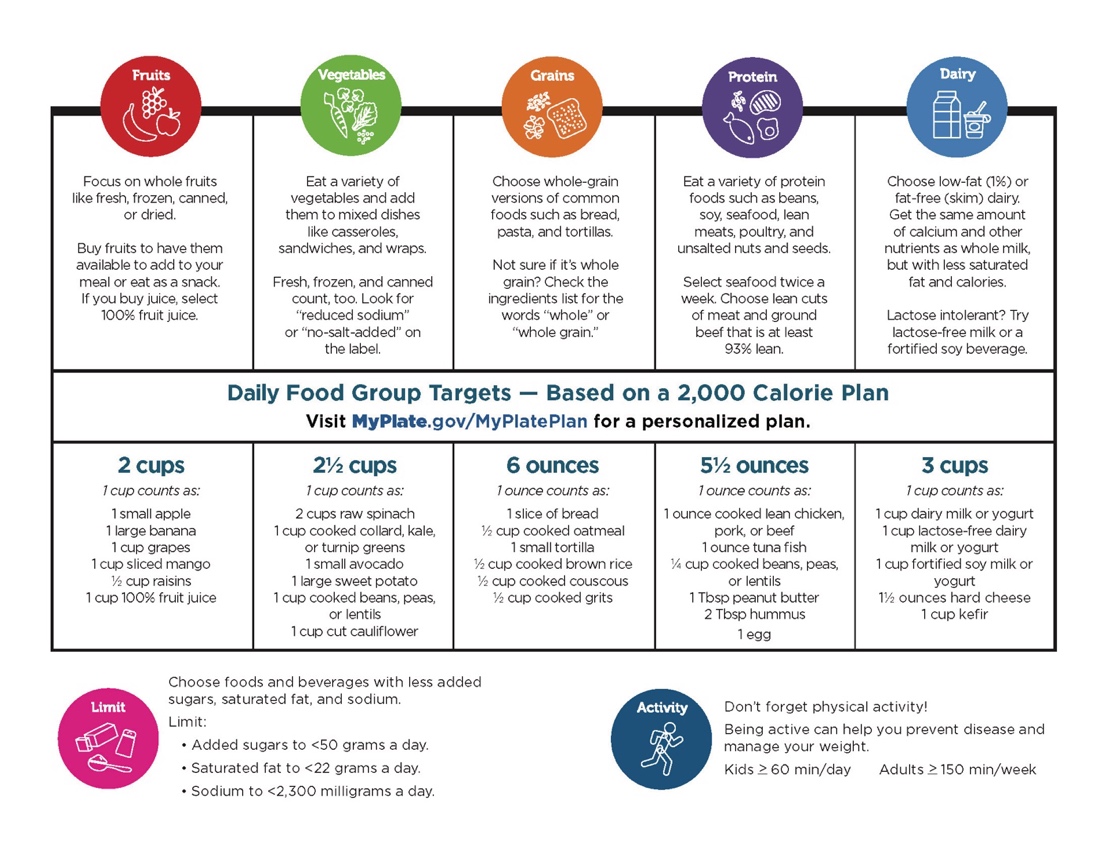
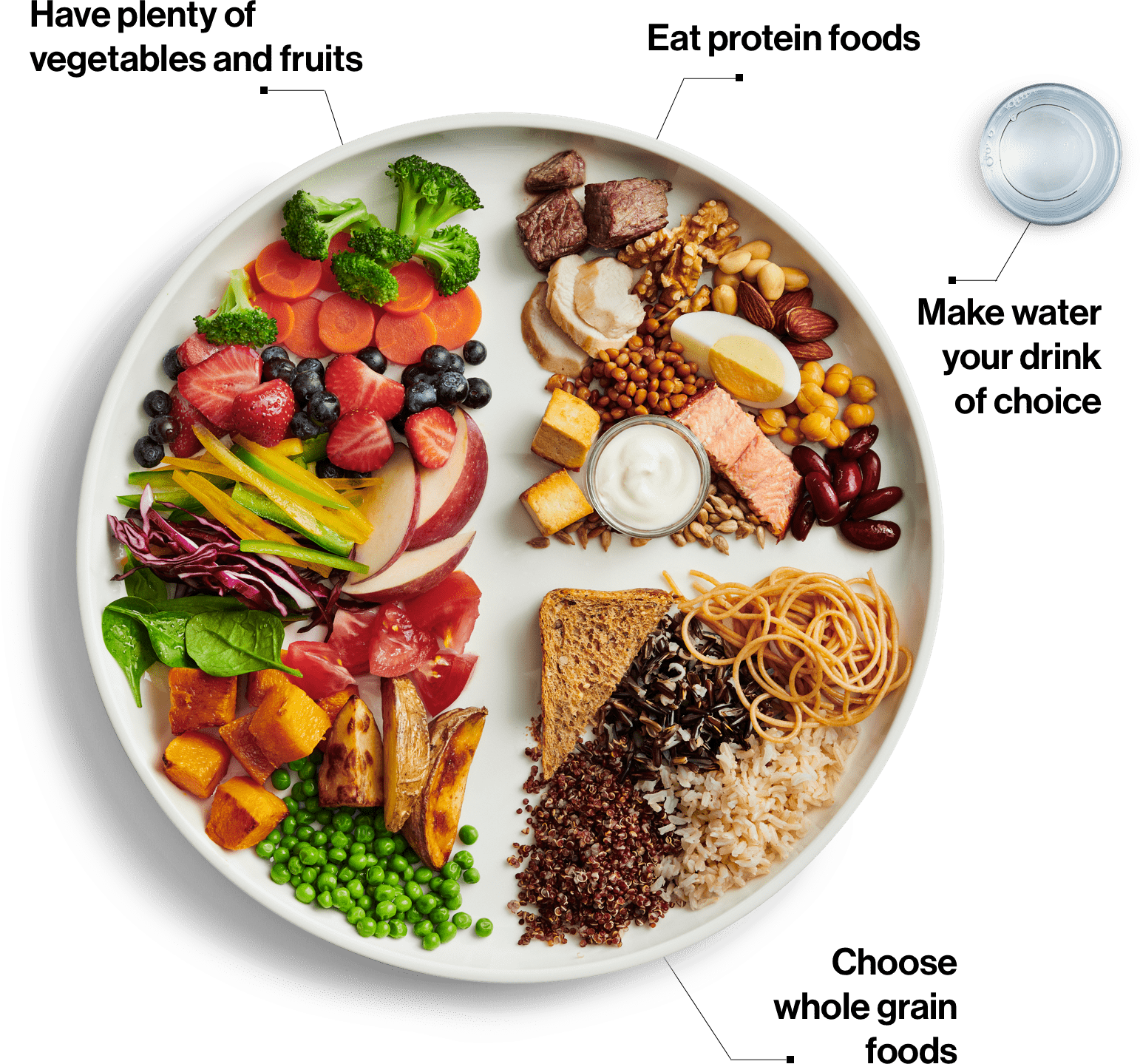
> grass fed, free range... Because agribusiness doesn't make money with those.
Agribusiness absolutely makes money off of those. In fact they had a hilariously easy time adapting to the consumer trend because all they had to do to label a cow “free range” or “grass fed” was change the finishing stage to a lower density configuration instead of those abominable feed lots you see along highways. The first two stages, rearing and pasturing, didn’t change because they were already “free range” and “grass fed”. Half of the farmland in the US is pastureland and leaving animals in the field to eat grass was always the cheapest way to rear and grow them. They only really get fed corn and other food at the end to fatten them up for human consumption.
The dirty not-so-secret is that free range/grass fed cows eat almost the exact same diet as regular cows, they just eat a little more grass because they’re in the field more during finishing. They’re still walking up to troughs of feed, because otherwise the beef would be unpalatable and grow quite slower.
True grass fed beef is generally called “grass finished” beef and it’s unregulated so you won’t find it at a supermarket. They taste gamier and usually have a metallic tang that I quite honestly doubt would ever be very popular. The marbling is also noticeably different and less consistent. Grain finished beef became popular in the 1800s and consumers in the West have strongly preferred it since.
I’m not sure you can even find a cow in the entire world that isn’t “grass fed”. Calves need the grass for their gut microbiomes to develop properly.
> all they had to do to label a cow “free range” or “grass fed” was change the finishing stage to a lower density configuration instead of those abominable feed lots you see along highways.
And this is exactly what people have wanted, and are willing to pay a premium for.
> Grain finished beef became popular in the 1800s and consumers in the West have strongly preferred it since.
Don't conflate the US and the "west".
> Don't conflate the US and the "west".
I only vaguely said “the West” because I didn’t want to get into the complexities of subsistence farming, regional quirks, and pedantics like “soybeans hulls are often considered roughage”.
About a third of beef in the world is truly grass finished and two thirds of that is subsistence farmers who can’t afford the grain. Most of the rest comes from Australia, Brazil, and New Zealand because it’s more competitive to leave them in pasture than import the grain.
As much as you may want to hold your nose up at the US, the (vast) majority of beef sold in the world is grain finished and has been for a long time. It’s just more economically competitive and people strongly prefer the taste and texture.
Grain finished has higher fat content. Better marbling and generally grades higher. Wagyu is grain fed for a reason.
If you want solid evidence you can read a book on the history of animal husbandry. Roman sources include Cato the Elder, Columella, and Varro describe how they used supplemental grains to get cows through the winter and provide oxen enough energy to work (and to feed cavalry which would have been completely impossible without them). Humanity has been feeding grains to cattle for thousands of years, likely prehistorically.
Then in the first half of 1800s a bunch of American farmers with an abundance of corn independently discovered that they could grow bigger cows for slaughter in half the time if they fed them grains instead of roughage like hay or grass. That idea quickly spread to Europe and by the time the green revolution and globalization rolled around in the second half of the 20th century, almost every body started doing it.
This isn’t some new phenomenon. It predates the globalization of agriculture and if you were to ask a random farmer around the world whether they feed their cows a ton of grain they’d look at you like you were asking a very stupid question.
It’d be like asking “do plants need fertilizer?” Yes. If you want to feed the world, yes they do.
where is the mythical land of people that prefer gamey metallic beef?
“Grass fed” is the default everywhere because calves can’t survive otherwise. All cows spend most of their lives feeding on grass.
Where exactly did you grow up? Without that detail “grass fed” is as meaningful as “cow goes mooooo”
I appreciate the depth of your responses in this thread. I feel frustrated to see so many nitpicky comments on your responses, but I appreciate that you address them anyway.
One non-nitpicky critique of the parent you replied to: under USDA labeling rules, a product may only be labeled “grass-fed” if the producer can substantiate that cattle were fed a 100% forage diet after weaning. Feeding grain, including corn during finishing, disqualifies the claim. While there is no standalone statute banning grain feeding, labeling grain-fed beef as “grass-fed” would be considered false or misleading and is not permitted by USDA Food Safety and Inspection Service.
Interesting
In New Zealand dairy herds are routinely fed all sorts of supplemental feed (palm kernel leftover from pressing palm oil, imported from Indonesia is particularly popular, with cows as well as farmers I guess) yet the products are labeled "grass fed" because the cows are kept in bare paddocks with grass underfoot.
The cows have no shade nor shelter from storms and would be much better off in herd homes, but cheapness and very little care for animal welfare
Most Beef in New Zealand is fully grass fed and it tastes...real. Some people would say "Gamey" others say "Actually has some flavour"
Like I said in a reply to the sibling comment, that’s a regional quirk (taste). Most of the beef exported from NZ to the US goes to meat products like burgers.
Australia is more interesting because it’s 50% grass finished but I could never find a source on how much of that was exported to SEA or US and what products it went to.
Another country that predominantly grass finishes is Brazil but they export mostly to China. Again I couldn’t find a source on how much of exports to the US go to meat products (we source a lot of our hamburger meat and pet food from random countries). I remember in all three cases very little is exported to the EU.
> Like I said in a reply to the sibling comment, that’s a regional quirk (taste
It's a "regional quirk" that applies to far more of the world than US tastes, by my reckoning. Even within the US you'll find plenty of people who don't prefer bland beef, and outside it's just... some parts of Western Europe that share the bland obsession?
Have you a source?
In NZ the cattle stand around in paddocks in all weather's with no shelter, but how do you know they are not fed supplementary feed?
Dairy herds almost all are
Cows and sheep in the UK (and I guess much of Europe) wander round outside all year round and I guess are eating almost entirely grass. You can't go for a walk in the countryside without coming across them constantly. Most of the beef you buy in the shops (not talking about processed foods) is produced in the UK.
> Cows and sheep in the UK (and I guess much of Europe) wander round outside all year round
Probably most of them, but definitely not all of them. https://nltimes.nl/2025/08/18/dairy-cows-netherlands-never-g...: “The total number of dairy cows in the country reached 1.5 million last year. Of these, over 460,000 cows—roughly 31 percent of the national herd—did not spend any time outside“
A factor with cows kept for milking is that you want them to be able to walk to the milking robot at all times, and moving food to where the robot and the cows are can be easier than moving the robot to where the food and the cows are.
Detail in there: during winter, UK livestock are sometimes fed silage, which is grass that has been harvested during the summer and partially fermented. UK is majority local production, but there's significant imports from Ireland.
People talk a lot about water and land use, but if you have the conditions of land that is (a) naturally watered and (b) not flat enough for arable farming, using it for livestock is much more environmentally friendly than, say, feeding them imported soy - leaving only the methane problem.
>You can't go for a walk in the countryside without coming across them constantly.
Next time you see a meat-eater, thank them for their service. If it wasn't for their heroic efforts we'd be overrun with cows, great lumbering beasts wandering around the streets blocking traffic and trampling our gardens.
Isn't Brazil a big beef exporter too? [1]
[1]: https://www.reuters.com/world/china/brazil-surpassing-us-top...
Here in Scotland its pretty common for cows to be kept off of the fields during winter - a combination of protecting them from the weather and, I suspect more importantly, protecting pasture land. Having cows in a field here at the moment (and I live in the middle of a farm) would probably just result in an ocean of mud.
Dairy in the UK also tastes far better than in the US. British people often comment how hard it is to deal with the dairy in the US which tastes like water in comparison.
Experienced that too, coming from a country that has 100.0% free-range grass-fed cows the beef in the US was pretty dire. Presumably if I'd paid a large amount of money I'd have got something decent but the generic restaurant stuff I've had was what I'd expect from a Ten-dollar-Tuesday meal here.
So what you're saying is that it's at least a small improvement over the previous situation. Seems like a win regardless of who is making money.
What he's saying is that the grandparent (top-rated as of this writing) comment claiming that agribusinesses are hiding the benefits of "community gardens, local food, farmers markets, grass fed, free range..." because they don't make money off of them is unfounded.
I personally don't have any insight into the situation and I definitely don't want to defend big businesses, I'm just explaining what you're replying to.
>Agribusiness absolutely makes money off of those.
I took the heart of their point to be about local food infrastructure and co-ops and farmers markets, and the grass fed bring cited insofar as it was complementary to those.
You rightly note that "grass fed" beef is effectively the same as "made with* real cheese", technically true even if it's in the parts per millions, and not at all a signal of authenticity it might seem to be at first glance. But I feel like this is all a detour from their point about local food infrastructure.
> all they had to do to label a cow “free range” or “grass fed” was change the finishing stage to a lower density configuration instead of those abominable feed lots you see along highways.
This is a material win for humane treatment of animals as well as the health of the consumers who aren't eating the stress hormones of a tortured large mammal. The price difference isn't even that big. Of all the things to complain about in the meat industry, this is not top of mind in my opinion.
I don't believe that's true with 100% grass fed beef
Thanks for the interesting perspective! I'm curious, is the metallic tang because of iron content or somethig else?
> because otherwise the beef would be unpalatable
[citation needed]
> Here's some things you won't find in any of the documents, including the PDFs at the bottom: community gardens, local food, farmers markets, grass fed, free range... Because agribusiness doesn't make money with those.
Are those relevant to addressing America's national diet deficiencies? None of them are currently anywhere big enough to make a practical difference to most people.
Also most of the health problems with what people eat are from what foods they eat and how much they eat rather than from not choosing the highest quality of those particular foods. E.g., someone might snack often on candy. If they can be convinced to switch to snacking on fruit it doesn't really matter much if they get that fruit from Safeway or a farmer's market. Maybe the farmer's market fruit is healthier for them than the Safeway fruit but the difference will be tiny compared to the gains from switching from candy to fruit.
The point is with many hundreds of pages maybe there could have been something like
"local farmers markets have shown to address concerns about food deserts especially in lower income communities" or some obvious non-controversial observation. Maybe "community gardens have been demonstrated to increase lifespan in multiple studies"
The point is these things are decided on by a committee. To find out where their priorities are one of the bigger tells is when you find really obvious things that are not there.
If this was a sincere effort, where is all the obvious stuff?
I think it's less about that farmer's market produce being healthier, and more about it being tastier. I've encountered plenty of people saying things like "I don't like tomatoes" when it turns out all they've eaten are pale, out-of-season tomatoes from the supermarket.
A big part of getting people to eat better is educating them about seasonality and what good produce should taste like, so that they end up actually liking it.
A farm by our cottage had a sign out last year, selling vegetables. We bought some cauliflower and had it for dinner. It was supposed to be a side dish but it was so darn good I don't even remember the main dish.
Later I got some vegetables from a friend who had grown them at a local allotment garden. Made some vegetable soup with them and I swear it's one of the best meals I've had, and I've had some real nice meals.
Flavor in each case was so far beyond what I can get in the grocery stores here it's hardly comparable.
A lot of it comes down to what the person you're responding to said, seasonality. I grew up in a very rural farming area and now live in a very large city. While the produce at the grocery store is generally inferior to that of being near a farm, when things are in season, it is at least comparable. That apple you buy in July is never going to be as good as one bought in the fall, it doesn't matter where you buy it from.
No reason to believe their numbers either given the shenanigans they have engaged in.
We need to be smart and not knee jerk into feel good memes though. Local gardens and community gardens have higher resource use per acre than large farm ops. Commercial farm infrastructure is far more resilient and lasts longer while consumer gardening gear is cheap and disposable. Consumer gardening gear manufacturers factories burn tons of resources to crank out tons of low quality kit, consumers burn through piles of it. That's not sustainable either.
Plus you really want the average American dumping chemicals in community ground water to grow the biggest pumpkin in the zip code?
Americans need to find common ground on the path forward not fragment into tens of millions of little resource intensive potato farmers
> Local gardens and community gardens have higher resource use per acre than large farm ops.
It amazes me how few people are cognisant of this very obvious and important fact.
> Plus you really want the average American dumping chemicals in community ground water to grow the biggest pumpkin in the zip code?
Just because it’s out of sight doesn’t mean it doesn’t exist. Industrial farming and specially animal farming is one of the most polluting industries, subsidized to produce environmental damage, population diseases and animal abuse.
The value of smaller gardens are not measured in the produce harvested but the knowledge sowed. Many are federally funded at schools, community centers, or local libraries to serve as outdoor classrooms.
> The value of smaller gardens are not measured in the produce harvested but the knowledge sowed
No, it should be measured in terms of amount of input relative to the amount of output. It’s almost never the case that small farms is going to be more efficient—not only cost wise, but for the environment—than large scale farming.
> It’s almost never the case that small farms is going to be more efficient—not only cost wise, but for the environment—than large scale farming.
I can relate: Our SIL gave my wife a countertop gadget that holds six little cups into which you drop pre-packaged paper cups of seeds and soil. (You order them online.) The gadget has a grow light. You have to water the cups periodically My ux uses the gadget to grow basil and parsley, and snips off bits of leaves as needed for cooking. All-in, the crops cost probably 5-10X what we'd pay for fresh herbs at a Whole Foods or Trader Joe's, let alone at an Aldi's or H-E-B. Ah, well: Signaling love and appreciation is important ....
That's great, but they cannot feed a nation 100% or even close for long periods of time.
They can help educate a nation on which are the healthiest foods to eat, how to prepare them, what they taste like, etc. That may allow us to more healthily feed a nation 100%, while also using fewer resources.
That's how Japan works...how horrendous ?
Japan is not a model to follow.
People need to eat and industrial scale farming is what enables us to make enough, affordable food.
It has plenty downsides. But it’s a brilliant and truly efficient system that is being perfected by thousands of scientists and it has prevented hunger and chaos for decades now.
If you want to see real change, people would need to have way more time, be less lazy, have more money and be less demanding when it comes to variety and availability.
In other words, it’s easier to keep perfecting the system we have because it’s easier to change procedures than it is to change people.
> You telling everyone that gardening is bad for the environment
Quote me on that, I think you'll have a hard time finding that quote because you've pulled it out of nowhere.
Now reread your comment and wonder what else is connected to my comment, because I'm wondering too - did you mean to reply to someone else?
> Been doing it the same way for centuries so, care to elaborate on what's wrong with how they farm?
You're talking about the same Japan that's had rice shortages for like two years now, right?
It's crazy how people are incapable of seeing something positive in the actions of the tribe they don't belong to.
If you think I'm a Democrat or part of any party, you don't know me.
I'm virulently anti-tribalistic and it's hurt me professionally, socially and romantically my whole life. Trust me, I've got nobody. It's a big problem.
So yeah, the tribal claim, that's just you. You're just talking about yourself
> positive change happens
> “Goshdangit why did arbiter of change get lobbied by [tangential cartel]?”
I don’t think it’s a good take, although I won’t go so far as to accuse you of political bias. It’s not like the guidelines say to eat Tyson-branded chicken; Let’s not complain about positive progress.
You know what got the flawed food pyramid created? Lobbying by Seventh Day Adventists. That did not get enough outrage as it hurt countless people in ways that are difficult to quantify. They made fat and meat the enemy across the country because of their religious beliefs. They paid off researchers and even had one claim that Coca Cola was healthier than steak.
Let’s focus on forward progress and not how we got there.
Sorry didn't mean to attack.
I'm thousands of miles outside the US sitting firmly in the center watching left and right be at each other's throats over absolutely everything so maybe we're kind of alike.
It sounds like you are having trouble seeing the positives in a tribe you don't belong to.
thanks for showing me the way that i sound when i make sweeping admonitions
Not to go off topic, but this comment really spoke to me. Have also been hurt everywhere in life for being anti-tribalist.
[flagged]
This could certainly be fantastic, and very good advice. Or it could be a lot of bunk, I don't know. Given the source (i.e., RFK), I refuse to trust it.
The point of guidance like this is to be trustworthy and authoritative. If I have the ability to independently evaluate it myself, then I didn't really need it in the first place.
Of course, I might be mistaken to have ever trusted the government's nutrition guidance. It's not like undue influence from industry lobbying is unique to this administration.
>> If I have the ability to independently evaluate it myself, then I didn't really need it in the first place.
At what point in time was the government's guidance ever to be accepted on blind faith without critical evaluation? Take this input, compare with data on the same topic from other positions that are far from the source and make up your own mind.
Many places, many times.
Trust in institutions is fundamental to a society that is goof to live in.
USAnian institutions are particularly corrupt, all the way to the very top. It is not like that everywhere
If the government's guidance isn't to be at least mostly trusted, then I'm not sure the government should be offering guidance at all. (Which is perhaps a sensible position in itself.)
In other words, if I learn enough about nutrition to be able to critically evaluate the government's guidance, then is that guidance adding any additional signal? At that point, I should just rely on my sources about nutrition.
I've never been one to rely on official guidance blindly. For example I don't show up to the airport two hours early, and cheerfully laugh at advice that I should. But I'd like to believe that this guidance is better than total nonsense.
This is really just bothsidesism. In reality there are fundamental differences between groups in the way that people evaluate events, evidence, even their own party's questionable actions. Papering it over with by claiming criticism is all just mindless tribalism just serves to excuse those with the worst behavior. In this specific case, government food policy has been drastically changed to suit the peculiar ideology of one man, with no public hearings, no debate, and no scientific consensus. Is it not appropriate to be skeptical, regardless of one's "tribe"??
There are a number of lies and omissions here, as there have been from just about every administration due to agribusiness lobbying.
You're playing the tribalism game by setting up this strawman, you too are being played.
I'd personally be just as critical towards anyone who claimed they were fighting a "war on protein" that plainly doesn't exist. Americans consume more meat per capita than nearly any other country.
meat != protein, that's just where we've historically gotten most of it. Even meat != meat; it's totally acceptable to read & accept "eat more protein" and then figure out how you're going to get it within your tolerances for fat, sugar, environmental impact, economics, etc.
I am extremely confused by this comment.
I scrolled past the intro on the website and got to the very first mention of protein, where it is pictured as the foundation of the "new pyramid". The literal very first long form text that appears after that graphic is as follows:
> We are ending the war on protein. Every meal must prioritize high-quality, nutrient-dense protein from both animal and plant sources, paired with healthy fats from whole foods such as eggs, seafood, meats, full-fat dairy, nuts, seeds, olives, and avocados.
I'm not about to go count all the mentions and provide an exact answer to your question, because this website appears to be saying things that I already know and have been living by for years; it has no value to me personally. But the initial call to eat more protein specifically says "both animal and plant sources".
This 1000%.
A lot of people in this post need to do some self reflection.
If the actions and beliefs of a group are fundamentally morally repugnant to me, I think that it is reasonable to not expect me to be able to find "something positive" in it. We are not amoral automata with grocery-list style utility functions.
I have people in my personal sphere that make this sort of argument and it honestly feels like gaslighting. The undercurrent is: "Look, you don't like this guy, I get it. But if you can't see that he does some good, then you are the one who is irrational and not really in a sound state of mind." Meanwhile completely preventable, life-threatening, life-destroying diseases such as measles are back because of the obscurantist beliefs that come with this "new refreshing outlook". This is a bit like saying: "look, you can say what you want about the Spanish inquisition but they kept rates of extra-marital affairs down."
Corporations love this sort of feel-good campaign (the same way they love performative LGBTQ / feminism / diversity when the culture wars swing the other way) for two main reasons: (1) they distract from fundamental issues that threaten their real interests; (2) they shift the blame on big societal issues completely to the public. They do this with climate change, they do it with increase of wealth inequality and they most certainly do it with public health.
All developed nations have a problem with processed food. Granted, it is particularly severe in the USA, but the ONE THING that separates the USA from almost every other developed nation in our planet is the absence of socialized healthcare. This is the obvious salient thing to look at before all others, so also obviously, a lot of money will be spent to misdirect and distract from this very topic.
>If the actions and beliefs of a group are fundamentally morally repugnant to me,
sure, although if tribal differences are always experienced as fundamentally morally repugnant one might think the moral calibration is screwed a bit too tight.
>I think that it is reasonable to not expect me to be able to find "something positive" in it.
Sure, I do think it is possible that some groups are so morally repugnant that they have absolutely nothing to offer whatsoever. For example that tribe of cave dwelling cannibals in the film The 13th Warrior, man those guys sucked! But the comment seemed more to be about how it is weird that when you find some group does some things that you find morally repugnant then they have nothing they do that can ever be good.
I have lived in places in which I find much of the surrounding culture to have behaviors that I found morally repugnant, or intellectually repugnant for that matter, but even at my most contemptuous of a culture and a people I will at times be forced to admit, honestly, that they have behaviors that can also be considered admirable (in many cultures the repugnant bits are so tightly bound to the admirable bits though I can see how it is difficult not to condemn everything)
Even a developmentally disabled human tends to be significantly more complex than a stopped clock so the analogy doesn't work well.
if anything it is more than a computer with a lousy video and sound card, you don't use it for games or streaming movies or most things, but due to some other things (which I am not going to take the time to create a plausible scenario why this should be) the computer is actually really superior as a server, so you have set it up for that. Do you give out a cookie for the computer that works really well at serving content over port 80 despite it sucks for anything you enjoy?
> If the actions and beliefs of a group are fundamentally morally repugnant to me, I think that it is reasonable to not expect me to be able to find "something positive" in it.
I'm not sure you appreciate how symmetrical this statement is. You are on Team A, saying it about Team B, but nothing in the statement actually depends on that permutation of teams -- it could be equally compellingly said by a Team B member about Team A.
Yes, but my team is 100% right about everything.
[dead]
> If the actions and beliefs of a group are fundamentally morally repugnant to me, I think that it is reasonable to not expect me to be able to find "something positive" in it.
No it isn't reasonable. In fact it is one of the stupidest things you can do. If you read any history, you will see that failures in military, politics, science etc. (really pick anything) are often due to key people simply refusing to learn from their opponents and/or refusing to adjust to the new reality. Often this is done because they find their opponents morally repugnant, or lacking in some virtue they happen to hold as important.
It is fine if you don't like the current US Administration. However if they do something that happens to be good, it is fine to acknowledge it as such, while still pointing out what else they are doing wrong. Otherwise you just come off as a sore loser and people will stop taking any notice of you.
I think this is true, and the broad sense of that website is an improvement on what went before, so we should acknowledge that. But it's also right that people point out the moralising tone and connect other administration actions and policies with an assessment of whether these principles will be backed by policies that actually make any difference in real life. My suspicion is that this will be part of an effort to further stigmatise people damaged by the industrial food industry without doing anything to make healthy food cheaper or more accessible, but I'd love to be wrong!
That is misinformation. Very few developed nations have socialized healthcare. Many of them do better in terms of universal coverage and cost control but they don't have a single-payer system or force healthcare providers to be government employees. For examples see Germany, Switzerland, Japan, Australia, Israel, etc.
Well done. This might be one of the most childish comment I've read all day.
This give off an air of virtue signalling to the extend of self destruction. Almost funny thinking about it.
Thanks for the tip. Just re-read it. Didn't have same effect. Anything else?
Those diseases are back because of rampant immigration. People from other countries bring them here. It has nothing to do with "obscurantist beliefs", whatever those might be.
Bingo. It’s pretty annoying. My tribe can do no wrong (in fact my tribe will freely point out its faults because again, it can do no wrong). Anything from the other tribe isn’t just wrong, it’s evil and all that is wrong with everything. Those guys are Neanderthals, not even worthy of telling the time to. My tribe is incredibly smart and gifted. We can do no wrong!
Unfortunately the only way to opt out is to basically stop participating at all. No more consumption of tribal news media and since most news media is incredibly tribal (even saying it’s not tribal is in fact tribal)… it basically means no more news media consumption. Which makes you uninformed instead of merely misinformed.
I dunno the solution to this. It’s a complex web of everybody playing to their incentives including the algorithms that aggregate things for consumption.
Again though, I’ll firmly emphasize that it is the other tribe that is wrong. My tribe isn’t biased or hateful or outrage driven. We say we aren’t so clearly it’s not possible.
That trite comment is intellectual dishonesty set to 11.
Trite, yes, but personally I'd argue that accusing people of intellectual dishonesty (i.e. bad faith) is by definition unfalsifiable and therefore unproductive. Always.
Comments noted but I always choose my words carefully. The accusation of bad faith is definitionally unfalsifiable. It makes a claim about intention, which - by definition - nobody but the speaker can know.
Arguing with someone who is intellectually dishonest is also usually unproductive (unless you know what you're doing and want to convince bystanders). So it's more of a tie.
Or the current man in control of Health and Human Services is at best saying nothing of value. (At worst, he's sidelining vaccines for multiple infectious diseases, but that's off topic)
A broken clock is right twice a day. Doesn't mean it's not broken.
It would be pretty weird if they were so broken they were incapable of saying anything right, even at times when they were trying to be ingratiating. You'd have to be astonishingly insane, more even than these people are, to be totally unable to identify something that would be good press.
I'm not saying they can't reach that point, but this ain't it. They are just getting details wildly wrong and being generally obtuse, but this is an attempt at not seeming completely insane and should be graded on that curve. You can't expect every little detail to be insane, that's asking a lot.
I was surprised how impressed I was by the website. The layout, design, focus on simple foods.
I think the person above may just feel skeptical of the scientific and medical opinion of most of the people running the US government. I know I do. When I read "gold-standard science and common sense," I rolled my eyes. Because the previous news cycle said they don't think meningitis vaccines are important for kids, yet say they follow gold-standard science. It's hard for me to reconcile the two.
EDIT: "rooted in...personal responsibility."
"America is sick. The data is clear. 50% of Americans have prediabetes or diabetes 75% of adults report having at least one chronic condition 90% of U.S. healthcare spending goes to treating chronic disease—much of which is linked to diet and lifestyle."
It also has this moralizing tone, and seems to make some pretty bold claims about why Americans have prediabetes or diabetes. For example, with the introduction of GLP-1 drugs, like Ozempic, people (including some I know well) have significantly reduced their diabetic risk. And they're still eating the same processed foods.
Also, "linked to diet and lifestyle" is a pretty broad claim. Maybe the undersleeping and overcaffeinating actually matters more for increased appetite and desire to eat less healthy foods.
In short, I just don't trust many people when they say health is so inextricably and exclusively tied to food source, especially when they tend to think most vaccines are net negatives for individuals and society.
The website is good information, and if it came from a NPO is would be great... But the US government has so much power (and responsibility) to protect the US consumers from the food industry.
- Ban some of the ingredients like they did for trans fat
- Force better labeling, like the Nutri-Score in France and EU
- Tax the more unhealthy choices so they don't become the cheapest solution - and maybe use that tax money to subsidize healthier alternatives
This site looks like they're just shaming the consumers for falling for the tricks the government allows the food industry to pull off.
I remember a European MEP who was fighting the food industry to impose Nutri-Score saying on TV that no constituent comes to them saying "help me, I'm too fat". However many expect politicians to boost the job market. The food industry knows that, so each time you try to impose some regulation they'll say "if you do that, we're be forced to do so many layoffs!"
I’m in Colombia right now and they actually have a great food labeling system. It just warns you if a product contains too much sugar, salt, additives etc, without trying to score. Whereas the European labels give you a false sense that everything is nutritious.
So is it useless or useful? You write one but then describe the other (compared to other products in the same category seems value add for sure)
That sounds useful. Consumers most likely choose the food they want to eat by type, being able to spot the healthier options within a category sounds like it would help me in the supermarket.
We have a traffic light system, pretty useful. But when all items in a category are bad for you, and you know it, them all having red lights doesn't help much.
I'd certainly try alternatives that are marginally healthier, if that's true generally then it puts some pressure on food industry to move to healthier choices.
this is clearly a net loss for public health in general, politics aside. Having alcohol in dietary guidelines (without even stating a drink limit) is positively idiotic.
Personally I don't care either way about RFK Jr's new food pyramid.
I think the bigger danger of giving this credit is lending any legitimacy to RFK Jr who is actively undermining actual medical advice and wrecking havoc on our childhood vaccine programs.
Just because a broken clock is right twice a day, doesn't mean you need to give the broken clock credit for being right.
By doing this "oh it's just tribalism" lends legitimacy to RFK Jr and furthers his ability to kill kids with preventable disease and further damage the credibility of modern medical science.
"Oh he has some good ideas" Yeah? Which ones? Does the average american have the time/curiosity/capability to sort through which of his ideas are good and which ones will kill their kids?
Which one of his books have you read?
Why should we read any of his books? He doesn't believe in infectious disease. That shows he has no understanding of how things work, if he gets something right it's a stopped clock situation. You learn nothing from looking at a stopped clock even though it's occasionally right.
Tell me, which of the following books should I read? Should I start on the silly anthony fauci attack book? or the book on vaccines by the man who isn't a doctor?
The Riverkeepers: Two Activists Fight to Reclaim Our Environment as a Basic Human Right
Crimes Against Nature: How George W. Bush and His Corporate Pals Are Plundering the Country and Hijacking Our Democracy
Saint Francis of Assisi: A Life of Joy
American Heroes: Joshua Lawrence Chamberlain and the American Civil War
Robert Smalls: American Hero
Framed: Why Michael Skakel Spent Over a Decade in Prison for a Murder He Didn’t Commit
American Values: Lessons I Learned from My Family
The Real Anthony Fauci: Bill Gates, Big Pharma, and the Global War on Democracy and Public Health
A Letter to Liberals: Censorship and COVID: An Attack on Science and American Ideals
Vax-Unvax: Let the Science Speak
The Wuhan Cover-Up: And the Terrifying Bioweapons Arms Race
> "grass fed, free range... Because agribusiness doesn't make money with those."
They actually make a considerable amount on those last two items, taking advantage of those who want to consume meat more ethically.
(Though, in reality, "grass fed" and "free range" are both misleading terms, and none of the meat on offer is likely to be humane.)
They also received financial aid depending on the land surface they have (at least in Europe)
> community gardens, local food, farmers markets, grass fed, free range
How are these connected to nutrition? The difference in nutrition between a local banana and a non-local banana is ... zero?
because they're a source of local, sustainable, seasonal, and healthy food that isn't peddled by agribusiness lobbies — grassfed beef specifically is leaner, lower in calories, and richer in beneficial nutrients
So the animal rights and environmental groups are upset that health targets are prioritizing health over mudding the waters with these other agendas? If those are worthy goals on their own then fine, but stop trying to suggest that we can't improve health drastically and more effectively by making simple and clear recommendations to move away form processed food.
What are the "well known health issues"? I have seen some low-quality observational studies (junk science) which show some weak correlation between consumption of animal products and negative health outcomes but so far nothing conclusive one way or the other.
https://peterattiamd.com/high-protein-diets-and-cancer-risk/
And costs significantly more money.
And none of that, if true, matters in the slightest to most of America because they otherwise wouldn't be able to afford these foods.
When I saw that protein target, I knew there must be shenanigans… 0.5-0.7g per pound is within the range that BODY BUILDERS target for maximum hypertrophy (1g/lb is a myth that wastes peoples money). Eating 4-5 chicken breasts per day is ridiculous for a normal person.
1g/lb is in fact a popular target among bodybuilders.
Much research indicates 0.5 to 0.7 g/lb provides most of the benefits, with continuing but diminishing gains above 0.7 g/lb. And the benefit is not just for "body building", but also for minimizing muscle loss during weight loss and improving insulin sensitivity. Other research indicates we may benefit from higher levels as we age.
quite off!
You need at least 0.8g / kilo (referring to 0.4g / pound) if you are doing nothing heavy, like walking to the office.
If you do moderate sports, you are hitting 1.0g / kilo immediately.
If you do some more extensive sports, like 3 - 4 days / week in gym, you jumü to 1.2 - 1.4g / kilo.
Bodybuilders are quite above :-))
Regarding the number of chicken breasts - scary for me, Im enough with a half one every second or third day.
There was a great movie about vegan & bodybuilding with known sports people: The Gamechangers - https://en.wikipedia.org/wiki/The_Game_Changers
I am not sure if you're disagreeing with the original poster here but you're both saying the same thing in different units. 1g/kg != 1g/lb which is A LOT more protein and a complete waste of time. As a mostly vegetarian who lifts regularly, I am targeting a bit more than 1g/kg but being from the US it is a lot less than 1g/lb. :p
maybe I was wrong? 1 pound = 500g 1 kilo = 1000g
therefore, multiplied by 2, though the numbers I showed are higher
Wait, what? I lift weights and chicken breast is a fundamental part of my diet but I'm eating 1/3 to 1/2 a single chicken breast a day, and an egg for breakfast. That CAN'T be right.
I get that I include some rice, peanuts etc. in there, but even if I quit EVERYTHING else there's no way 4 to 5 chicken breasts a day is accurate.
It’s not recommending 4 to 5, but for larger people (I’m 200lbs) to hit their protein target I’d need to eat over 1lb of chicken a day which is a lot.
IDK man, this sounds pretty common sense:
>Eating real food means choosing foods that are whole or minimally processed and recognizable as food. These foods are prepared with few ingredients and without added sugars, industrial oils, artificial flavors, or preservatives.
Meh, I would note that the Tyson-supported definition of "real chicken" is not one without antibiotics and growth hormones, let alone a free-range heritage breed. This would have been the standard for a "real chicken" a few human generations ago.
I was wondering why meat and veg were side by side, rather than vegetables being at the base. The new pyramid is still better than the old one, but not completely intellectually honest...
I thought this way is pretty good since the problem with the old one was that it makes vegetables look like a side-dish.
The new pyramid reflects a healthy plate of food: mostly meat and veggies, and a little piece of bread on the side. It's almost genius.
Better than the old one in what way?
I'm not zdc1, but they may be referring to the previous advice that included more grains than fruit and veg combined. From a design perspective, it is an interesting choice to mix food groups on the same level of the pyramid.
https://en.wikipedia.org/wiki/Food_pyramid_(nutrition)
https://en.wikipedia.org/wiki/MyPlate
> I have not seen the pyramid with bread, cereal, rice and pasta at the base pushed for at least ~20 years.
Thats right. It was replaced 20 years ago by https://en.wikipedia.org/wiki/MyPyramid
do you think they market those pyramids to adults, or to children?
[dead]
Might be corrupt, but is at least closer to truth then the last corrupted version. Let's not let perfect be the enemy of progress
The incentives are wrong. Any good policy for bad incentives is temporary and incidental
This policy selectively emphasizes the most difficult to import foods so it also plays into isolationist nativist policies.
If you think meat lobbying groups just wanted a new triangle and this isn't going to extend to water, land, energy, and environmental policies along with farm subsidies and even merger&acquisition and liability policies, sorry ...
This thing is for them, their profitability and their investors. They didn't lobby on behalf of your personal health...
Open a position on the MOO ETF. I just did. Might as well make some money from it
wrong incentives, good outcomes? is there a world where the long term outcomes are also good, or at least much better than the current ones?
also, hi there! (da from oblong)
Sure. What about the public citizen efforts for crumple zone and seat belts in the 1960s?
Or are you saying bad incentives, good long term outcomes?
Maybe Napoleon's rework of Paris? That was done to control public dissidents but it also made it a beautiful city.
Mass timekeeping? Those were adopted for industrial labor... Seems to be quite useful
Joint stock ownership was I think invented for the slave trade but that's proven to be generally useful.
I think magnetic audio tape was made practical for a deceitful technique by the Nazis for claiming to be broadcasting live on the radio after they had fled...
In each of these instances though the thing long outlived the initial user
Is it? The change in recommendation is to have less veggies in favor of more meat. From all the recent research and meta studies I've seen it doesn't track.
It's still decent a guidance, but the previous one was as well.
The first food group listed is literally meat and dairy. The ordering here is purposeful, too, as they admit. One promo graphic includes a block of butter and a carton explicitly labelled "whole milk." This is a very definite downgrade.
Butter is king. It should be pictured with a crown, stars and glitter.
Surely whole milk is better than less-than-whole milk?
Dairy/Meat are both inflammatory and overconsumption contributes to a whole host of medical disease.
Some protein is obviously desirable, but the ratios, like anything else in chemistry/biology, are paramount.
I don't think the USA has a problem with under consumption of meat and dairy. If anything, it has a long standing overconsumption problem.
Meat and dairy contain the bulk of the saturated fat in the average diet. It's pretty absurd to imagine a diet in which the largest food group is just meat and dairy, but due to the ordering, that almost seems to be implied.
The saturated fat → LDL-C → heart disease relationship has a lot of evidence and history behind it. A very interesting research project if you needed one. I call this advisory a "downgrade" because heart attack and stroke (among other conditions) are both: 1) downstream of saturated fat consumption, and 2) the most prevalent causes of death among people in the developed world.
[flagged]
"The first food group listed is literally meat and dairy."
that's because the pyramid is presented pointy end down.
The first thing on the website is indeed broccoli. But the first thing in the new inverted pyramid, both on the website and in other graphics of it, is meat. In fact, on the website, when you first get to "The New Pyramid", you'll first see only the left half, the one that has meat and other proteins; you'll have to scroll more to see the right half with vegetables and fruit.
The only difference from the previous guidance is that it's suggesting eating more meat and dairy, which would come at the expense of veggies, legumes, nuts and seeds.
To be honest, I don't totally disagree from a practical angle. I think we have to acknowledge that most Americans failed to eat large portions of non-processed veggies, legumes, nuts and seeds. The next best thing might be to tell them, ok, at least if you're going to eat meat and dairy in large portions, make sure it's non-processed.
I've found for myself, it's hard to eat perfectly, but it's easier to replace processed foods and added sugar with simpler whole meats, fish and healthy fats like avocado, eggs, etc. And since those have higher satiety it helps with calorie control and so you avoid eating more snacks and treats which are heavily processed and sugary.
That said, in a purely evidence based health sense, it's not as good as the prior ratios from what I've seen of the research.
And that's going to dictate nationwide purchasing policies for things the the 30 million school lunch meals, million prisoners...
This is worth millions of dollars a day and we're sold it as common wisdom from the mom and pop country doctor.
the rectangular pizzas were never "reheated". i have copies of the recipe cards to make enough trays of pizza to feed a school using the industrial kitchen appliances they have in schools.
and whatever your issue is with chocolate milk, can you link a recent survey that shows the percentage of say, americans, that have had 1 or more glasses of water in the last month? a glass being at least 8floz (1/4 liter or so)
i'm leaning toward "most people don't drink enough, if any, water; furthermore most people are probably varying levels of dehydrated", at least in the US. The fad of carrying water with you everywhere was lambasted into obscurity, at least in the american south. Anecdotally, many people have told me they drink 64 ounces a day, because diet coke counts and so does beer.
that a kid is getting a fortified delicious drink they enjoy is fine by me.
And here in largely vegetarian India, everyone is now pushing for more protein and meats because a vegetable-heavy diet has been awful for our public health
Even if Indians ate 2x the meat that they do now, they wouldn’t consume anywhere as much as Americans do. Increasing meat consumption in America is not necessary.
India would do well to consume more protein, and the US would do well to consume less
If you want to actually get full and satiated with a largely vegetarian diet, you will eventually resort to carbs
And this is for a culture that really knows how to make smashingly good vegetarian dishes
I love my vegetables, but a vegetable-heavy diet is clearly not something that everyone can or should do. The people I know who retain their health with vegetarian/vegan diets are usually really well-versed in nutrition
Carbs and butter.
If you look at a lot of the indian vegetarian dishes you'll find things like potatoes fried in butter being a staple.
Chickpeas and yogurt do make a showing, but a lot of indian dishes are devoid of vegetarian protein sources. You need a lot more beans/nuts if you want to eat healthy as a vegetarian.
If you don't cook vegetables in plenty of fats, you will end up feeling unsatiated - at least the vast majority would if that's their only meal
Salads are great, but eat them 7x a week for 2x meals a day and most will end up binge eating some absolute trash just to feel full
Most branches of hinduism condemn meat eating, so this has created a significant pressure against meat production (same as you'll find little production of pork in the Middle East and North Africa). This is not universal, of course, because historically many regions of India had large meat-eating muslim populations as well.
Note that this is typically lacto-ovo-vegetarianism, not veganism.
Maybe home cooking is, but every restaurant meal I bhave eaten near the Mediterranean had seafood or cheese in it.
Edit: you said vegetarian not vegan, and yeah lot of pasta dishes are vegetarian but not vegan.
The last corrupted version had the same person at its head.
>but is at least closer to truth then [than?] the last corrupted version
I'm pretty sure you did the rhetorical equivalent of looking at a roomful of pregnant high school girls..
.. and declaring one of them to be closest to virginity.
I fail to see the significance of your link to a group that opposes animal experimentation asking RFK Jr to reduce animal experimentation. Did you paste the wrong URL For the first link?
Did you mistakenly mean to reference Canada's highly corrupt as hell food guide?
https://food-guide.canada.ca/en/
Ctrl+F'd and didn't see any of those words mentioned a single time either. What a corrupt country Canada is.
I'm not sure what you're trying to say here. Canada can be just as corrupt.
Isn't every single policy a result of some kind of lobby group? Are you saying that it's corrupt because it's been influenced by a lobby group? Would all policies then be corrupt to some degree? Or is it corrupt because you disagree with the lobby group?
Not all lobby groups are asking for harmful things. But nearly always they act in their own short sighted self interest. Which usually comes at the expense of citizens or the would be customers or competitors.
Which is why sane countries make paying for access and influence illegal.
So, that would be corrupt because you don't agree with it then?
Which are these sane countries? How do you think lobbying should work then? Everyone should get equal access? Hunter and gatherer man was egalitarian like that. Afaik it is a universal feature of civilization that this eventually breaks down. Of all the existent modes of dealing with this problem, money is probably one of the better ones compared to some historical or even contemporary alternatives. I actually will be very surprised if you come up with a single country that credibly makes "paying for access and influence illegal" as that is pretty much the history of all of human civilization, but I would welcome being surprised.
I'm a realist. All these comments were saying "oh this is good they're doing this for my personal health" and I thought "oh, no no no. That's not how this works..."
Why do the two have to be mutually exclusive though? Why can't something healthy also not also happen to benefit corporations/lobby groups?
If something was beneficial to shareholders and to everyone else, it already happened.
[dead]
The irony is Tyson's is an absolutely horrendous organization and ruins food left and right. Not to mention the absurd living conditions for the animals they feed us.
The linked PDFs on realfood.gov transparently cite the industry ties of all the doctors and PhDs involved in long descriptions next to each of their names and readers can decide for themselves if such is "corrupt as hell". PR pieces are an inferential distraction.
You probably can't change politics, but you can use them for a good end.
>Tyson foods and other meatpacking companies lobbied and funded RFK.
So? They are fighting fire with fire.
Or should sugar,casino and tobacco industries have all the lobbying
Also this doesn't surpass the minimal threshold for being shocked anymore, there's more critical shit going on, I can't be here being outraged at checks notes meat companies pushing that meat is healthy
Right off the bat, "prioritizing protein" is already smelling.
There's some real science there for a couple of reasons. Protein is a macronutrient you can be malnourished if you don't get enough of even if you eat enough calories and the right micronutrients, and if most of your calories are from protein then you're actually probably not getting as many "burnable" calories as you think you are because (1) the amount of protein you need to meet your daily protein needs never enters the citric acid cycle to oxidized for ATP regeneration, (2) protein is the macronutrient that feels the most filling, and (3) excess protein that goes to the liver to be converted into carbs loses around 30% of its net usable calories due to the energy required for that conversion.
The way we count calories is based on how many calories are in a meal vs the resulting scat, and that just isn't an accurate representation of how the body processes protein such that a protein-heavy diet doesn't have as many calories as you probably think it does, which makes it a healthy choice in an environment where most food-related health problems stem from overeating.
However I agree with your skepticism insofar as when they say "prioritizing protein" they probably mean "prioritizing meat," which is more suspect from a health standpoint and looks somewhat suspicious considering the lobbyists involved.
Most Americans get plenty of protein without trying. It's hard to see how eating more meat should help unless you think the amount of protein actually needed is much more than what the May Clinic thinks: https://www.mayoclinichealthsystem.org/hometown-health/speak...
The "without trying" people probably aren't going to make much use of a food pyramid anyway. The guidelines are more aimed at people who will try.
Americans simply do not have the problem of not getting enough protein. It's a made-up idea.
cmon, this is just stupid
the "industry" obviously makes much more money on "highly processed" and branded foods - more intermediaries, more profits & margins
literally everyone can compete freely in the "whole unprocessed foods" market, and the only real differentiating factors will be quality & taste (as it should be)
Is lobbying the same as corruption?
Would you say the same thing about the covid vaccination campaigns during the Biden administration? Because billions of dollars were poured into those as well, with record profits for big pharma.
[dead]
[dead]
In capitalism you kinda are supposed to make money by providing good value in most of the case.
The fact that people lobby to make more money from good food rather than sugar/fat crap is a good thing not a bad one
RFK is a retarded public health menace but him saying high protein low carb/low fat diet is generally good isn't retarded and only fat fricks would get mad about it
The original food pyramid was based on a world crafted by calory deficit and worked for it's time, but in a life of excess it causes mass obesity which is partly why americans are so fricking fat.